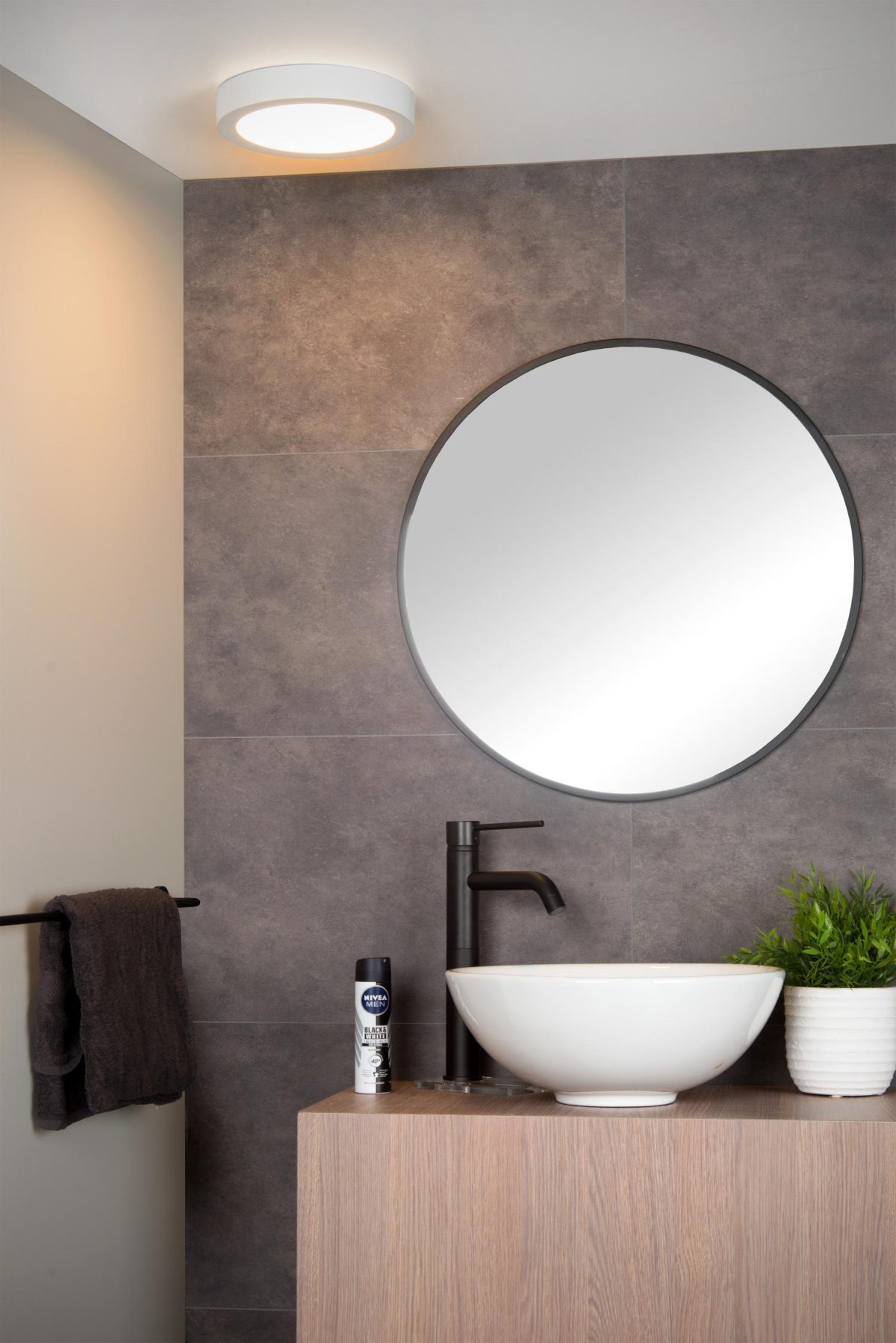
Around the bath and shower, the distance to the water determines which lights may be installed. In Belgium, since 1 March 2025 the AREI has worked with volumes 0 and 1 around a shower and volumes 0, 1 and 2 around a bath; a 230 V light may only go in volume 1 if it is at least IPX4, permanently connected and declared suitable for volume 1 by the manufacturer. In the Netherlands, NEN 1010 works with zones 0, 1 and 2, with at least IPX4 in zones 1 and 2. At the mirror, light from the left and right, not from above.
Which IP rating does a bathroom light need?
That depends on where the light is mounted. Close to the bath or shower, where water can splash, a light must at least withstand splashing water: IPX4. The closer to the water, the stricter the rules, right down to the bath or shower tray itself, where only special equipment at extra-low voltage is allowed. Further from the water the ordinary rules apply, although a light with IP44 is the sensible choice there too in a bathroom full of steam. You will find an overview of lights for this room under bathroom lighting; check the IP rating of each light.
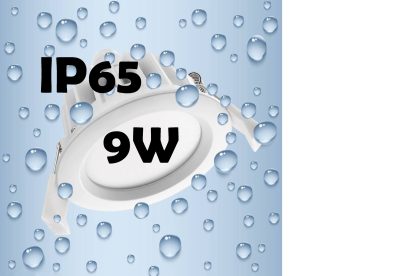
The IP code consists of two digits. The first says how well a light is protected against solid particles and dust, the second how well against water. An X means that digit is not specified. Licht.de, the information platform of the German lighting industry, gives these examples: IP20 keeps out particles larger than 12 mm but no moisture, IP44 keeps out particles larger than 1 mm and is splash-proof, IP65 is dust-tight and resistant to water jets.
| Code | Meaning | Typical use |
|---|---|---|
| IP20 | No protection against water | Outside the volumes or zones, in a dry corner |
| IPX4 / IP44 | Resistant to splashing water from all directions | Minimum in volumes 1 and 2 (Belgium) and zones 1 and 2 (Netherlands) |
| IPX5 / IP65 | Resistant to water jets | Where water jets occur, such as with massage jets |
| IPX7 / IP67 | Resistant to temporary immersion | In the bath or shower tray itself, at extra-low voltage |
How do the volumes work in Belgium under the AREI?
The AREI, the General Regulations on Electrical Installations, has thoroughly rewritten its chapter on bathrooms. The royal decree of 3 October 2024 was published in the Belgian Official Gazette on 28 October 2024 and has applied since 1 March 2025. Chapter 7.1 has thus been brought into line with the international standard IEC 60364-7-701. Transitional measures exist for work that started before 1 March 2025.
The main changes for anyone choosing lights:
- Volume 3 no longer exists.
- Volume 1bis, the space under the bath or shower tray, now belongs to volume 1.
- Around a shower there are now only two volumes: 0 and 1. The former volume 2 of a shower has been absorbed into volume 1.
- Around a bath there are three volumes: 0, 1 and 2.
- The volumes are determined from the highest and the lowest accessible level, and doors and windows in fixed walls count as open, except the doors of the shower itself.
What are volumes 0, 1 and 2?
Volume 0 is the inside of the bath or shower tray. Volume 1 is the space above it, up to 2.25 m above the accessible level. Volta, the Belgian knowledge centre for electrical engineering, gives the example of a recessed spotlight above a shower that is lower than 2.25 m: it is in volume 1. Volume 2 lies around a bath, outside volume 1; in the previous version of the AREI and in the international standard, that is a 60 cm strip. The exact boundaries depend on walls, the position of the shower head and the type of ceiling, and the new decree contains numerous figures for them. Have your electrician determine them for your bathroom.
Which lights are allowed in volume 1?
Volta sets out the rules of subsection 7.1.5.2. In volume 1 the following are allowed:
- fixed equipment at safety extra-low voltage (SELV), with its power supply outside volumes 0 and 1. In volume 1 that is at most 12 V AC, 18 V DC with ripple or 30 V ripple-free DC;
- a fixed 230 V light, if it meets three conditions: it withstands at least the external influence AD4 (IPX4), the manufacturer states in the instructions for use or installation that it is suitable for volume 1, and it is permanently connected, not with a plug.
So a 230 V spotlight is no longer automatically excluded from volume 1, but IP44 on the packaging alone is not enough. If suitability for volume 1 is not stated in the documentation, you can ask the manufacturer for written confirmation. When in doubt, Volta calls a SELV spotlight or a position outside volumes 0 and 1 the safest choice. A fixed, non-perforated suspended ceiling that cannot be removed without tools can also limit volume 1.
The general protective measures also still apply: all circuits supplying the room are protected by a residual current device of at most 30 mA located outside the bathroom, and supplementary equipotential bonding is required in the room.
How do the zones work in the Netherlands under NEN 1010?
In the Netherlands the rules are set out in NEN 1010, the standard for low-voltage electrical installations, in section 701 on rooms containing a bath or shower. NEN 1010 is the Dutch implementation of the European HD 60364 series, the same basis as in Belgium and Germany. You can view the current version, NEN 1010:2020+C1:2024, with a free account via NEN Connect.
The Netherlands works with zones 0, 1 and 2. Licht.de describes the European basic rules for those zones on the basis of the German implementation (DIN VDE 0100-701):
- Zone 0 is the inside of the bath or shower tray. Only equipment at safety voltage up to 12 V AC or 30 V DC, protected against immersion (IPX7), is allowed there.
- Zone 1 is the space above the bath or shower tray, up to 2.25 m above the floor. For a shower without a tray, it is a circle with a radius of 120 cm around the shower head. Minimum IPX4.
- Zone 2 is a 60 cm strip next to zone 1. Minimum IPX4, or IPX5 with massage jets.
Check the precise layout for your situation in NEN 1010 or with your electrician; special arrangements, such as a shower next to a bath or a freestanding bath, have their own provisions. The requirements for residual current protection and bonding of the bathroom circuits are also in section 701.
| Belgium (AREI since 1 March 2025) | Netherlands (NEN 1010, section 701) | |
|---|---|---|
| Name | Volumes | Zones |
| Around a shower | Volumes 0 and 1 | Zones 0, 1 and 2 (without a tray: zone 1 up to 120 cm around the shower head) |
| Around a bath | Volumes 0, 1 and 2 | Zones 0, 1 and 2 |
| Height of volume or zone 1 | Up to 2.25 m above the accessible level | Up to 2.25 m above the floor |
| 230 V light in volume or zone 1 | IPX4, permanently connected and declared suitable for volume 1 by the manufacturer | Minimum IPX4 |
| Extra-low voltage in volume or zone 1 | At most 12 V AC or 30 V DC, power supply outside volumes 0 and 1 | According to NEN 1010; for the German implementation, licht.de gives up to 25 V AC or 60 V DC |
| RCD or residual current protection | At most 30 mA for all circuits to the room, installed outside the room | See NEN 1010, section 701 |
Which lights suit which zone?
With the rules laid out, the choice becomes simpler.
- In the shower or above the bath (volume or zone 1): a ceiling light or recessed spotlight with at least IPX4. In Belgium, also check whether the manufacturer declares the light suitable for volume 1, and whether it is permanently connected. A 12 V spotlight with the transformer outside the zones is a safe way out. How to determine the number of spotlights and their spacing is explained in planning spotlights.
- Next to the bath (volume or zone 2): at least IPX4.
- At the washbasin and elsewhere in the bathroom: the zones concern the bath and shower, not the washbasin. In a small bathroom, however, the washbasin is often within a few tens of centimetres of the shower, and then the mirror light does fall within a volume or zone. Measure it.
With recessed spotlights, check which part the IP rating applies to. On some spotlights it only applies to the visible front below the ceiling; the manufacturer’s documentation tells you what applies and where the spotlight may be installed. LED strips in a niche should have a high IP rating (IP65 or IP67), with the power supply outside the zones and in a dry, accessible place.
How do you light the mirror?
For shaving, applying make-up and putting in contact lenses, you want to see your face without shadows. Licht.de gives a clear rule: two identical lights to the right and left of the mirror, possibly supplemented by a light above large mirrors. An opal glass cover spreads the light softly. Avoid spotlights and directional light at the mirror: they dazzle in the mirror and cast hard shadows under the eyes, nose and chin.
For colour rendering, licht.de asks for at least Ra 80, and preferably Ra 90 or more. A mirror light that renders skin tones poorly turns make-up into guesswork. For the general light in the bathroom, licht.de gives at least 300 lux; dark tiles absorb light and call for more lights or stronger ones.
Which colour temperature in the bathroom?
Licht.de suggests adapting the colour temperature to the moment: cooler, brighter light in the morning to wake up, warm white (up to 3300 K) and dimmed in the evening. A light with adjustable colour temperature, or two groups, a cooler mirror light and warm ambient lighting, make that possible. You will find more about Kelvin in choosing a colour temperature.
What do steam and condensation do to a bathroom light?
The IP code describes splashes, jets and immersion. Daily steam and condensation are a different kind of strain: warm, humid air gets in everywhere and condenses as the light cools down. In a bathroom, therefore, choose closed fixtures with a seal, even outside the zones, and avoid open shades with a bare bulb. A good extractor fan that keeps running after a shower keeps the lights looking good for longer, and the mirror clear.
What can you do yourself, and what do you leave to an electrician?
Anyone can replace a plug-in light outside the zones. As soon as it involves a fixed connection in a volume or zone, a new circuit, a transformer for extra-low-voltage spotlights or determining the volumes, call in a registered electrician. In Belgium the rules of the AREI apply, and the volumes the electrician lays down determine what is allowed where.
Which mistakes do you see most often in the bathroom?
- Reading IP44 as a free pass for the shower. In Belgium, volume 1 requires more than just IP44.
- Using the old volumes after 1 March 2025, with a volume 2 next to the shower that no longer exists.
- A single spotlight above the mirror, with shadows under the eyes and chin.
- Too little light with dark tiles.
- A transformer or driver in a zone instead of in a dry, accessible place outside it.
- An ordinary living room light with an open shade in a bathroom without an extractor fan.
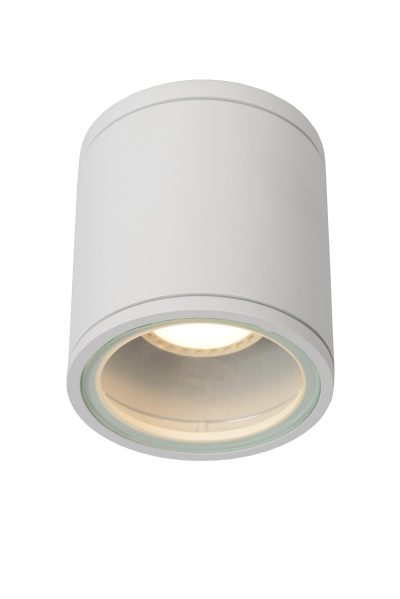
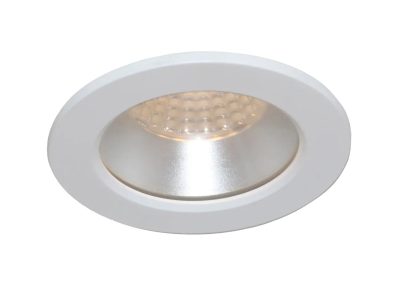
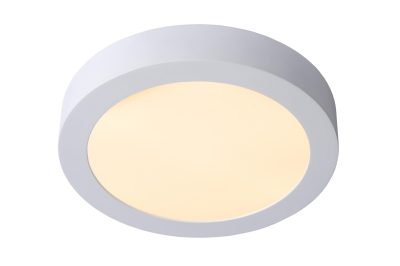
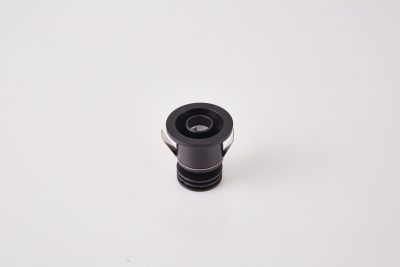
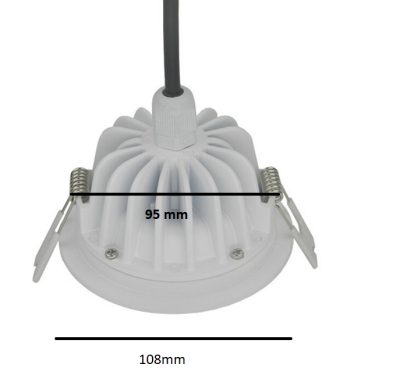
Ceiling lights and spotlights for the bathroom, IP44 and higher
View allAll at least IP44. For volume or zone 1, also check what the manufacturer says about installation.
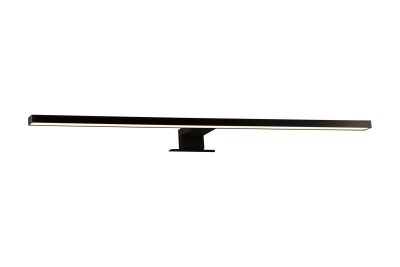
Mirror lighting and wall lights for the bathroom
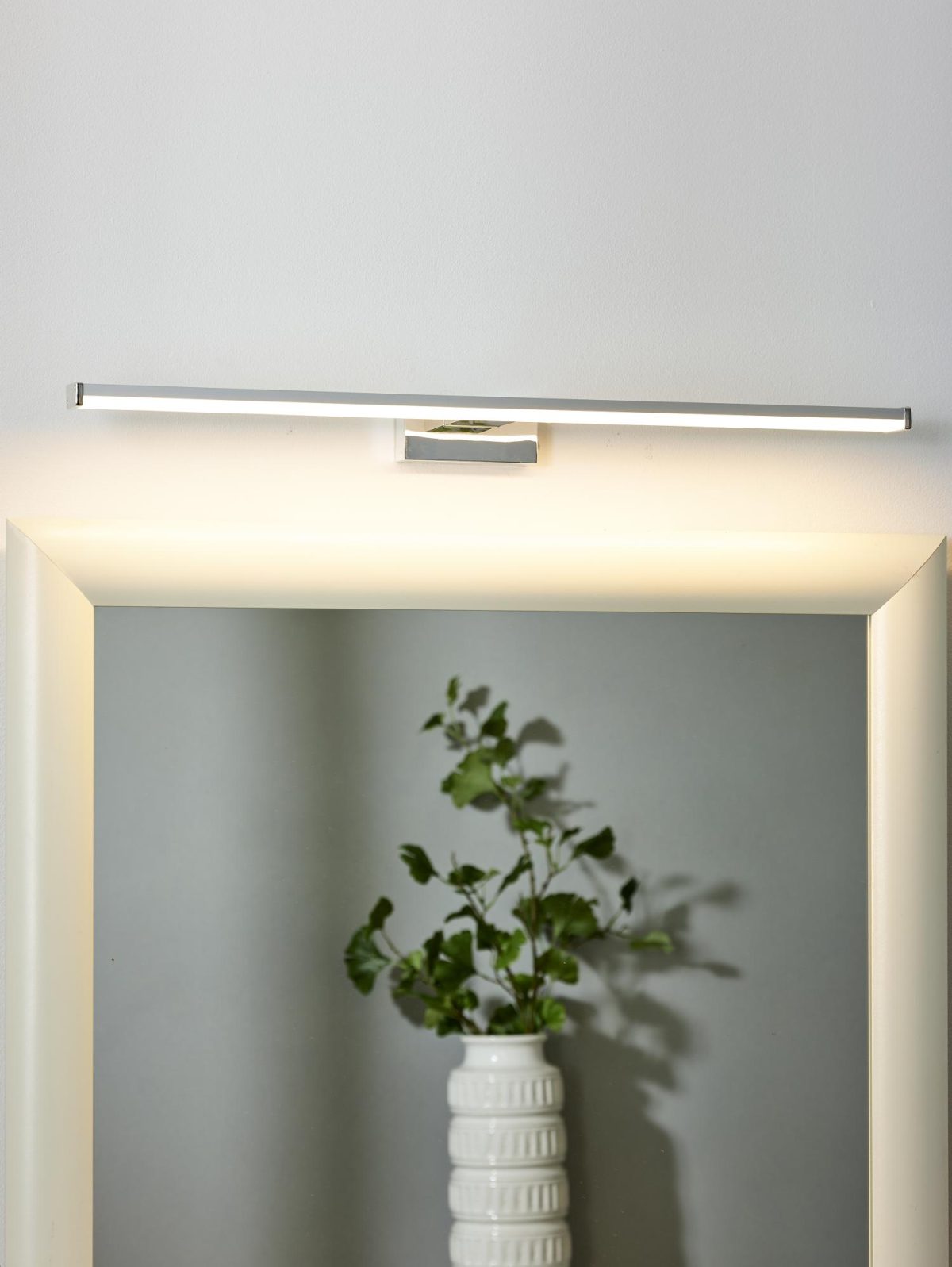
View allIP44 or IP54. Hang two identical lights beside the mirror for light without shadows.
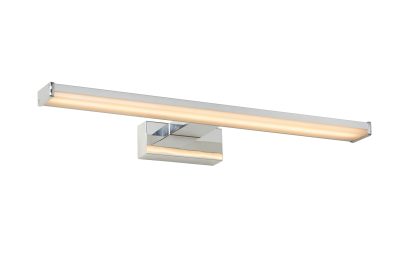
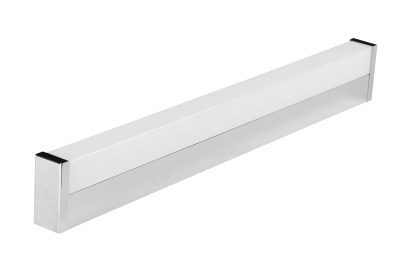
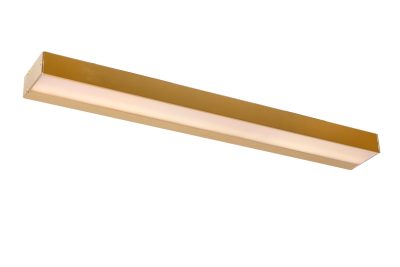
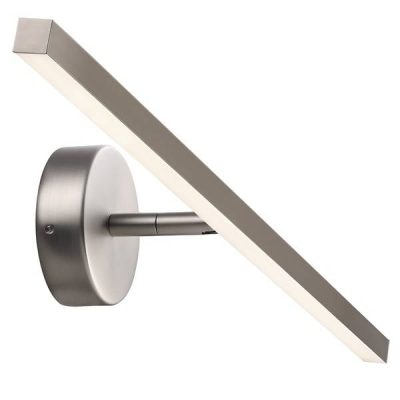
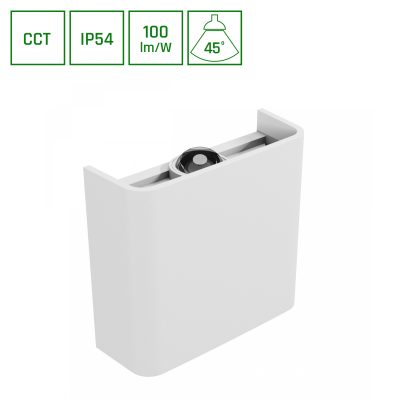
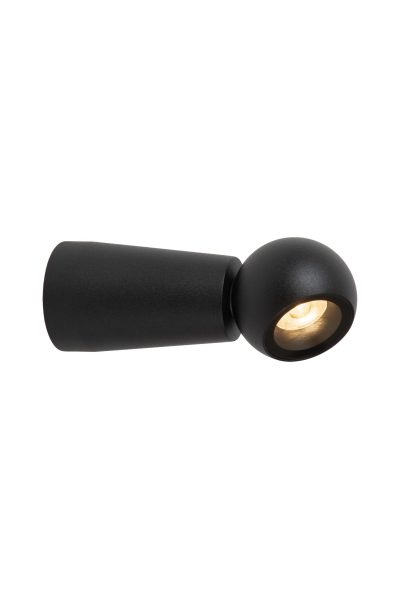 LUCIDE IPSOS bathroom wall lamp, black
A wall light with IP54, 420 lumens and 2700 K. Hang two of them to the left and right of the mirror, as licht.de recommends, and your face gets light without shadows. €56.66
Frequently asked questions
What does the X in IPX4 mean?
The X stands for a digit that is not specified. With IPX4, only the protection against water is defined (splashing water), not that against dust or solid particles. For the bathroom rules, it is mainly the second digit that counts.
Can an ordinary pendant light go in the bathroom?
Outside the volumes or zones the rules allow it, but an open shade with a bare bulb copes poorly with daily steam. Preferably choose a closed light with at least IP44. Above the bath or shower, an ordinary pendant light is not permitted.
Are LED mirrors with built-in lighting a good alternative?
Yes, if the light is all round or at the sides of the mirror: then you get the same effect as two lights left and right. Watch the IP rating, the colour rendering and, if it hangs in a volume or zone, the manufacturer’s installation instructions.
Can an LED strip go in a shower niche?
With an extra-low-voltage strip that is water-resistant (IP65 or IP67), and with the power supply outside the volumes or zones, it can. Have the installation and the position of the power supply assessed by an electrician. How to choose a strip is explained in choosing an LED strip.
My bathroom dates from before 2025. Do I have to change everything now?
The AREI provides exemptions for existing installations and transitional measures for work that started before 1 March 2025. For a renovation or a significant change, the new rules apply. Your electrician can tell you what applies to your bathroom.
Sources
- Koninklijk besluit van 3 oktober 2024 tot wijziging van hoofdstuk 7.1 van boek 1 en sommige andere delen van de boeken 1, 2 en 3 (AREI), Belgisch Staatsblad, 28 oktober 2024 (2024)
- KB van 3 oktober 2024 tot wijziging van hoofdstuk 7.1 Ruimten die een bad of douche bevatten, Volta (2025)
- Mag een 230 V spot worden geplaatst in volume 1 van een douche?, Volta (2026)
- NEN 1010:2020+C1:2024 Elektrische installaties voor laagspanning, NEN (2024)
- Installation im Bad (DIN VDE 0100-701), licht.de (ZVEI)
- Bad: Licht im Badezimmer, licht.de (ZVEI)
- Schutzarten IP, licht.de (ZVEI)