Outdoor lights need at least IP44; ground spotlights IP65 or IP67, because water stays on them. Aim the light downwards and only where you need it, and let a motion sensor, dusk switch or timer decide when it is on, so the garden is not lit all night. Choose warm light: for wildlife-friendly lighting, the Flemish research institute INBO advises avoiding anything above 2700 K. Leave a fixed 230 V connection to an installer; according to licht.de, you can install above-ground 24 V plug-in systems yourself.
Which IP rating does outdoor lighting need?
Outdoors, only use lights that are expressly designed for outdoor use. Licht.de, the information platform of the German lighting industry, gives IP44 as the minimum for a good-quality outdoor light. Ground spotlights and other lights set into the ground must be walk-over or drive-over and need IP65 or IP67.
The IP code consists of two digits: the first gives the protection against dust and solid particles, the second against water. Outdoors, what matters most is where the light is mounted. Under a canopy IP44 is enough; on an exposed facade where rain and wind have free play, IP54 or IP65 is a safer choice; in the ground, where water collects, IP67 is the standard. You will find all outdoor lights under outdoor lighting; how the IP code works in a wet room indoors is explained in bathroom lighting and IP zones.
| Code | Protection | Typical location |
|---|---|---|
| IP44 | Particles larger than 1 mm, splashing water from all directions | Wall light under a canopy or awning, covered patio |
| IP54 | Dust (limited), splashing water | Wall light or post light in the open air |
| IP65 | Dust-tight, water jets | Facade without cover, garden spotlight, floodlight |
| IP67 | Dust-tight, temporary immersion | Ground spotlight, recessed spotlight in a patio or driveway |
How do you light the front door and the facade?
At the front door you want to see the lock, the doorbell and the face of whoever is ringing. Licht.de gives three building blocks: a ceiling light under the canopy if there is one, wall lights beside the door at about three quarters of the door height, and an illuminated house number. For an ordinary front door that is around 150 to 160 cm: that way they light the lock and the face from the side. Because they then hang at roughly eye level, choose a model that screens the light source.
Choose lights that direct the light downwards and screen the light source. A bare bulb in a glass lantern looks classic, but it dazzles whoever is standing on the doorstep and sends light in every direction, including upwards and across the street.
Facade lighting with up-and-down light
Wall lights that shine both upwards and downwards give a facade character. They do send light into the sky. Use them deliberately: low luminous flux, warm white, and on a timer so that they are not on all night.
How do you light paths, steps and the patio?
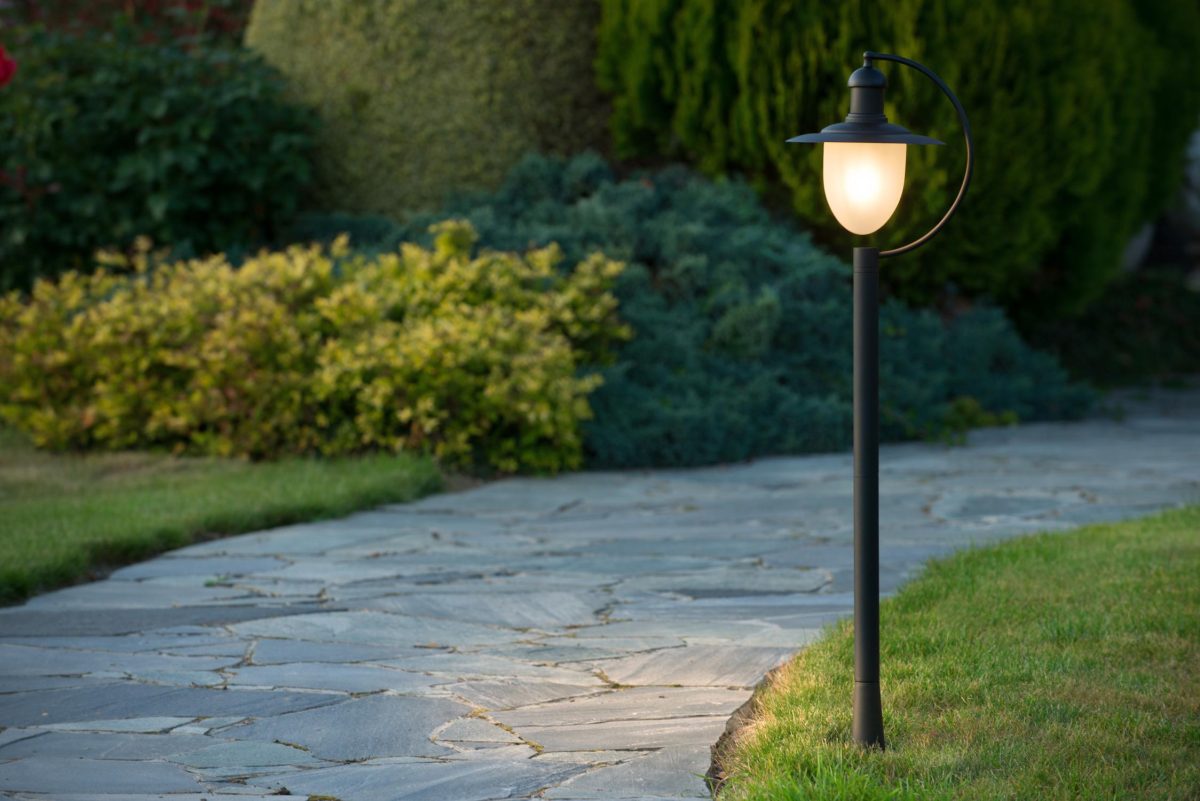
On a path, safety is what counts: you want to see the edge, obstacles and changes in level. Licht.de asks for even light without hard transitions between light and dark. For that there are post lights up to about 2 m, low bollard lights, wall lights along a wall and ground spotlights. The height of the light point determines the spacing: the lower the light, the closer together they have to be.
Put up one light first and see in the dark how far its pool of light reaches. Place the next one where that pool ends, not further. This avoids dark gaps between brightly lit circles, where your eyes have to adjust each time.
Steps
You need to be able to read a flight of steps: every tread visible, with short, soft shadows. Licht.de mentions orientation and marker lights in the wall or in the risers, and gives as a rule of thumb light on every third step. Light from above, such as a wall light at the top of the steps, completes it.
Patio
For a patio, licht.de suggests wall lights as basic lighting, or recessed and surface-mounted lights under a cover, and mentions portable rechargeable LED lamps as a popular addition on the table. The latter are handy: no cable, and you put them where you sit.
Motion sensor, dusk switch or timer?
Licht.de mentions all three, and recommends motion sensors because they save a lot of energy: the light only comes on when it is really needed. What LED saves on top of that, you can work out in saving with LED. Each has its place:
- Motion sensor: for paths, the driveway and the back door. The light comes on when someone passes and goes off after a set time.
- Dusk switch: switches the light on as evening falls. On its own it then stays on until morning, so combine it with a timer or a motion sensor.
- Timer: for atmospheric light in the garden or on the facade, which you let go off at 11 pm, for example.
Most outdoor motion sensors use an infrared sensor that detects moving heat. They respond best to someone walking across the detection area, less to someone walking straight towards them. So aim the sensor so that you walk past it along the path, and set the range so that the street, a tree moving in the wind or the neighbours’ cat does not keep it switching all night. Choose a short on-time.
For animals, the way the light switches matters too. INBO, the Flemish government’s research institute for nature and forests, advises that with motion detection the light should come on and go off gradually rather than in a flash, because a sudden change can cause startle reactions.
How do you keep it dark for neighbours and wildlife?
There are few legal requirements for outdoor lighting. The Flemish government itself writes that the environmental rules on light nuisance are worded in general terms, and its overview of March 2025 even leaves lighting at homes out of consideration. Nuisance for the neighbours is therefore mainly a matter of being a good neighbour. In the lighting world, people work with the concept of a curfew from the international CIE guideline 150: a time after which stricter limits apply to obtrusive light, because light that is acceptable in the evening becomes disturbing later at night.
For wildlife, however, there is solid research. In 2023 INBO brought together the scientific literature on night-time lighting and biodiversity. The core message: keeping things dark is always preferable, and there is no kind of light that has no effect. For insects, effects were seen up to 50 to 75 m from the light source. INBO recommends four steps, all of which you go through:
- Light only where it is needed. No light upwards, shielded fixtures that direct the light where you need it, and lights as low as possible. Leave trees, shrubs and water dark.
- Light only when it is needed. With motion sensors or a timer.
- Keep the light level as low as possible. For bats, researchers put the threshold at around 1 lux.
- Choose a suitable spectrum, as the last step: avoid light above 2700 K.
That order matters. A warm light that shines on a tree all night generally disturbs more than a cool light on a motion sensor that only lights the path when you come home. A meta-analysis cited by INBO even found no difference in the number of insects attracted between cool white and warm white LED. How much and how long therefore count at least as much as the colour.
Which colour temperature should you choose outdoors?
Warm white, 2700 K or lower, is the usual and the most wildlife-friendly choice for a garden. In a field trial discussed by INBO, amber light around 2200 K attracted fewer insects than white light, although some groups of species were in fact drawn to it more. Cool white at 4000 K or more looks harsh and cold outdoors, and makes a garden look flatter. You will find more about Kelvin in choosing a colour temperature.
How do you connect outdoor lighting safely?
Outdoors, water, metal and soil come together, which is why you leave a fixed 230 V connection to an installer: an outdoor light on the facade, an outdoor socket or a cable to a post light. In Belgium that work follows the AREI and in the Netherlands NEN 1010, with the right protection.
Earthing and protection class
The light carries a protection class. Licht.de explains them like this: a class I light has basic insulation and accessible metal parts that are connected to the earth conductor, so the earth connection is required. A class II light has additional, reinforced insulation and must not be connected to earth. A class III light runs on a harmless safety extra-low voltage, such as the 12 or 24 V of a garden system.
Cables in the ground
In Germany, licht.de asks for 230 V cables to be laid “spade-safe”, at a depth of 60 cm. Follow the rules in your own country and let the installer decide how and how deep the cable goes. In any case, record where the cable runs, so that you do not hit it when digging later.
Low voltage: 12 V and 24 V
Garden systems on 12 or 24 V work with a transformer that you plug into a socket; the lights and cables after it carry a harmless voltage. Licht.de writes that above-ground 24 V plug-in systems can be installed without a professional. You move the spotlights as the garden grows, and a cut cable poses no risk of electric shock. Do pay attention to the length of the cables and the output of the transformer, and to the IP rating of the connectors. LED strips for outdoor use often run on 24 V as well; see choosing an LED strip.
Solar lights
Solar-powered lights need no cable, but give little light: the solar-powered wall and bollard lights in this shop deliver between roughly 80 and 240 lumens. That is enough to mark a path or highlight a corner, not to really light a driveway.
Which mistakes do you see most often outdoors?
- Using indoor lights outdoors, or IP44 in the ground where water collects.
- Light that is on all night without a sensor or timer.
- Floodlights shining at the neighbours or the sky instead of downwards.
- Bright circles with dark gaps along a path, instead of even light.
- Cool white light in a garden.
- A motion sensor that responds to the street and keeps switching on and off all evening.
- A 230 V cable without a plan, hit at the first bit of digging.
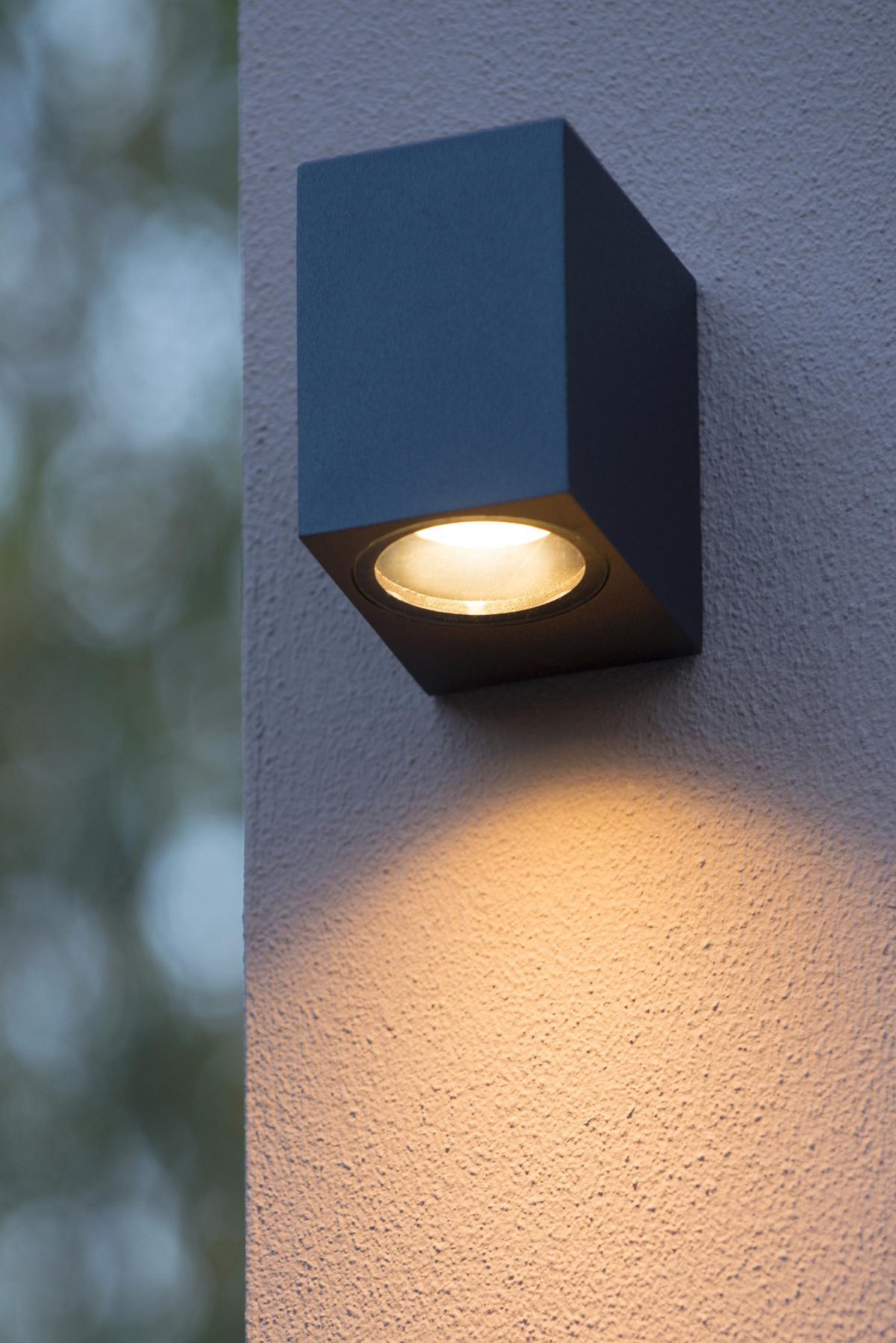
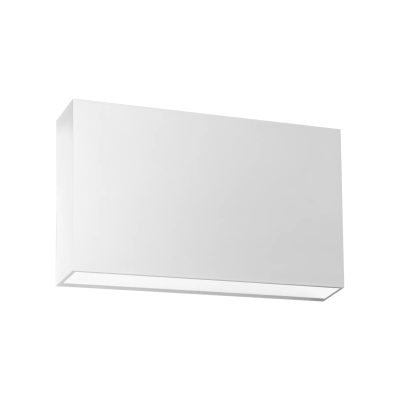
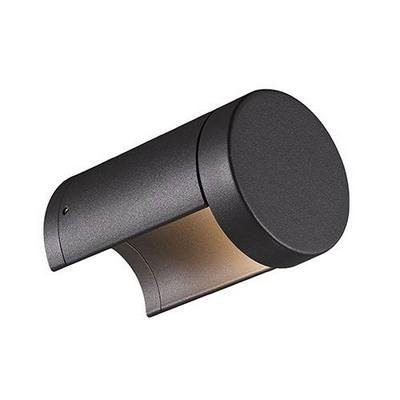
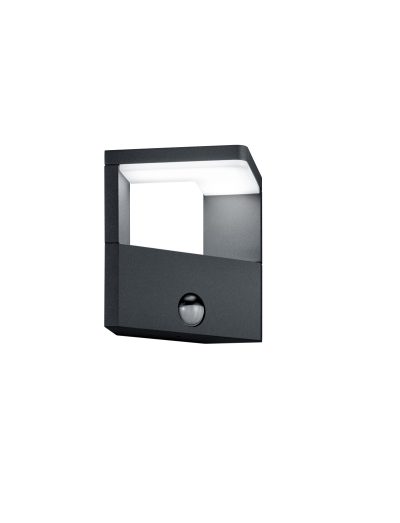
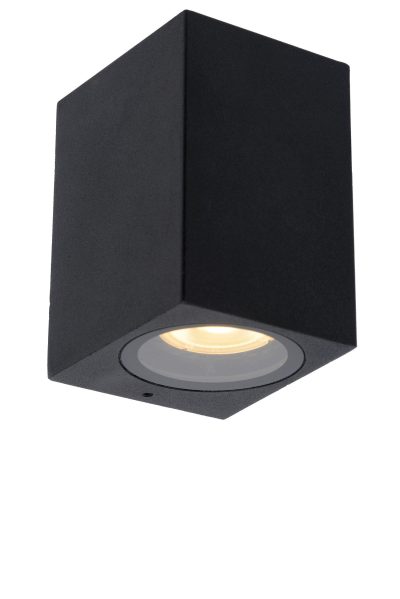
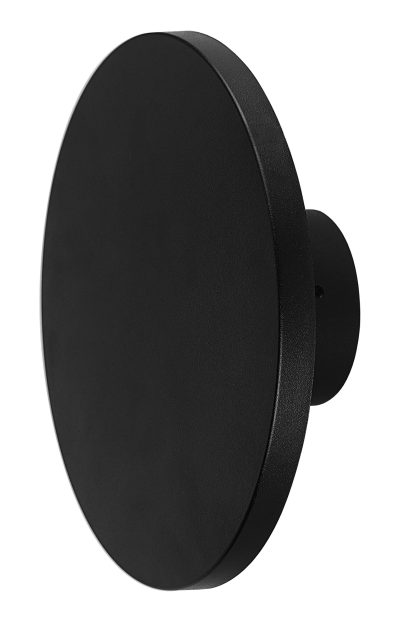
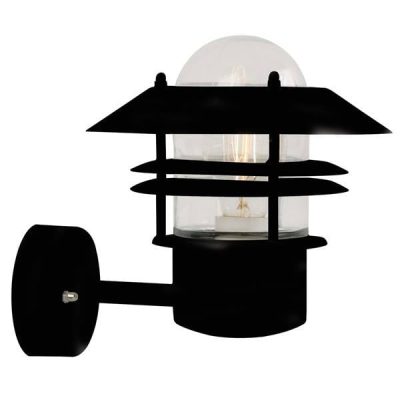
Wall lights for the facade and the front door
View allFrom IP44 to IP65, some with a built-in sensor. Preferably choose a model that shines downwards.
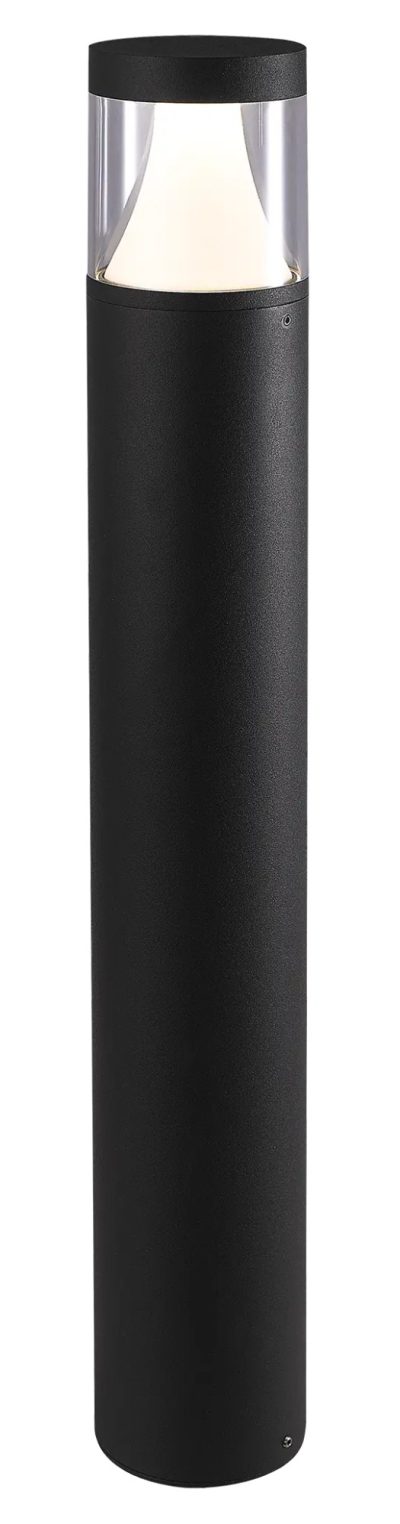
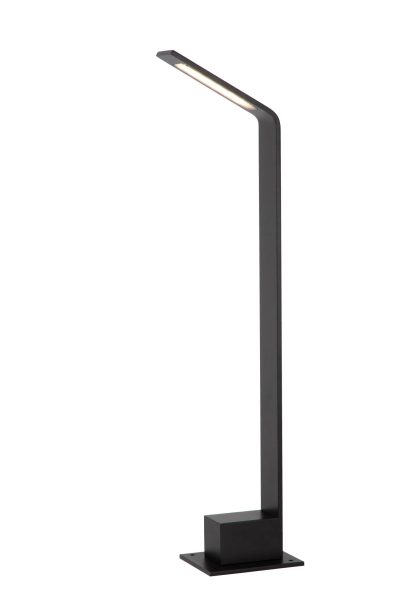
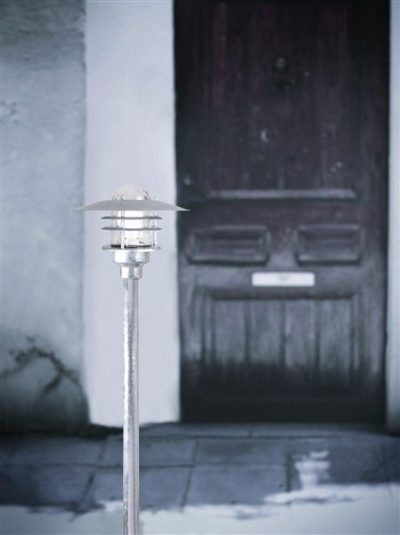
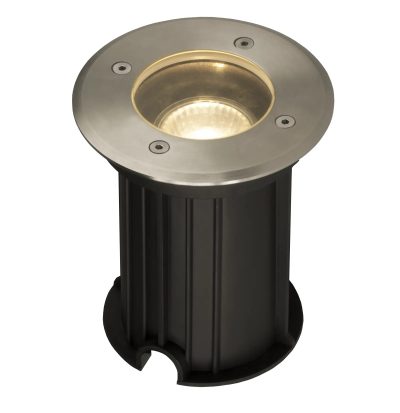
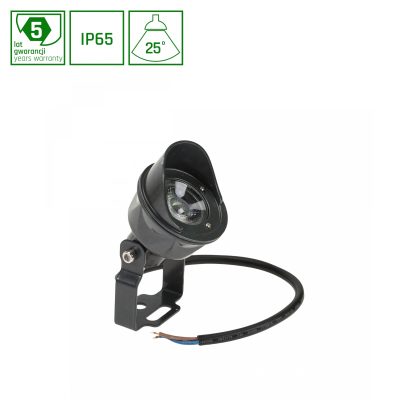
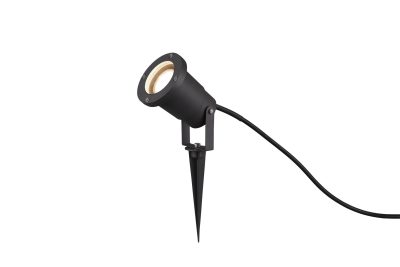
Post lights, bollard lights and ground spotlights for path and garden
View allFrom a low post light to an IP67 ground spotlight, and a 24 V spotlight for a low-voltage system.
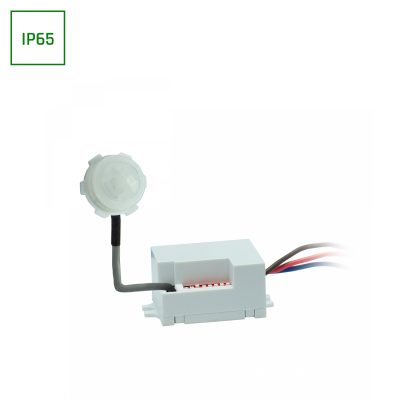 Spectrum LED PIR SENSOR 360DEG 6M IP20/IP65 230V
A separate motion sensor with a 360-degree detection angle and a range of 6 m: with it you switch an existing outdoor light on only when someone passes. €16.17
Frequently asked questions
Is IP44 enough for a wall light without a canopy?
IP44 is the minimum licht.de gives for outdoor use, and it withstands splashing water from all directions. On a facade fully exposed to rain and wind, IP54 or IP65 gives you more margin, especially on the weather side.
Can you walk or drive over a ground spotlight?
Only if the manufacturer declares it walk-over or drive-over. Licht.de requires that for every light set into the ground, together with IP65 or IP67. Also check the temperature of the glass: where children or pets walk over it, choose a spotlight that does not get hot.
Is my neighbour allowed to aim his garden spotlight at my facade?
There are few specific rules for private garden lighting; nuisance usually comes down to being a good neighbour. A conversation asking for the light to be aimed differently, shielded or put on a timer solves it in most cases.
Which light goes well with a video doorbell?
A camera sees best with soft light from the side or from above in front of the door, not with a bright light straight into the lens. Wall lights beside the door that shine downwards, at about three quarters of the door height, work well for this.
Sources
- Garten: Licht für Garten und Terrasse, licht.de (ZVEI)
- Schutzarten IP, licht.de (ZVEI)
- Schutzklassen, licht.de (ZVEI)
- Licht für Wohnräume (presentatie bij licht.wissen 14), licht.de (ZVEI) (2020)
- Effecten van nachtelijke verlichting op biodiversiteit. Een literatuurstudie voor beleidsondersteuning (Dekeukeleire, Gyselings, De Bruyn), Instituut voor Natuur- en Bosonderzoek (INBO) (2023)
- Regelgeving en normen voor niet-residentiële buitenverlichting en lichthinder, Departement Omgeving, Vlaamse overheid (2025)