The letter of a lamp base tells you how the bulb is held in place; the number gives a size in millimetres. E27 and E14 are screw bases on 230 V; GU10 is a spotlight base with two thickened pins on 230 V; GU5.3 (MR16) and G4 run on 12 V with a transformer; G9 is a small capsule with two loops on 230 V. Halogen bulbs with G9, G4 and GY6.35 bases may no longer be placed on the EU market since 1 September 2023, but there is an LED replacement for every common base.
How do you read the name of a lamp base?
The name of a lamp base consists of one or two letters and a number. The letters tell you how the bulb is held in place; the number is a size in millimetres.
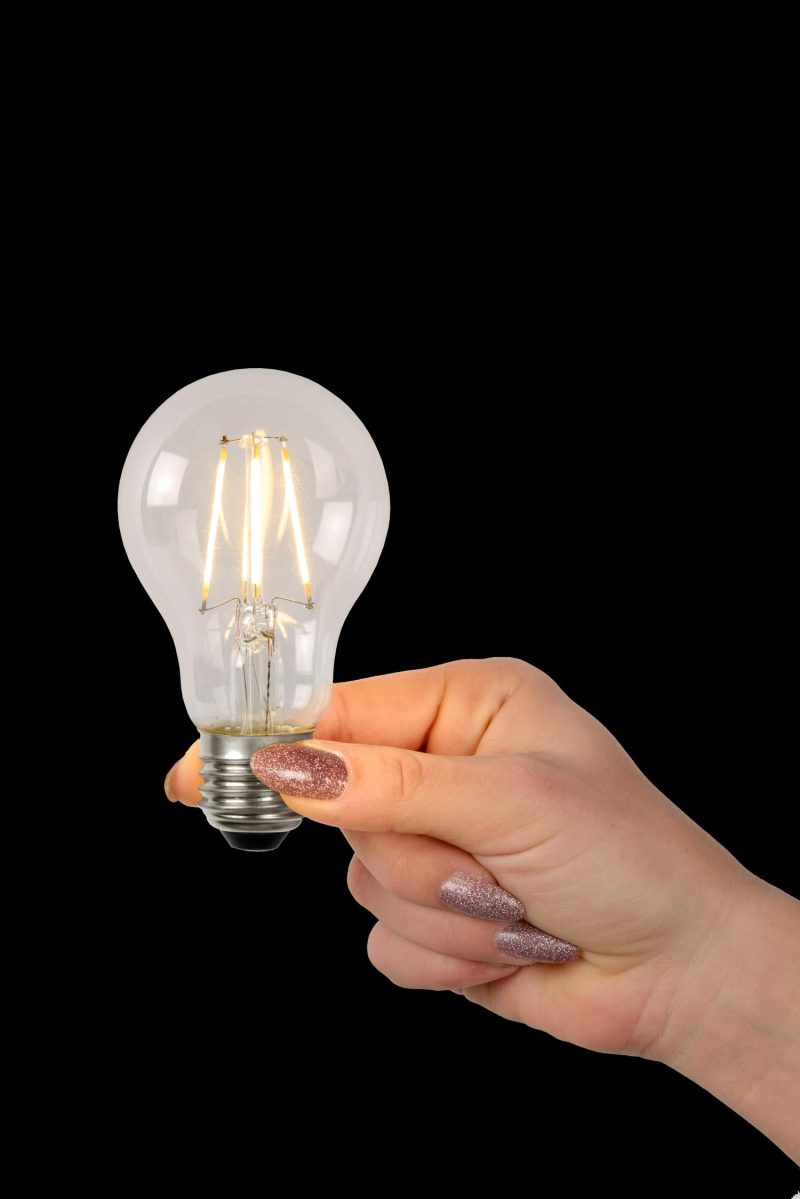
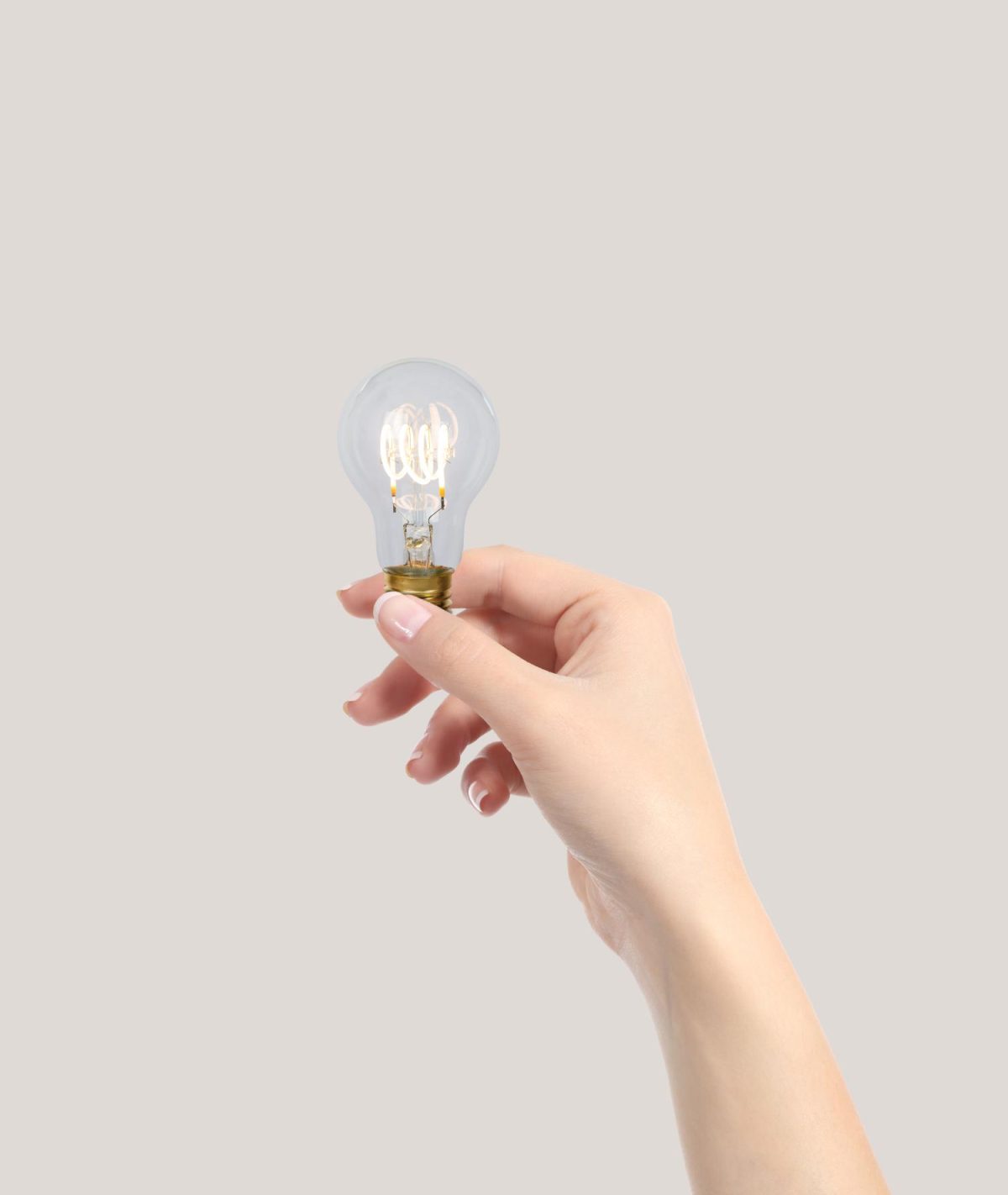
- E stands for Edison, the screw base. The number is the diameter of the thread: E27 is 27 mm, E14 is 14 mm.
- G stands for a base with pins. The number is the distance between the pins: 9 mm for G9, 4 mm for G4, 13 mm for G13.
- GU is a pin base whose pins are thickened, so that the bulb clicks or twists into place: GU10 and GU5.3.
- GX and GY are variants with a different pin shape, such as GX53 and GY6.35.
- B is a bayonet base that you push in and twist, such as the BA15d of small indicator bulbs.
- R7s is a linear lamp with a contact at each end.
Besides the base, a bulb has a shape code. The letter is the shape, the number the diameter. A60 is the classic 60 mm pear shape, G45 and G95 are globes of 45 and 95 mm, C35 is a 35 mm candle bulb, P45 a golf ball bulb, ST64 an elongated bulb 64 mm wide. Reflector bulbs are different: AR111 is 111 mm wide, and MR16 and MR11 count in eighths of an inch, which comes to about 50 and 35 mm. So an MR16 is a shape, not a base: it exists with GU10 and with GU5.3.
Which base goes where, and what replaces it?
| Base | How to recognise it | Voltage | Where you find it | LED replacement |
|---|---|---|---|---|
| E27 | Wide 27 mm thread | 230 V | Pendant lights, floor and table lamps | Pear, globe or filament, without restrictions |
| E14 | Narrow 14 mm thread | 230 V | Chandeliers, small wall lights, cooker hoods | Candle and golf ball bulbs |
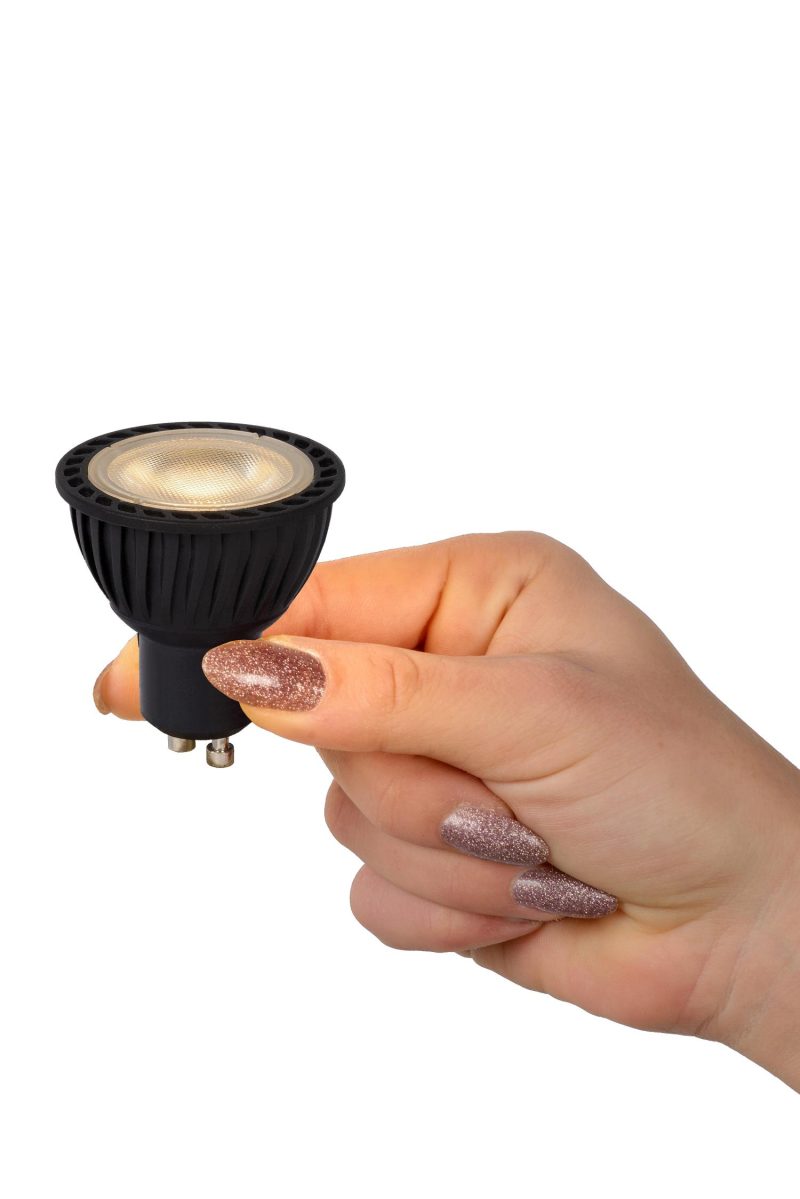
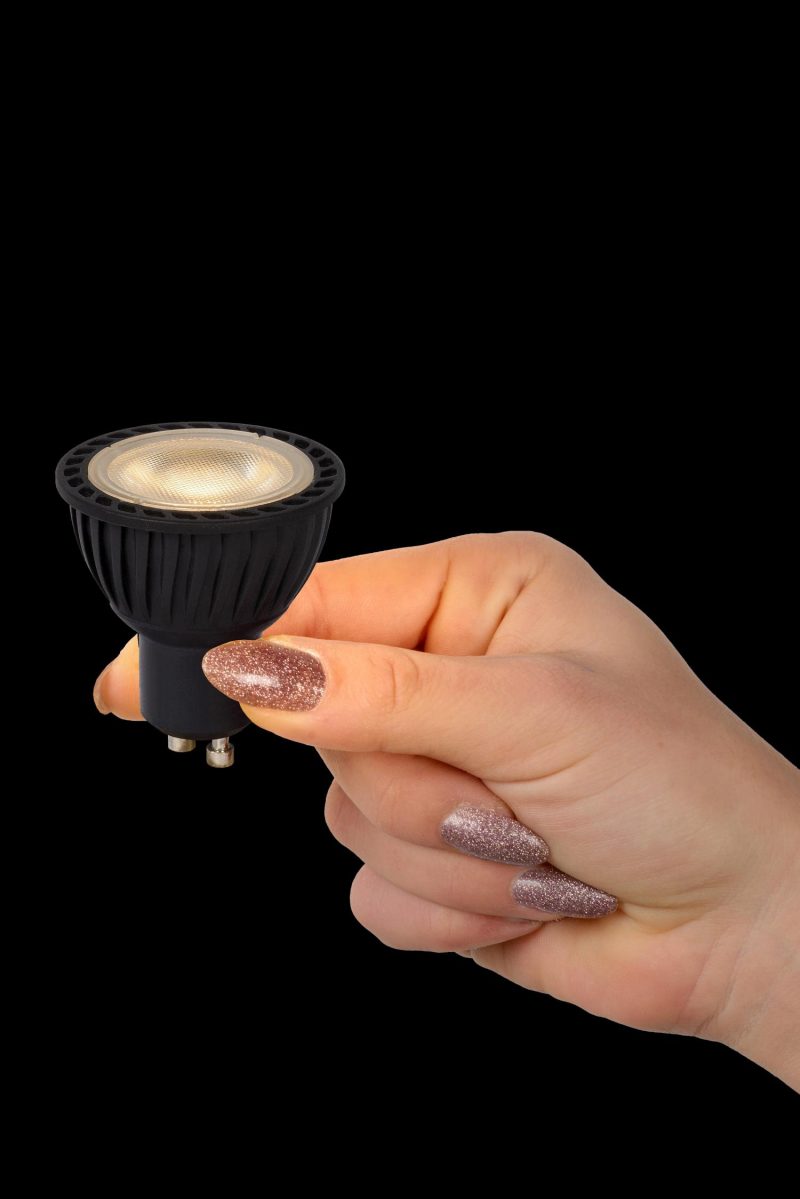
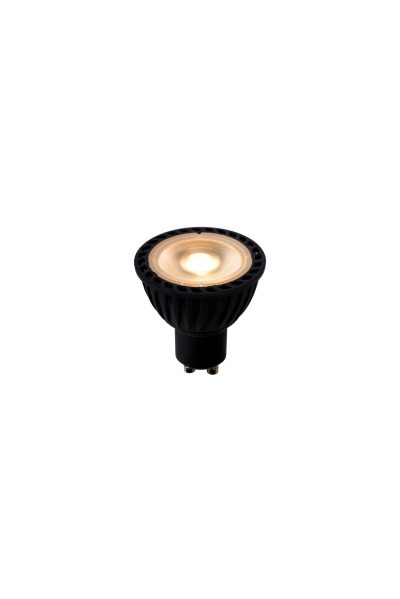
| GU10 | Two short pins with a thickened head; push in and twist | 230 V | Recessed, surface-mounted and track spotlights | LED spotlight; watch the length |
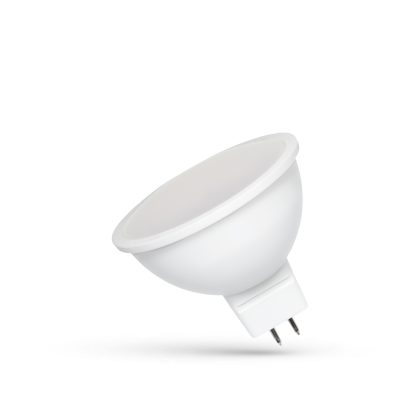
| GU5.3 (MR16) | Two thin straight pins | 12 V, with transformer | Older recessed spotlights | 12 V LED spotlight; check the transformer |
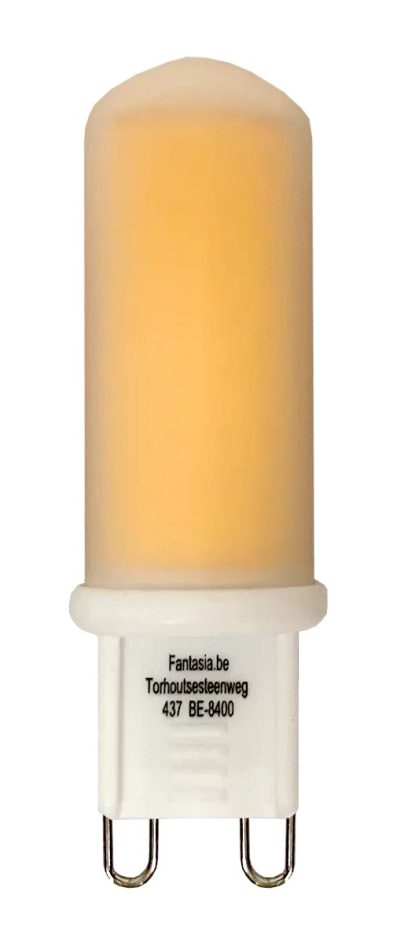
| G9 | Two curved wire loops | 230 V | Small wall lights, designer pendant lights | LED G9, often slightly larger |
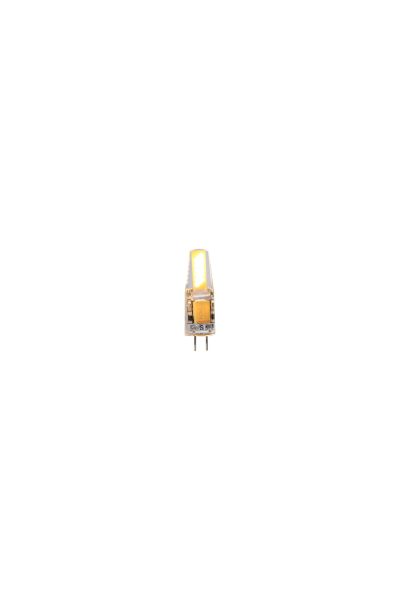
| G4 | Two thin pins, 4 mm apart | 12 V | Cabinet lighting, small reading lights | LED G4 of the same voltage |
| GX53 | Flat disc with two pins, twist in | 230 V | Flat recessed spotlights, some pendant lights | GX53 LED disc |
| R7s | Rod with a contact at each end, 78 or 118 mm | 230 V | Uplighters, wall lights, work lights | LED R7s; thicker than halogen |
| G13 (T8) | Tube of about 26 mm, two pins at each end | 230 V | Fluorescent fittings in garage, storeroom, kitchen | LED tube; connection depends on the fixture |
| Integrated LED | No base; the LED is built into the fixture | Via a driver | Ceiling lights, spotlights, wall lights | None; the module or driver is replaced |
E27 and E14: the screw bases
Most pendant lights, floor lamps and table lamps have an E27 base, chandeliers and small wall lights often E14. For both, there is an LED bulb in every shape, colour temperature and output, dimmable or not. Choose by lumens and by size, not by watts. Replace a 60 W incandescent bulb with an LED bulb of at least 806 lumens; the conversion table is in how many lumens per room.
With E27, watch the dimensions of the bulb. A 125 mm globe or an elongated filament bulb often sticks out of the bottom of a small shade. With open pendant lights where the bulb is visible, the shape is precisely the point: the bulb is then part of the design.
Many fixtures state a maximum next to the lamp holder, such as “max. 40 W”. That figure refers to the heat of an incandescent bulb that the shade, the cable and the lamp holder can withstand. A 5 W LED bulb stays well below it. The maximum says nothing about how much light you are allowed to use.
GU10 and GU5.3: two spotlight bases you must not mix up
Both spotlights are about 50 mm wide and look the same from the front. Look at the pins. A GU10 has two short pins with a thickened head: you push the bulb in and turn it a quarter turn. It runs directly on 230 V. A GU5.3 has two thin straight pins that you push into the lamp holder, and runs on 12 V via a transformer. In shops the latter is often called MR16, although strictly speaking MR16 is the shape.
With GU10, the length is the pitfall. An LED spotlight has a heat sink at the back and is therefore often a few millimetres longer than the halogen spotlight it replaces. In a shallow recessed spotlight or a small track spotlight it then does not fit, or presses against the spring. Measure the depth before you order; for LED spotlights, the length is listed with the dimensions.
With GU5.3, the transformer is the pitfall. Electronic transformers for halogen are designed for bulbs of tens of watts and have a minimum load, which is printed on the label. With a 5 or 6 W LED bulb you are often below it. The result is flickering, a bulb that briefly comes on and goes off again, or no light at all. There are two tidy solutions: replace the transformer with a 12 V DC LED power supply, or have the lamp holder converted to GU10, so that the transformer disappears. Both are work for an electrician.
An AR111 is a larger 111 mm reflector bulb. It too comes in two versions: with a G53 base on 12 V and with a GU10 base on 230 V. Look at the old one before you order a new one.
G9 and G4: small capsules
A G9 is a capsule with two curved wire loops that you push into the lamp holder. It runs on 230 V and is mainly found in small wall lights and in pendant lights with many light points. A G4 has two thin straight pins and runs on 12 V, usually in cabinet lighting or small reading lights.
Halogen G9 and halogen G4 bulbs may no longer be placed on the EU market since 1 September 2023. The LED replacements are often longer or thicker than the old capsule, because the electronics and the cooling have to go somewhere. In a narrow glass shade or a small globe, that is the limitation. Measure the space, and in closed shades choose a low-wattage bulb: in a small enclosed volume the temperature rises quickly, and heat shortens the life of an LED. Not every LED G9 is dimmable; it says so on the packaging.
R7s: linear lamps in uplighters and wall lights
The R7s is a rod with a contact at each end, usually 78 or 118 mm long. You find it in uplighters, wall lights that throw light up and down, and work lights. Halogen linear lamps of more than 2,700 lumens have been off the market since 1 September 2021; according to licht.de, weaker halogen linear lamps may still be sold.
LED R7s exists, but it is thicker than the slim halogen rod. In narrow fixtures with a glass cover it does not always fit. A fixture that already contains an LED rod, such as the wall light below, is then the simpler choice.
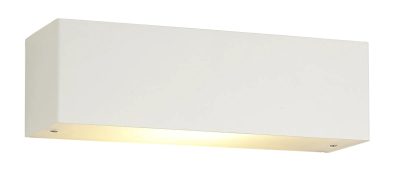 Fantasia Fluo wall light white aluminium dimmable R7S incl.
A wall light with an R7s base that already holds a dimmable 10 W LED rod of 810 lumens, roughly the light of a 60 W incandescent bulb. €62.55
GX53: the flat disc
A GX53 bulb is a flat disc with two pins at the back. You push it into the lamp holder and twist it tight. It runs on 230 V and is found in shallow recessed spotlights and in some pendant lights. Because the bulb is flat, the fixture stays low. You buy a replacement as an LED disc with the same base; watch the colour temperature, because it varies between brands.
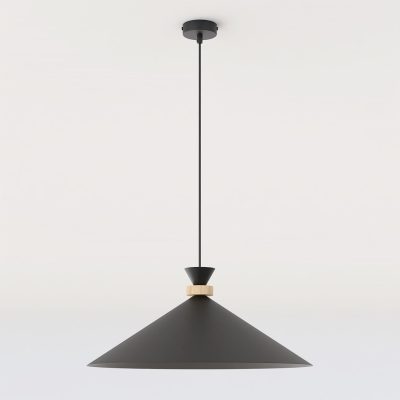 Emibig OLIVO 1L BLACK
A pendant light with a GX53 base: the light source is a flat disc instead of a pear-shaped bulb or a spotlight. €119.04
G13: replacing fluorescent tubes with LED tubes
The G13 is the base of the 26 mm fluorescent tube, the T8, with two pins at each end, in lengths of 60, 120 and 150 cm. T8 fluorescent tubes may no longer be placed on the EU market since 25 August 2023, because they contain mercury. An LED tube of the same length fits in the same fixture, but how you connect it depends on the ballast inside.
- In an old fixture with a starter and a magnetic ballast, you usually replace the starter with an LED starter or bridge that comes with the LED tube.
- In a fixture with an electronic ballast, you need an LED tube that works with it, or the fixture has to be converted so that the tube runs directly on 230 V.
Converting is work for an electrician. A converted fixture should get a clear label, so that nobody puts a fluorescent tube in it later. Often a new waterproof LED fixture for the garage or storeroom costs the same and is simpler.
Integrated LED: no base, but replaceable?
More and more fixtures no longer have a base: the LEDs sit on a circuit board in the fixture, powered by a driver. That allows flatter and smaller designs and often better optics. For a long time the drawback was that you threw the whole fixture away when it failed.
Since 1 September 2021 there are European rules on this. Under Article 4 of the ecodesign regulation 2019/2020, light sources and separate drivers in a fixture must be replaceable with commonly available tools and without permanently damaging the fixture, unless the manufacturer can technically justify why that is not possible. The buyer must be able to read this in the instructions and, for sales to consumers, on the packaging, at least as a pictogram. So with a fixture that has integrated LED, check the instructions to see what can be replaced.
If the LED cannot be removed from the fixture to test it, the whole fixture counts as the light source and gets its own energy label. More on this in the energy label for lighting.
Which bulbs may no longer be sold?
The European Union is taking bulbs off the market in stages: through the ecodesign rules because they use too much electricity, and through the RoHS directive because they contain mercury. What is already in a shop may be sold, and what you have at home you can simply keep using. No new ones are added.
| Bulb type | Base | No longer placed on the market since | Reason |
|---|---|---|---|
| Incandescent bulb | E27, E14, B22 | Gradually 2009–2012 | Ecodesign |
| Compact fluorescent bulb with integrated ballast | E27, E14 | 1 September 2021 | Ecodesign |
| Halogen linear lamp above 2,700 lm | R7s | 1 September 2021 | Ecodesign |
| Plug-in compact fluorescent lamp without ballast | G24, 2G11 and related | 25 February 2023 | RoHS (mercury) |
| T5 and T8 fluorescent tube | G5, G13 | 25 August 2023 | RoHS (mercury) |
| Halogen capsule | G9, G4, GY6.35 | 1 September 2023 | Ecodesign |
If you still use halogen bulbs, you mainly pay for it in electricity: a 50 W halogen spotlight uses about ten times as much as an LED spotlight giving the same light. What that saves per year is in what LED really saves.
How do you find the base without taking the bulb out?
On a fixture you already own, the base is usually printed on a sticker inside the shade or next to the lamp holder, together with the maximum wattage. For a new light, it is in the product details. If in doubt, unscrew the old bulb: the code is almost always on the base or on the rim of the reflector, and otherwise the shape of the pins and a ruler tell you enough.
Two checks before you order: the voltage (230 V or 12 V) and the space around the bulb. The base tells you what fits; the space tells you whether it fits in.
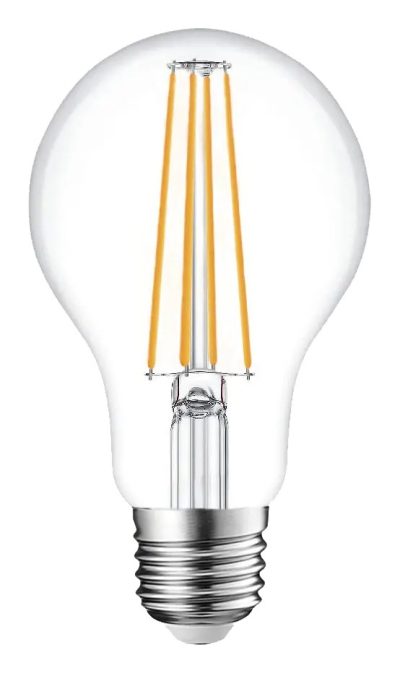
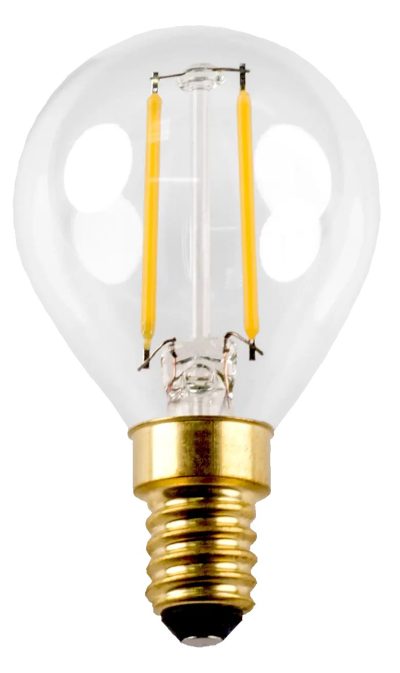
LED bulbs for the common bases
View allAn LED bulb for every common base, from E27 to the LED tube for a fluorescent fitting.
Frequently asked questions
Can I use an adapter to put an E27 bulb in an E14 lamp holder?
Adapters exist, but the bulb then sits higher and further out of the shade, and an E27 bulb is bigger and heavier than the fixture was designed for. In an open fixture with room to spare that can work; in a chandelier with candle sleeves or a closed glass shade it cannot. There are almost always LED bulbs with the right base that give just as much light.
Is a B22 base the same as an E27?
No. B22 is a 22 mm bayonet base: you push the bulb in and turn it a little until the two lugs lock. It is mainly used in the United Kingdom and in France. An E27 bulb does not fit it, nor the other way round.
Can I put a 12 V LED bulb on my existing transformer?
Sometimes. Check the transformer’s label for the minimum load and for a statement that it is suitable for LED. If the total wattage of your LED bulbs is below that minimum, you get flickering or cut-outs. A 12 V DC LED power supply solves this.
Why does my new LED bulb in a closed fixture fail so quickly?
Probably because of heat. An LED produces less heat than an incandescent bulb, but the electronics in the base cope poorly with heat. In a small closed fixture without ventilation, the temperature rises. There, choose a lower-wattage bulb or one that the manufacturer expressly declares suitable for closed fixtures.
Sources
- One month to go before most general lighting lamps are phased out (persbericht met uitfaseringstabel), LightingEurope (2023)
- Timetable and overviews for the phase out of lamps, licht.de (geraadpleegd 2026)
- Commission Regulation (EU) 2019/2020 laying down ecodesign requirements for light sources, Article 4 (replaceability), EUR-Lex, European Union (2019)
- Commission Delegated Regulation (EU) 2019/2015 with regard to energy labelling of light sources, Article 2 (definition of containing product), EUR-Lex, European Union (2019)
- Light sources: energy label and ecodesign requirements, Europese Commissie (geraadpleegd 2026)