You do not light a living room with one ceiling light but in layers: general light for the room, functional light where you read or work, and accent light on walls and objects. For an average living room of 20 m², licht.de counts on at least three and preferably five lights. Choose warm white with a colour rendering of at least Ra 80, make the lights at the seating area dimmable and put the layers on separate switches, so that you choose which light is on for each moment.
Why is one ceiling light not enough in the living room?
One light in the middle of the ceiling has to light the whole room and give good reading light at the same time. That does not work. If it is bright enough to read by, it is too bright to relax and you look straight into the light source from the sofa. If it is dimmed, the corners go dark and you read in your own shadow. Light from directly above gives faces harsh shadows under the eyes and nose.
Licht.de, the information platform of the German lighting industry, therefore advises at least three and preferably five lights for an average living room of 20 m², instead of the single light in the middle that used to be usual. The difference is not in the amount of light, but in its distribution: light in the places where you use it, and light on the walls so that the room looks more spacious and calmer.
Which layers does good living room lighting have?
Lighting designers work with three layers. Each layer has its own task, and the trick is to be able to switch them independently of each other.
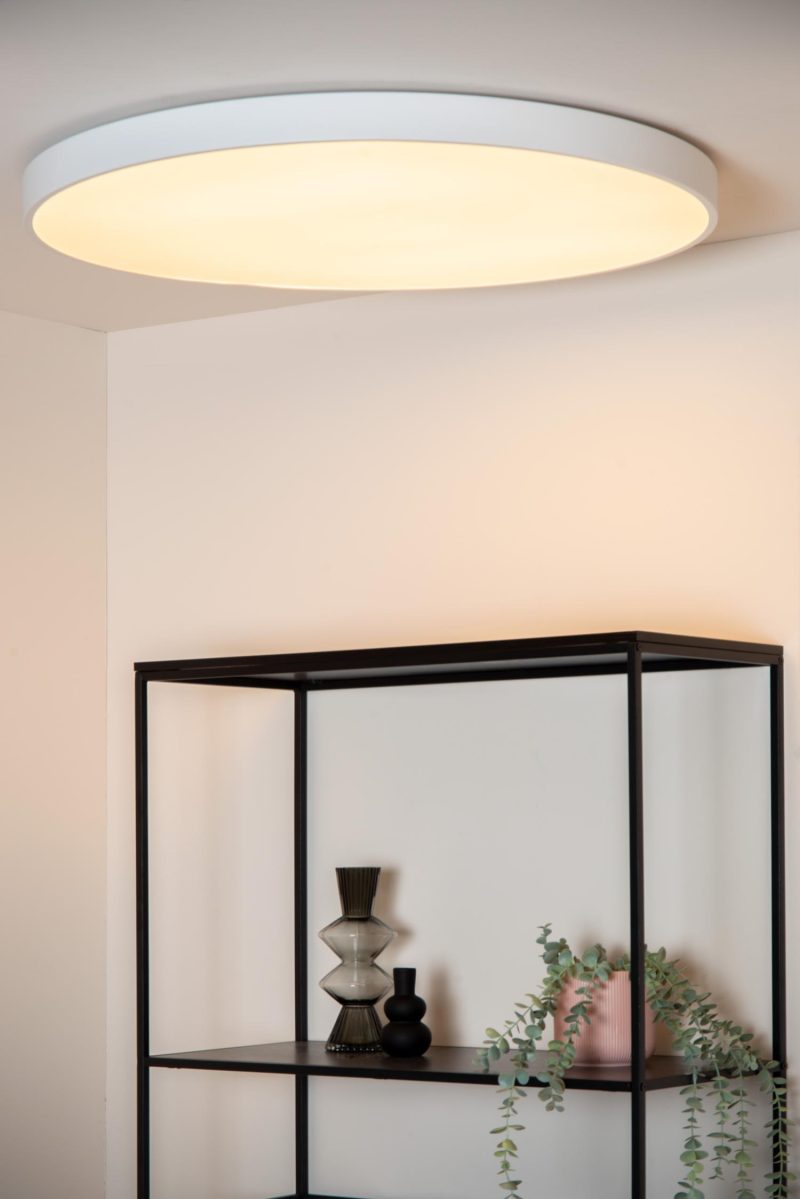
- General light is the light with which you walk safely through the room and find things. That can be a ceiling light, but also indirect light against the ceiling, a row of wall lights or a line of light in a lowered ceiling.
- Functional light is light for a task: reading, a jigsaw puzzle, needlework. It is direct and adjustable, and it is close to the place where you need it.
- Accent light gives depth: a lit wall, a cabinet, a painting or a plant. It is the light that makes a room inviting in the evening.
Licht.de sums up the difference between direct and indirect light briefly: direct light is needed for demanding tasks such as reading and writing, indirect light is experienced as pleasant. A living room needs both.
| Layer | Purpose | Typical lights | Control |
|---|---|---|---|
| General | Orientation, cleaning, tidying up | Ceiling light, indirect light, line of light, wall lights | At the door, dimmable if desired |
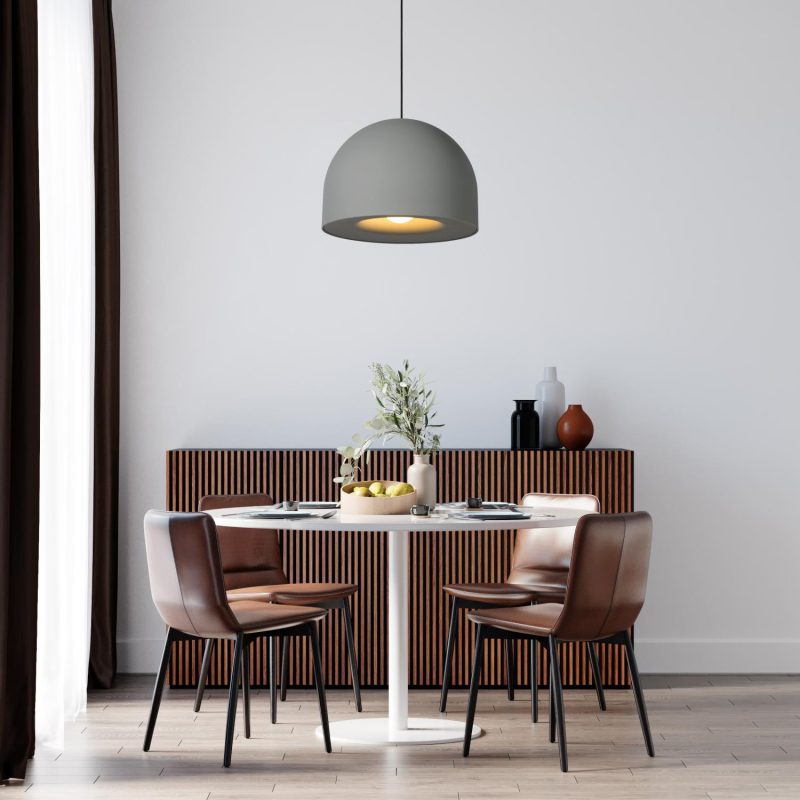
| Functional | Reading, needlework, a game at the table | Reading lamp, adjustable floor lamp, desk lamp, pendant light above the table | On the lamp itself or separately, dimmable |
| Accent | Depth, atmosphere, art and cabinets | Up-and-down wall lights, picture lights, spotlights along the wall, LED strips in cabinets | Together on one switch or in a lighting scene |
How many light sources does a living room need?
Start with the way you use the room, not with the number of square metres. A living room usually consists of a few zones: the seating area, the TV area, perhaps a dining area, a cabinet or a wall you want to show off, and the walkway. Each zone gets at least one light source, the seating area usually two or three.
The three to five lights from licht.de are a minimum for 20 m². A larger living room with a dining area quickly comes to seven or eight light sources, and that is normal. How many lumens the room needs in total is worked out in how many lumens per room; this article is about the distribution.
How do you light the seating area?
The seating area is where you sit the longest, and where poor light bothers you most. Two rules do most of the work here: the light comes from the side or diagonally from behind, and you do not see the light source.
Reading light next to the sofa or armchair
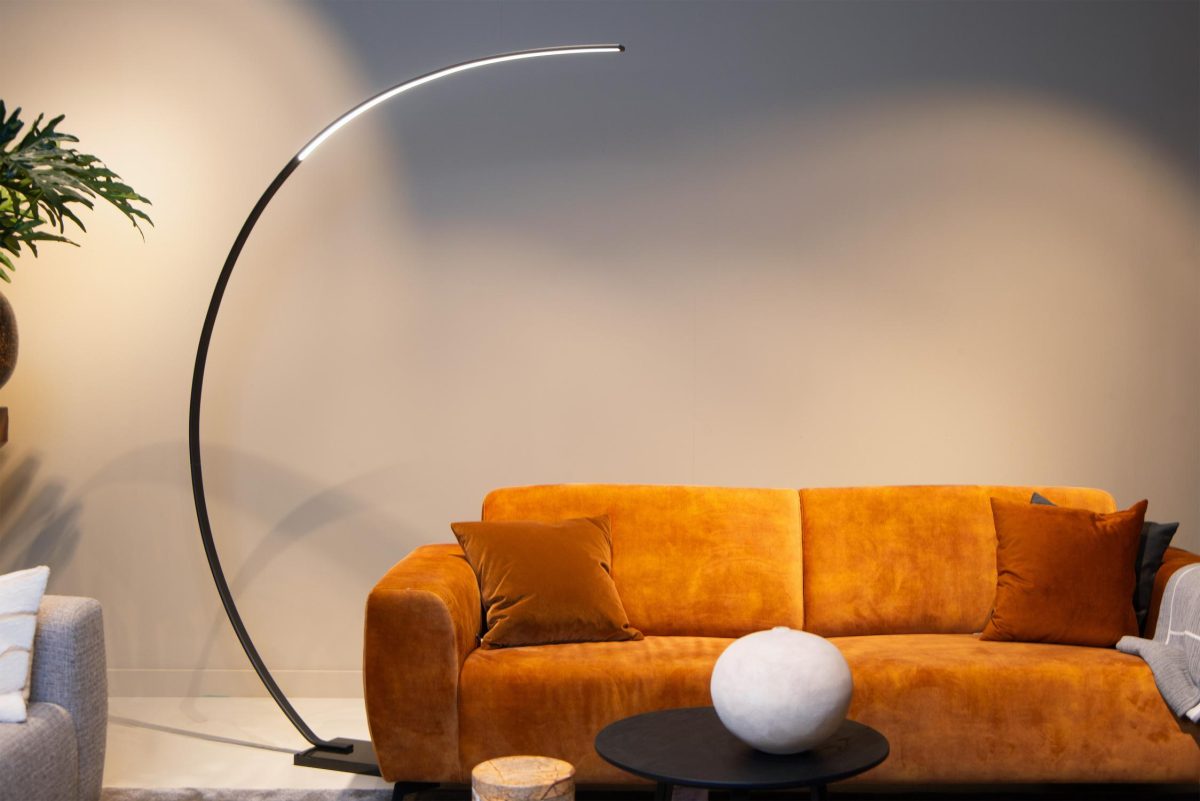
Place a floor lamp with an adjustable head or a shade next to the chair, slightly behind your shoulder. That way the light falls on the book and your head and hand cast no shadow. Position the lamp so that the bottom edge of the shade is roughly at your eye level when you are seated, so that you do not look into it; at a normal seat height, that is around 110 to 125 cm above the floor. A floor lamp with a long arm that reaches over your shoulder from the side also works with a sofa that stands against the wall.
Eyes become more demanding with age. Licht.de states that someone of 60 needs about twice as much light as someone of 20 for the same task. A dimmable reading lamp with some reserve is therefore not a luxury: you set it low for TV and at full for a book with small print.
Table lamps and floor lamps for atmosphere
A table lamp on a side table or a windowsill gives light at eye level and fills the corner. Lamps with a fabric or opal glass shade radiate in all directions and are pleasant to look at; lamps with a bare bulb quickly cause glare. Licht.de recommends making all the lights at the seating area dimmable, two and preferably three.
How do you light the TV wall without reflections?
Licht.de gives two rules for the television: aim all lights so that they do not cause distracting reflections on the screen, and add a little light to the wall around the set. That second point is often forgotten. A bright screen against a dark wall creates a large contrast, and your eyes constantly switch between the two. Soft, diffuse light next to or behind the screen makes watching more relaxed.
Reflections are caused by lights that face the screen and mirror in your direction, usually spotlights or lights behind or above the sofa. A simple test: switch the screen off, sit in your usual place and look at which lights you see in the black glass. Those lights will cause a reflection later.
How do you use accent light on walls, cabinets and art?
A room with light walls feels larger than a room in which only the floor is lit. In its explanation of the European workplace standard, licht.de writes that bright rooms give an open atmosphere and, especially with small floor plans and low ceilings, look larger and less cramped; at home it works the same way. Wall lights with light upwards and downwards, spotlights along the wall or a line of light along the ceiling bring the walls into play.
Lighting a painting
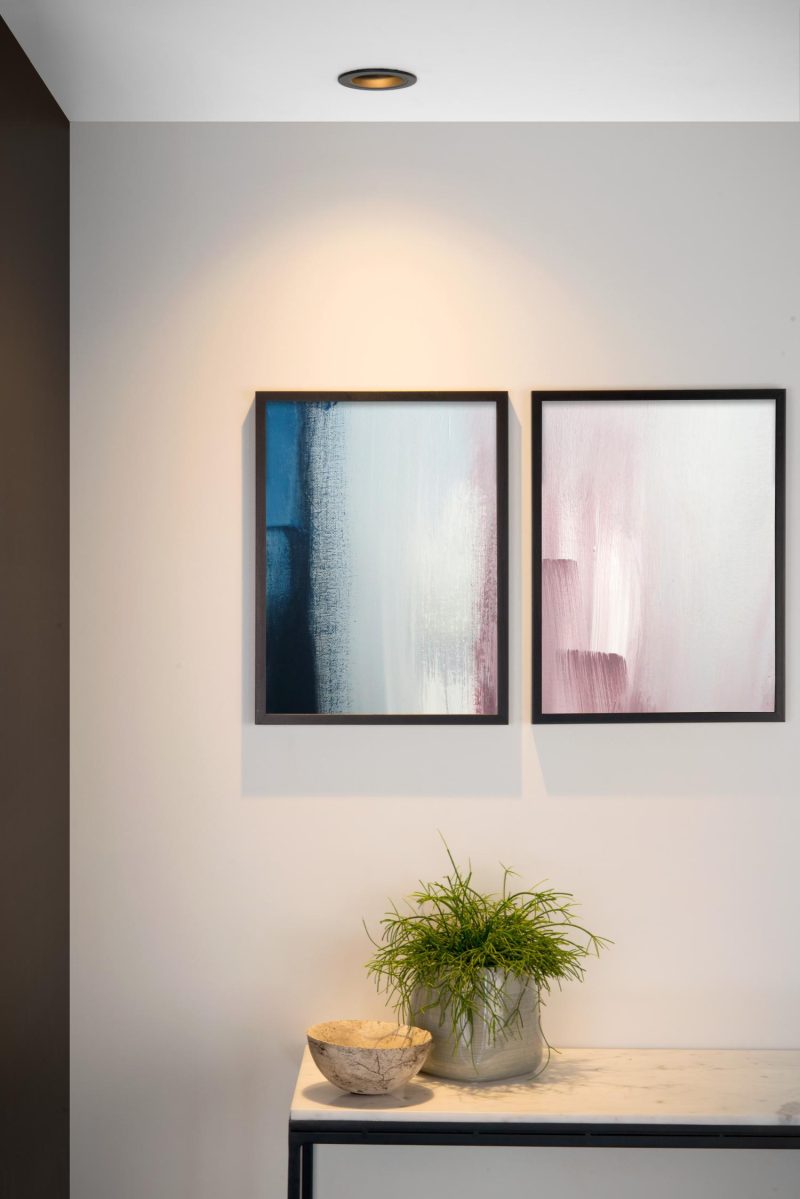
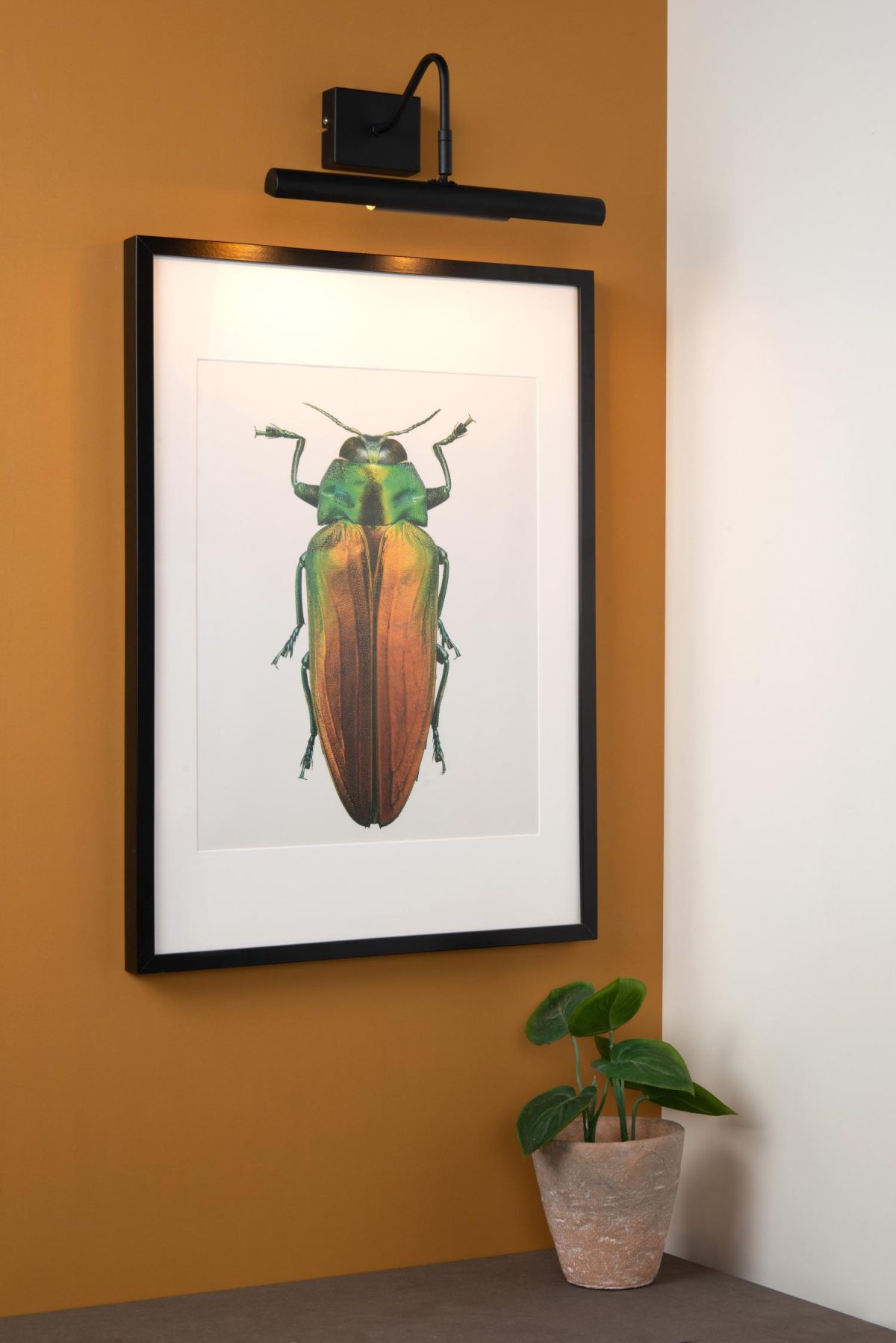
For object lighting, licht.de distinguishes narrow beams of 10 to 30 degrees, for sculptures and small paintings, and wide beams of 30 to 60 degrees, for large canvases. Choose a light source with high colour rendering, otherwise the colours of the work lose their authenticity. A picture light above the frame or an adjustable spotlight in the ceiling both work. A rule of thumb from art lighting is an angle of about 30 degrees to the wall: steeper gives a long shadow under the frame, flatter tends to give a reflection in glass or varnish that you see from the sofa.
Cabinets and alcoves
An LED strip in a profile behind a skirting or under a shelf gives an even line of light without visible dots. How to choose the right strip is explained in choosing an LED strip.
Switching and dimming: how do you set up the controls?
The best lights do not help if you have to switch them on one by one. Plan the controls per layer. At the door goes the switch for the general light and, separately, the one for the accent light. Floor and table lamps are preferably connected to a switched socket: a socket controlled by a wall switch, so that you switch the mood lights on together from the door. During a renovation this is cheap to provide; afterwards, smart plugs or smart bulbs are an alternative.
Dimmability is almost always worth it in the living room. Pay attention to the combination of LED bulb and dimmer; how to avoid flickering and buzzing is explained in dimming LED lamps. Licht.de also points to lighting control systems with which you can save scenes: one button for TV, one for reading, one for cleaning.
Which colour temperature do you choose for the living room?
For living spaces, licht.de advises warm white with a colour rendering of at least Ra 80. In practice, 2700 K is the standard for general and mood lighting, and a reading lamp can go to 3000 K. Keep the lights you see together in the same colour temperature: a 4000 K ceiling light next to 2700 K table lamps makes the room restless. If you want to know which kelvin value suits which atmosphere, use the colour temperature calculator or read choosing a colour temperature.
Which mistakes do you see most often in the living room?
- Everything on one switch, so that the light is always either too bright or too dark.
- A grid of spotlights in the ceiling that mainly lights the floor. Licht.de calls directed light on the floor of little use; spotlights belong at the wall. See planning spotlights.
- A reading lamp that is too high or directly above your head, with a shadow on the book or glare.
- Different colour temperatures from lamps of different brands and generations mixed together.
- A dark TV wall, with a bright screen in a black area.
- Bare bulbs at eye level without a shade or diffuser.

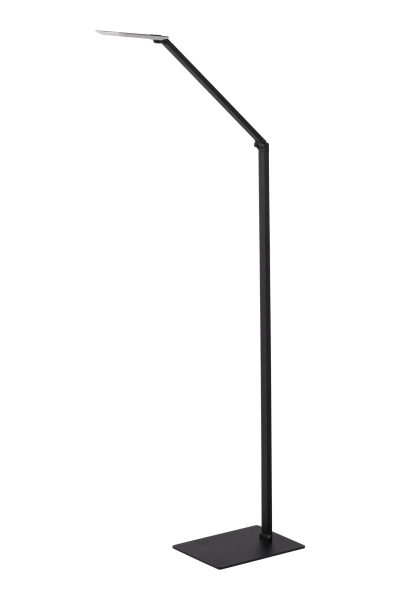
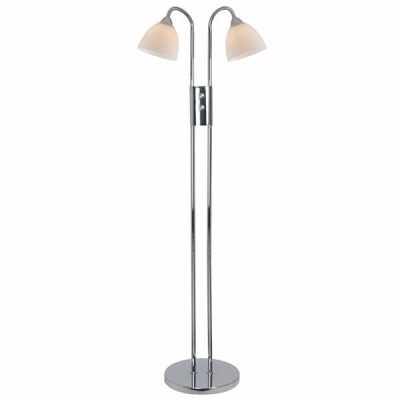
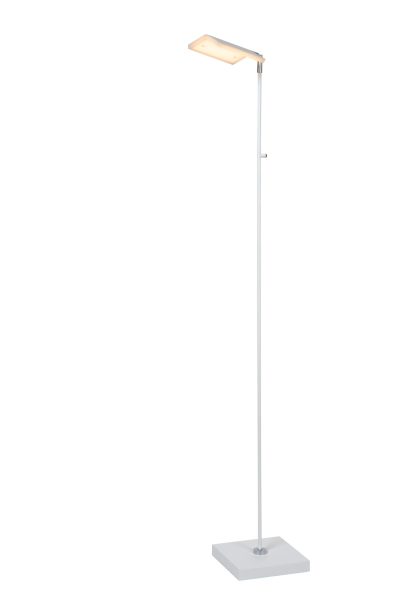
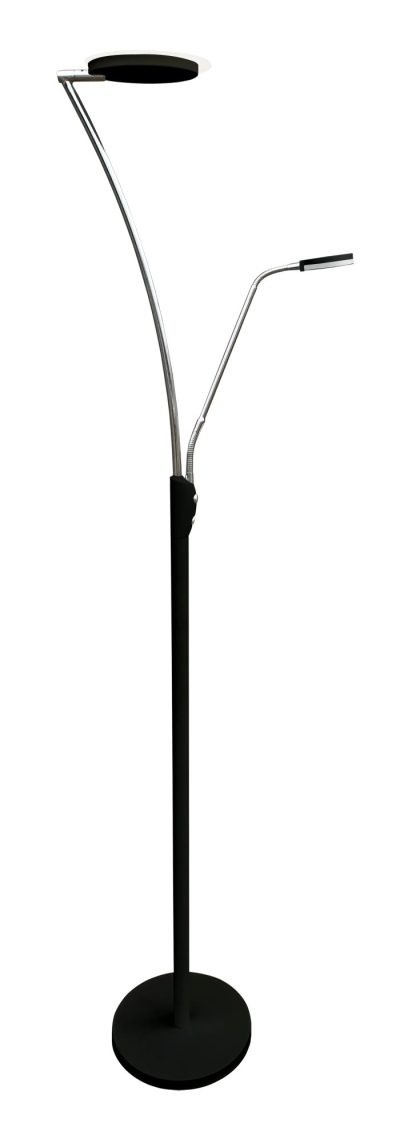
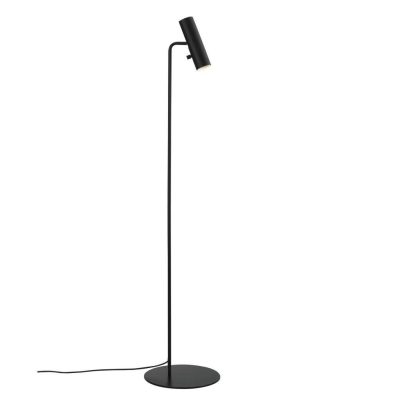
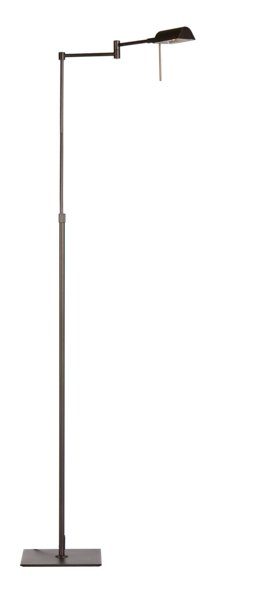
Reading lamps and adjustable floor lamps for the seating area
View allWith an adjustable head or arm, and most of them dimmable.
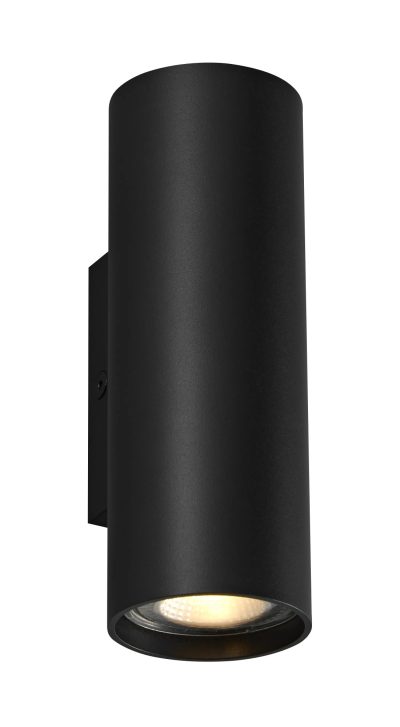
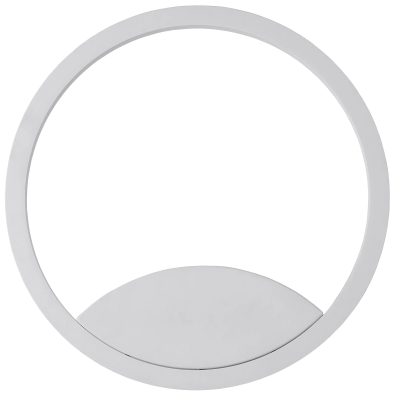
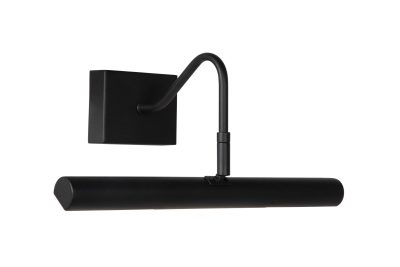
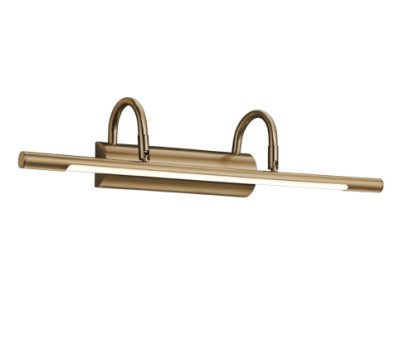
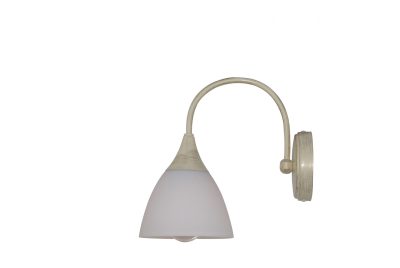
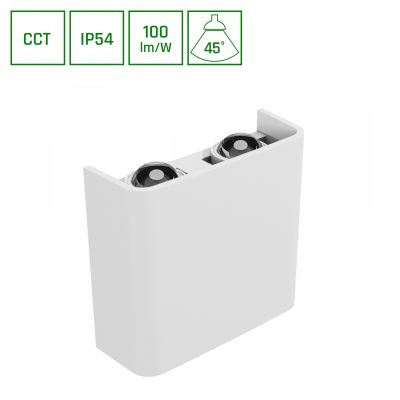
Wall lights and picture lights for accents
View allLight up and down along the wall, indirect light and lighting above a painting.
Frequently asked questions
How many lumens does a living room need?
That depends on the floor area, the colour of the walls and ceiling and what you do in the room. Work it out with the lumen calculator. Then divide the total over the layers: most of it over general and accent light, and a little extra at the reading spot.
At what height do you hang a wall light in the living room?
There is no standard for it. In practice, a wall light in the living room hangs so that you do not look into it when standing, around 160 to 180 cm, or lower if it belongs to a seating area and you mainly see it when seated. With up-and-down wall lights, the height also determines how far the beams of light reach on the wall.
Can an LED strip replace the general light in the living room?
A line of light in a lowered ceiling or a curtain pelmet can provide a large part of the general light, if the strip has enough lumens per metre and the ceiling is light in colour. For reading and tasks you still need a directed lamp as well.
What is a switched socket?
A socket controlled by a wall switch. A floor or table lamp that you plug into it goes on and off with that switch. That way you switch the mood lights on together from the door, without walking through the room. Have the connection made by an electrician.
Are smart bulbs a good idea in the living room?
They mainly solve the control problem: scenes, groups and dimming without new wiring. Do note that smart bulbs should not be behind an ordinary dimmer, and that the wall switch has to stay on to keep them reachable.
Sources
- Wohnzimmer: Licht für den Wohnbereich, licht.de (ZVEI)
- Licht für Wohnräume (presentatie bij licht.wissen 14), licht.de (ZVEI) (2020)
- Auswahl der Komponenten: Tipps für die private Lichtplanung, licht.de (ZVEI)
- licht.forum 60: Leitfaden DIN EN 12464-1:2021-11 (heldere ruimtes), licht.de (ZVEI) (2024)