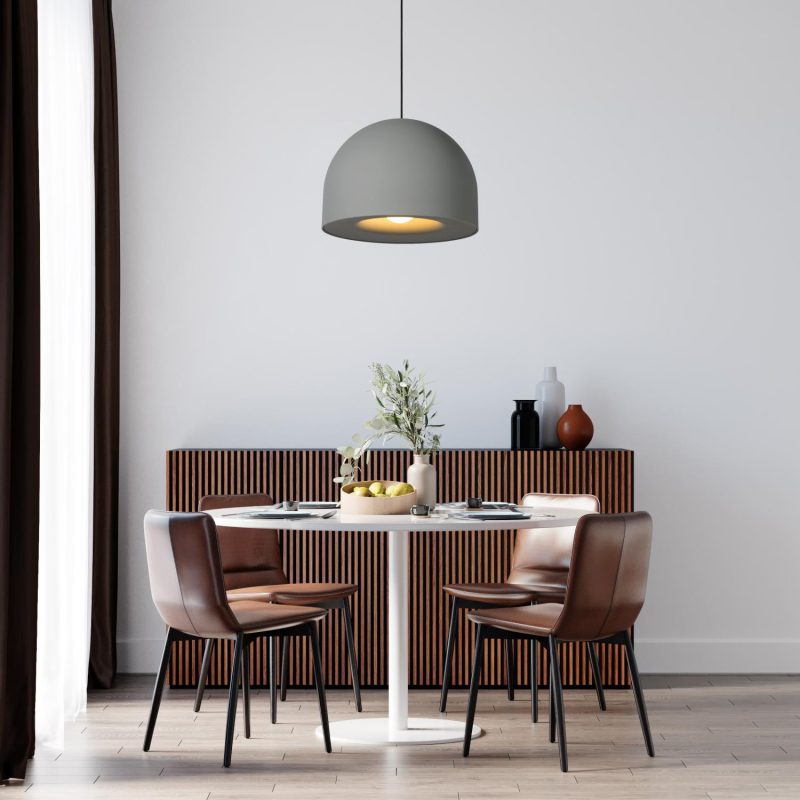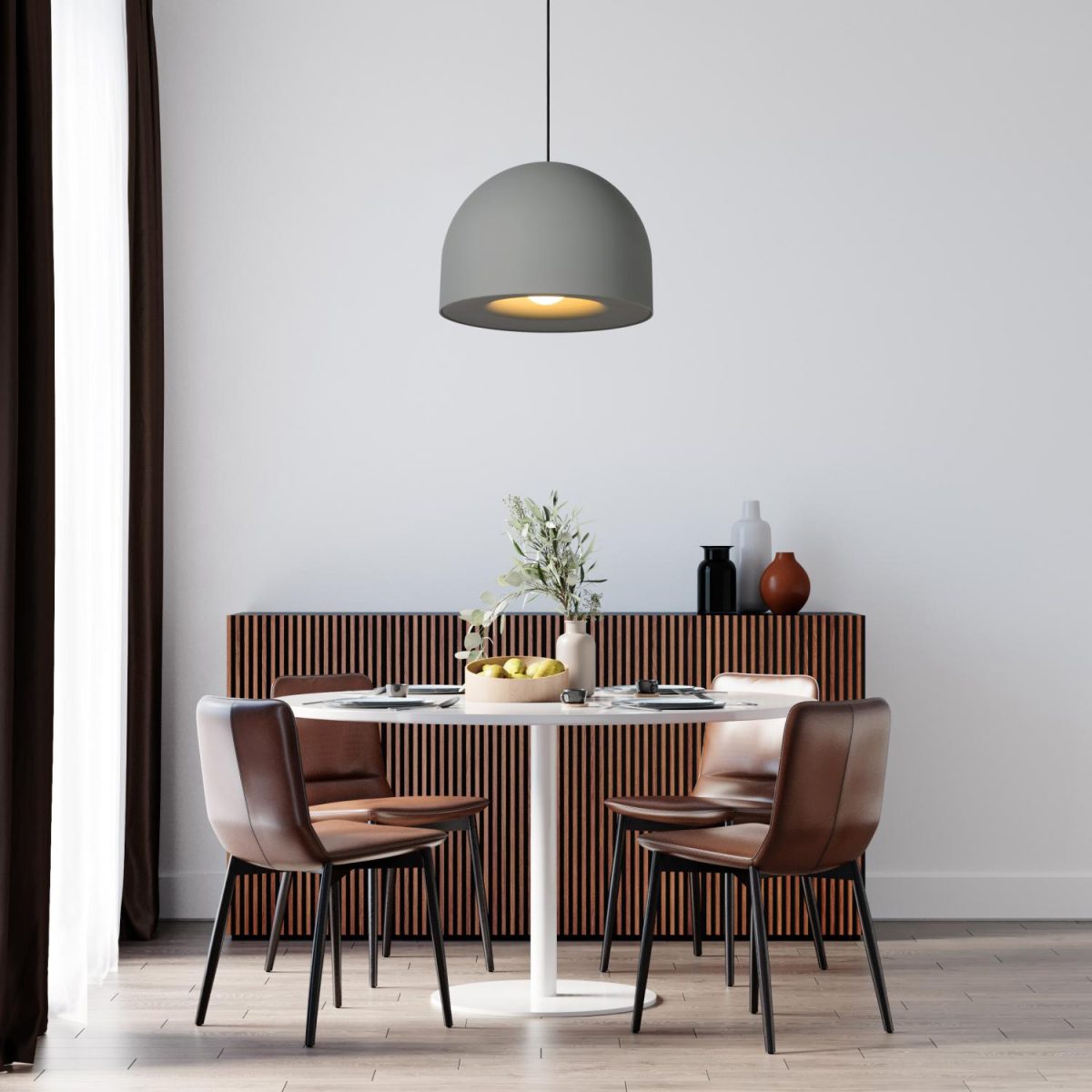
Hang the bottom of a pendant light 60 to 75 cm above the tabletop: low enough not to dazzle anyone, high enough to see freely across the table. A single light is a third to half as wide as the table. Above a table of 160 cm or longer, use a linear pendant or two to three lights that together cover about two thirds of the table length, with at least 30 cm clear at each end. Choose warm white around 2700 K, good colour rendering and a dimmer.
How high should a light hang above the dining table?
Allow 60 to 75 cm between the tabletop and the bottom of the light. Licht.de, the information platform of the German lighting industry (ZVEI), gives 60 cm as a guide: at that height an open shade dazzles nobody and the view of the person opposite stays clear. In practice most lights end up between 60 and 70 cm, and a large, light shape can go up to 75 cm.
Those figures follow from the way you sit at a table. A tabletop is usually at 74 to 76 cm, and the eyes of a seated adult are roughly 40 to 50 cm above it. If the bottom edge of the light hangs a little way above that, you look under the light at the person opposite and do not see the light source itself. Hang it higher and the shade moves out of your field of view, but you look into the bulb more easily, and the light spreads across the whole room instead of over the table.
When should you go outside 60 to 75 cm?
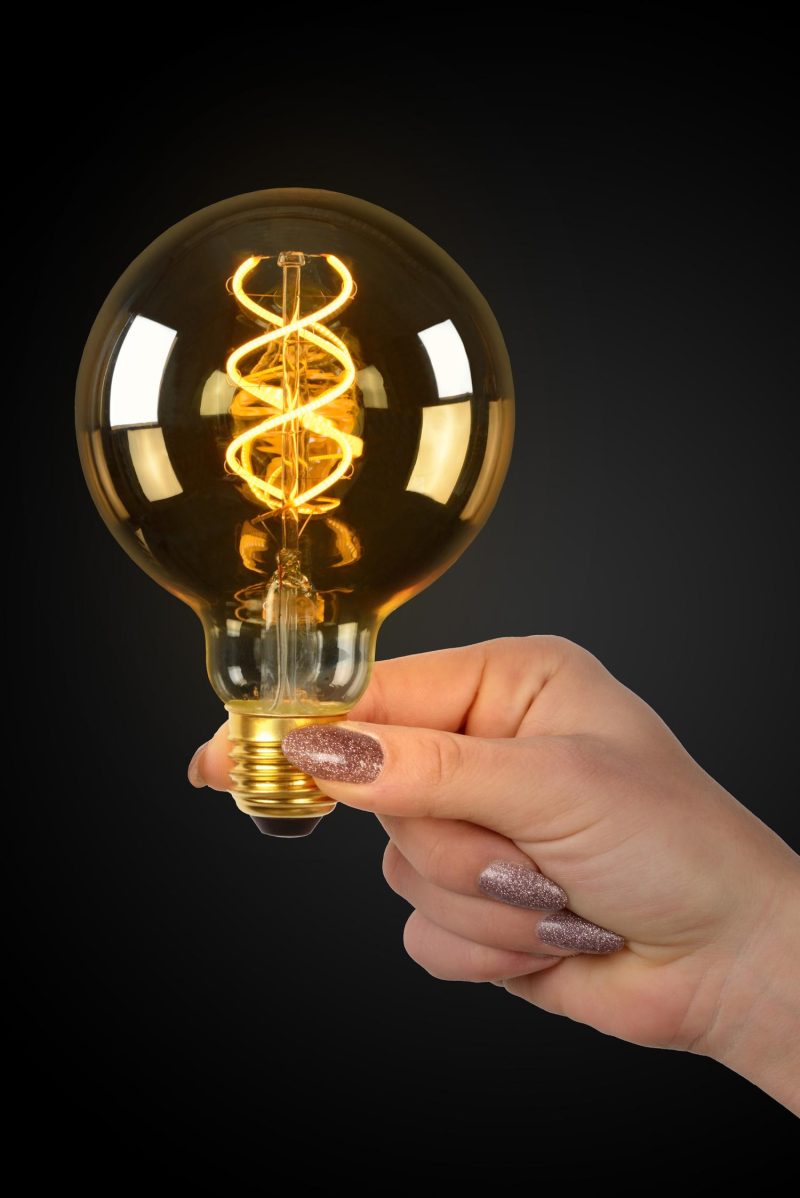
- Open shade or clear glass: stay at the low end, around 60 cm, and choose a shade deep enough to screen the bulb. A bare filament bulb at eye level is glaring, however cosy it looks.
- Large, airy shape (wirework, rattan, a chandelier): this can hang a little higher, up to 75 cm, because you look through it.
- High chairs or tall diners: add 5 cm.
- Homework or working from home at the dining table: licht.de notes that 60 cm is then actually too high. A height-adjustable pendant solves this: low for tasks, higher for dinner.
- High ceilings: a ceiling of 3 m or more changes nothing about the distance to the table. The cable gets longer; the light stays at the same height above the top.
Always measure from the tabletop, not from the floor. With a bar table or a tall dining table of 90 cm, the whole calculation moves up with it.
How high and how big above your table?
Type of shade
How big should the light be relative to the table?
For a single light above a round or square table, a diameter of a third to half of the table width is a good starting point. For a round table of 120 cm, that gives 40 to 60 cm. Leave at least 15 cm on each side between the edge of the light and the edge of the table: anyone standing up moves their head above the table edge and should not hit a light there.
The most common mistake is a light that is too small. A 25 cm shade above a 120 cm table lights a circle in the middle and leaves the plates at the edge in semi-darkness. Too big is possible as well: an 80 cm shade above a 100 cm table hangs out over the chairs and dominates the room.
Visual weight counts too. A solid 50 cm metal dome looks heavier than a wire light or a rattan globe of the same size. If you are torn between two sizes, choose the smaller one for a solid shade and the larger one for an open, transparent shape.
| Table | Light diameter | Note |
|---|---|---|
| Round or square 80–90 cm | 30–45 cm | Bistro table or table for two |
| Round 100–110 cm | 35–55 cm | Classic round family table |
| Round 120 cm | 40–60 cm | With an open shape, 60 cm is fine |
| Round 140–150 cm | 50–70 cm | Or a cluster of three smaller lights |
| Square 140 × 140 cm | 50–70 cm | Or four small lights in a square |
One light, several lights or a linear pendant above a long table?
From a table length of about 160 cm, one round light is usually no longer enough: the middle is bright, the ends are dark. Licht.de advises matching the shape of the light to the table, and there are three common ways to do that.
A linear or elongated pendant light
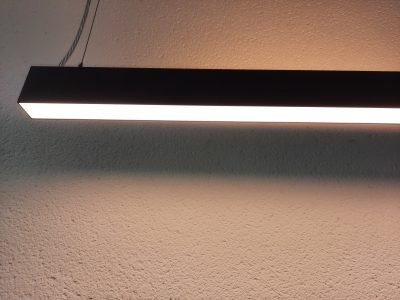
A linear light follows the shape of the table and gives the most even light along its whole length. Choose a length between half the table and the table length minus 60 cm; around two thirds looks the most balanced. For a 200 cm table, that is 100 to 140 cm, with 130 cm as a good middle.
Two or three separate pendant lights in a row
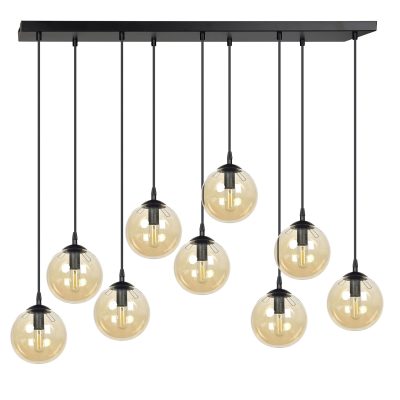
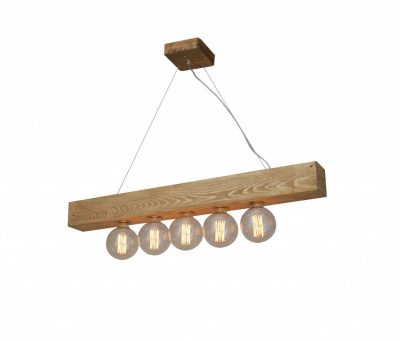
Licht.de writes that several lights with small shades give a lighter look, in a row or in a circle above the table. Let the row together cover about two thirds of the table, with 15 to 25 cm between the shades and at least 30 cm clear at each end. Above a 200 cm table, three 30 cm lights with their centres about 50 cm apart are a classic solution.
One large light with several arms
A chandelier or a light with several arms can also carry a long table, as long as its span stays in proportion to the length. Watch the width: more than half the table width soon becomes too much.
Always hang the lights above the centre of the table, not above the centre of the room. If the connection point is in the wrong place, there are lights that can be hung off-centre with a second suspension point, ceiling canopies for several cables, or a track or cable system. For an extending table, licht.de calls lights you can move, on a track or on a cable or rod system, a smart solution. You can read more in track lighting explained.
| Table length | Linear pendant length | Two lights | Three or four lights |
|---|---|---|---|
| 160 cm | 80–100 cm | 2 × 35–40 cm, centres ± 60 cm | Tight: 3 × 20 cm |
| 180 cm | 90–120 cm | 2 × 40–45 cm, centres ± 72 cm | 3 × 25 cm, centres ± 47 cm |
| 200 cm | 100–140 cm | 2 × 40–45 cm, centres ± 86 cm | 3 × 30 cm, centres ± 51 cm |
| 220 cm | 110–160 cm | 2 × 45 cm, far apart | 3 × 35 cm, centres ± 56 cm |
| 240 cm | 120–180 cm | Too far apart | 3 × 35–40 cm or 4 × 25 cm |
| 300 cm | 150–240 cm | Too far apart | 3 × 45 cm or 4 × 35 cm |
Which colour temperature and which colour rendering above the dining table?
Warm white, around 2700 K, is the standard for a dining table. It suits the evening and makes skin tones and wood warmer. If you want even softer light for dinner, choose a bulb that can drop to 2200 K, or a dim-to-warm bulb that automatically gets warmer as you dim it. Neutral white at 4000 K above a dining table feels like an office and makes food look less appetising. You can read more about Kelvin in choosing a colour temperature.
Colour rendering is at least as important. Licht.de asks for an Ra of at least 90 at the dining table, while 80 is often enough in the rest of the house. Low colour rendering makes tomatoes look brownish and lettuce dull. The packaging gives it as Ra or CRI; what the number means is explained in colour rendering (CRI) explained.
How much light do you need above the table?
The table should be brighter than the rest of the room, licht.de writes; that way it draws attention and the dining area feels like a zone of its own. How many lumens that takes depends heavily on the shade. A closed metal shade sends almost everything onto the tabletop, while an opal glass globe also spreads its light over the ceiling and walls. Work out the room with the lumen calculator and, above the table, go for a little too much rather than too little, because with a dimmer you can always turn it down.
Why does the light above the table get its own dimmer?
Licht.de recommends that all lights in the dining room can be switched and dimmed separately. The table is used for much more than eating: homework, a board game, sorting receipts. Full power for tasks, dimmed for dinner, and the rest of the room (spotlights, wall lights) on its own switch, so that the table can stand out against a calm background.
When dimming, look at the combination of bulb and dimmer: not every LED bulb works with every dimmer, and a poor combination causes flickering or humming. How to avoid that is explained in dimming LED bulbs.
Which mistakes do you see most often above a dining table?
- The light hangs above the centre of the room instead of above the centre of the table. The ceiling point then dictates where your furniture goes.
- Hung too high, at 90 cm or more, so that the light mainly lights the ceiling and the eyes of whoever is seated.
- Too small for the table: one 25 cm shade above a table for six.
- One round light above a long table, leaving the ends dark.
- Cool white light or bulbs with low colour rendering.
- Mixed colour temperatures in a row of lights, because there are three different bulbs in the lamp holders. Buy them as a set, of the same type.
- No dimmer, so the table is either too bright or too dark.
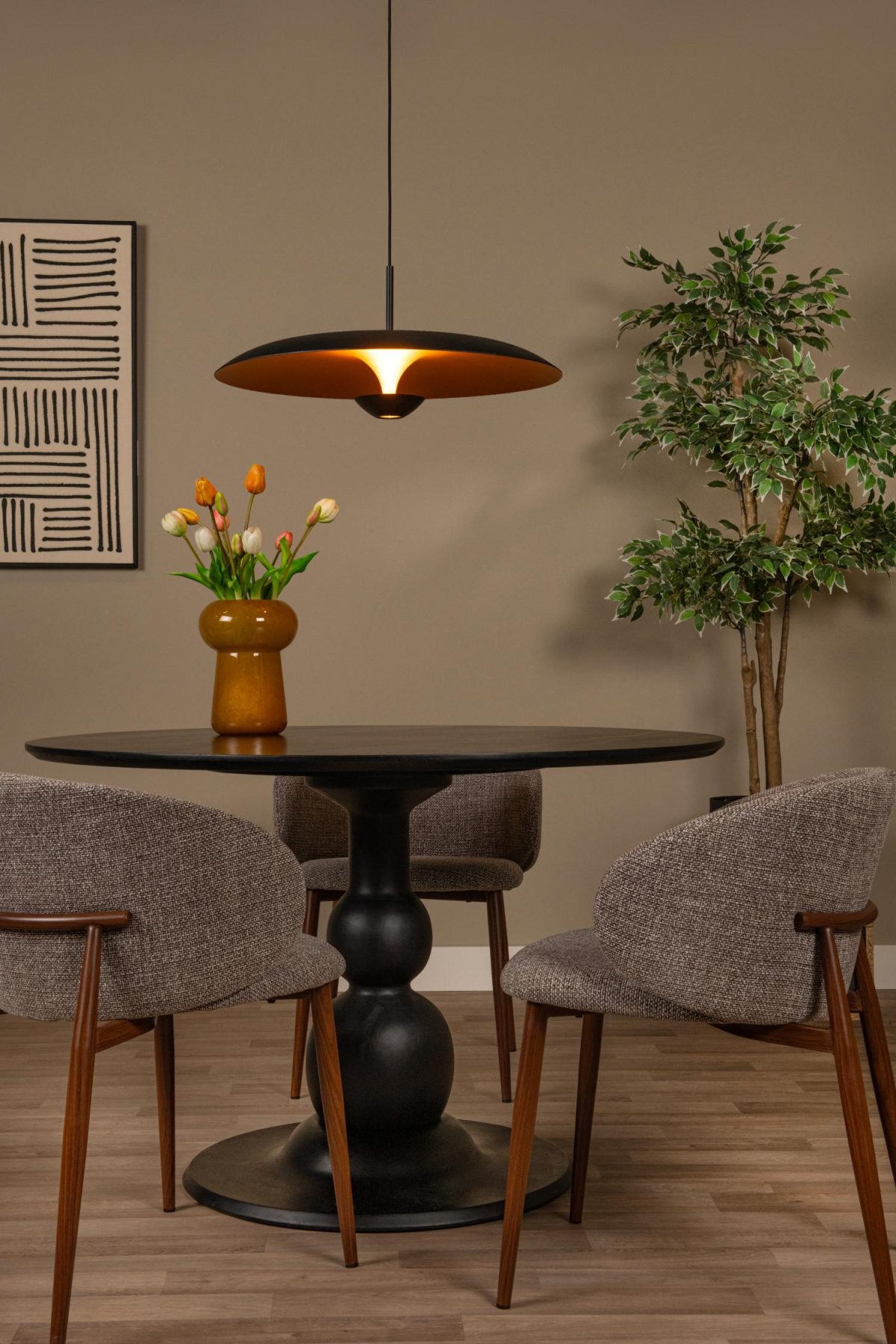
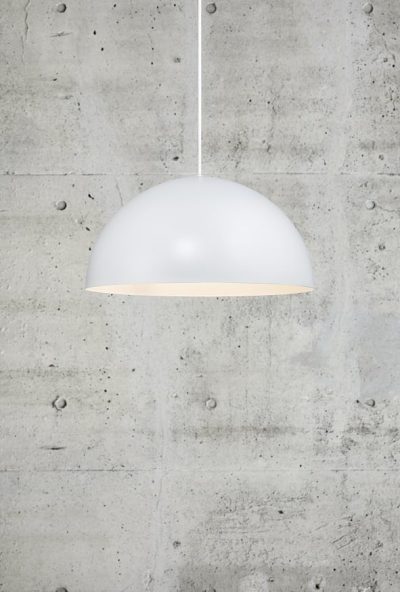
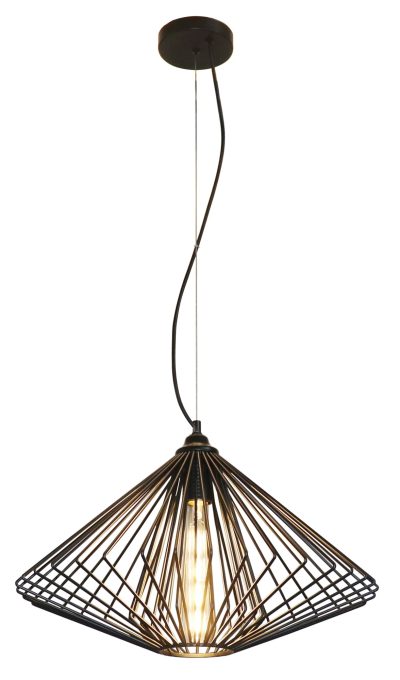
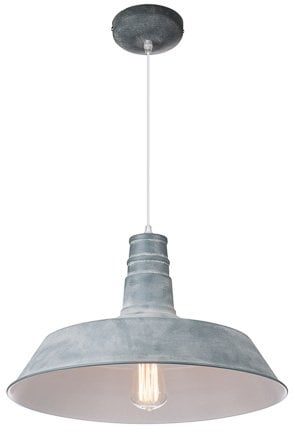
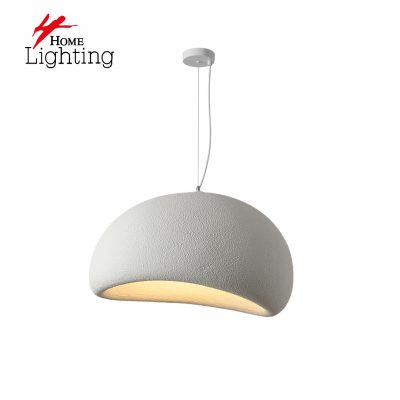
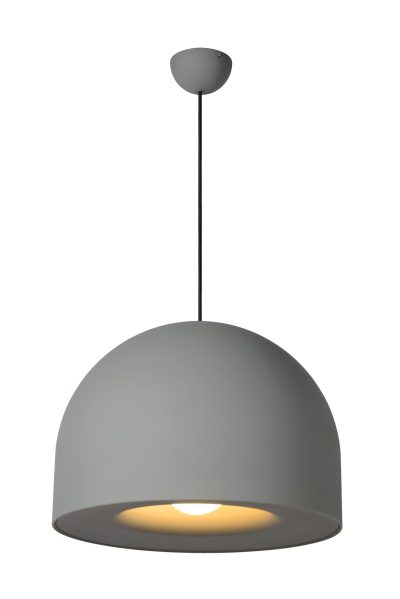
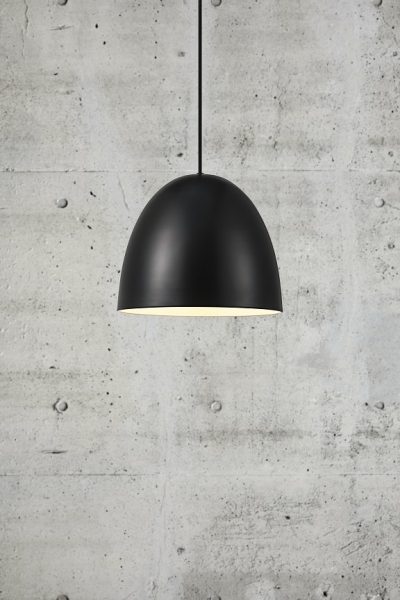
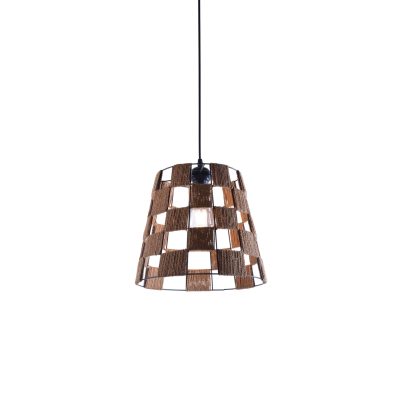
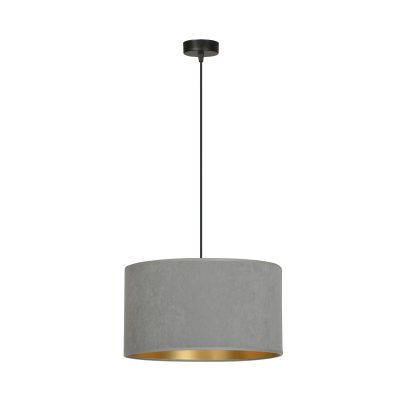
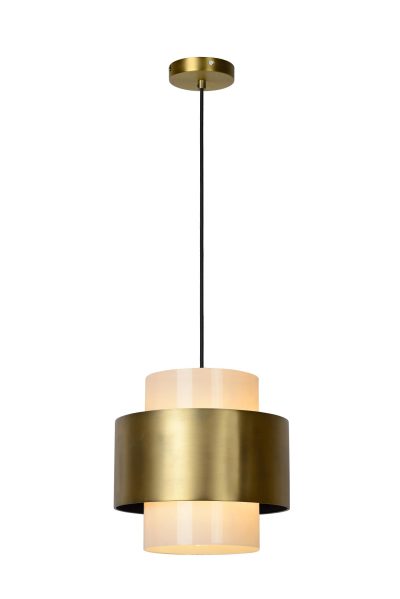
One pendant light for a round table of 100 to 140 cm
View allDiameters of 40 to 60 cm: a third to half of a table of 100 to 140 cm.
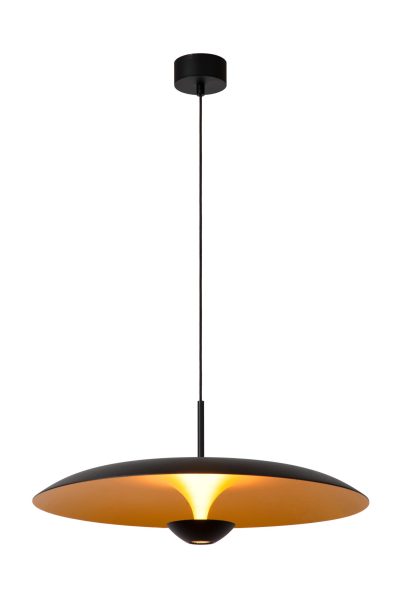
Linear pendants and multi-light pendants for a table of 180 to 220 cm
View allBetween 104 and 120 cm long: two thirds of a table of 160 to 180 cm, the lower limit for a table of 200 to 220 cm.
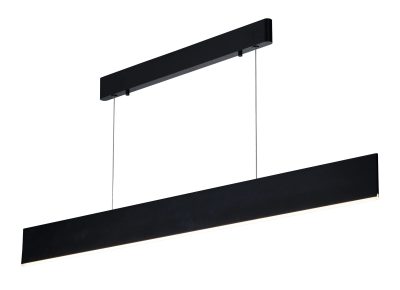
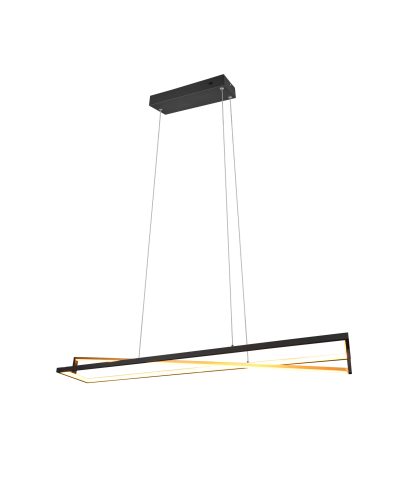 Trio Lighting Edge pendant lamp dimmable adjustable color temperature matte black
The Trio Edge is 118.5 cm long, dimmable and has an adjustable colour temperature: warm for dinner, more neutral for homework. Above a table of 180 to 200 cm it follows the two-thirds rule. €285.11
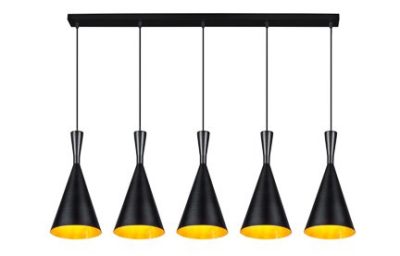
Separate pendant lights of 25 to 35 cm to hang three in a row
View allThree 30 cm lights take up about 130 cm including the gaps: right for a 200 cm table.
Frequently asked questions
How high should a pendant light hang above a kitchen island or a bar?
Above a worktop where you stand, the light usually hangs a little higher than above a dining table: 70 to 85 cm above the top, so that you do not look straight into it when standing upright. If you sit at the island on bar stools, the 60 to 75 cm of the dining table applies again. The details are in kitchen lighting.
Can I use a pendant light above an extending table?
Yes, but then choose a set-up that can move with it, such as a track or a cable system with sliding pendants, or a linear pendant that stays in proportion when the table is closed. Licht.de explicitly mentions movable lights here as a smart solution.
My ceiling connection is not above the table. What now?
You have three options: a light you can hang off-centre (with a second hook in the ceiling, the cable running at an angle or along the ceiling), a ceiling canopy from which several cables leave at different points, or a track. Moving the connection point is the tidy solution during a renovation, but leave that to an electrician.
Should all the lights above the table have the same colour temperature?
Yes. Even small differences, such as 2700 K next to 3000 K, are immediately visible side by side. Buy the bulbs for a row of pendant lights as one set, of the same type and from the same manufacturer.
How high above a low coffee table?
A coffee table is not a dining table: you do not sit around it looking across, but you do walk past it. A pendant light above a coffee table therefore usually hangs higher, so that nobody bumps into it when standing up. A floor lamp next to the seating area is often the better choice; see living room lighting.
Sources
- Esszimmer: Licht für den Esstisch, licht.de (ZVEI)
- Lichtrezepte für die Küche, licht.de (ZVEI) (2024)
- Licht für Wohnräume (presentatie bij licht.wissen 14), licht.de (ZVEI) (2020)