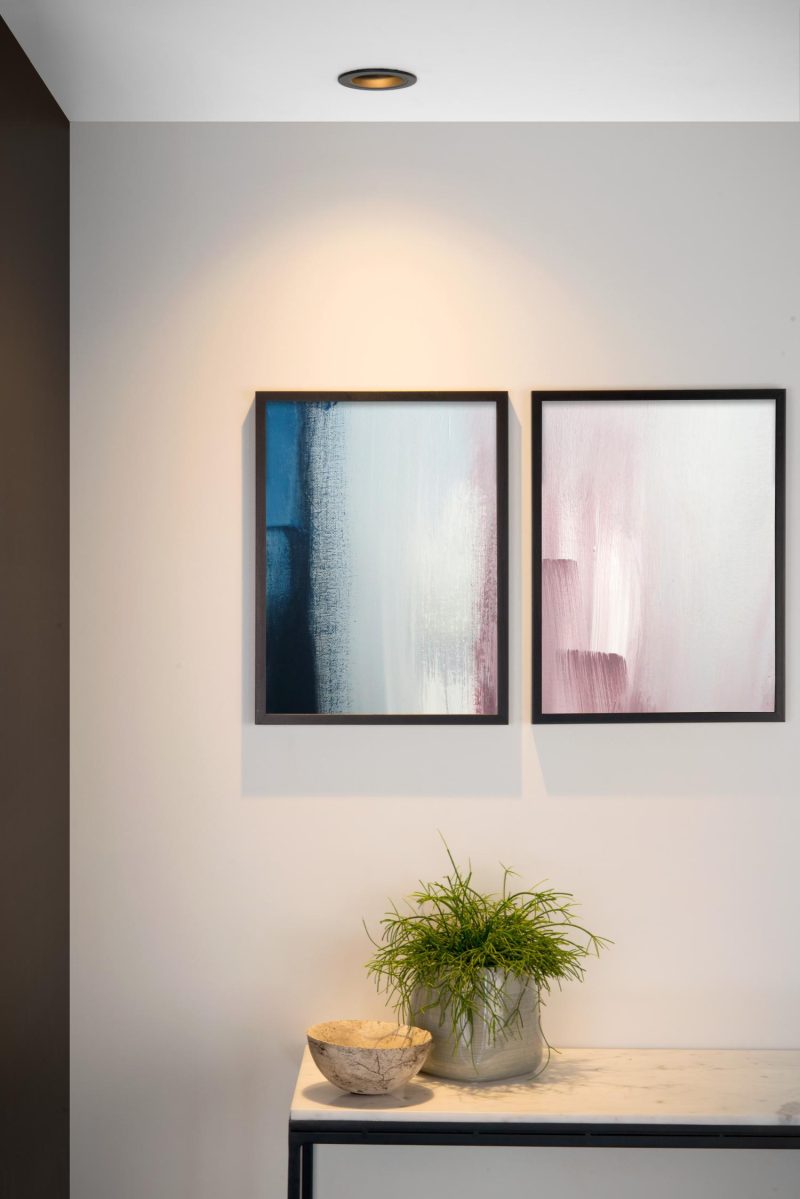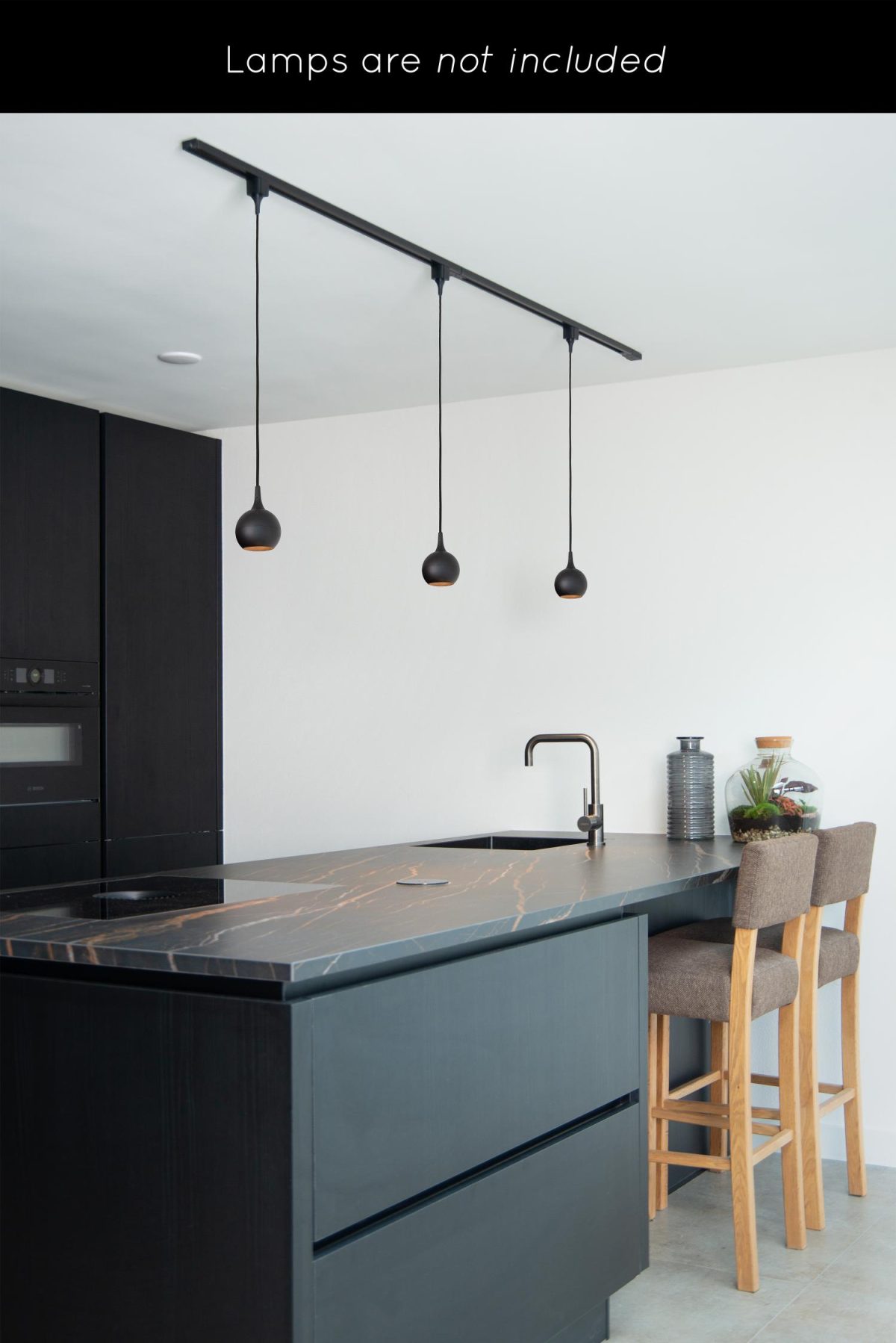
Track lighting is a power track on the ceiling onto which you click and slide spotlights and pendant lights. A 1-phase track at 230 V switches all lights together and is enough in most homes; a 3-phase track has three circuits that you can switch or dim separately. A 48V track runs at low voltage behind a driver, often with magnetic spotlights and control via an app. Adapters only fit the track profile they were made for: choose track, spotlights and connectors within one system.
How does a track system work?
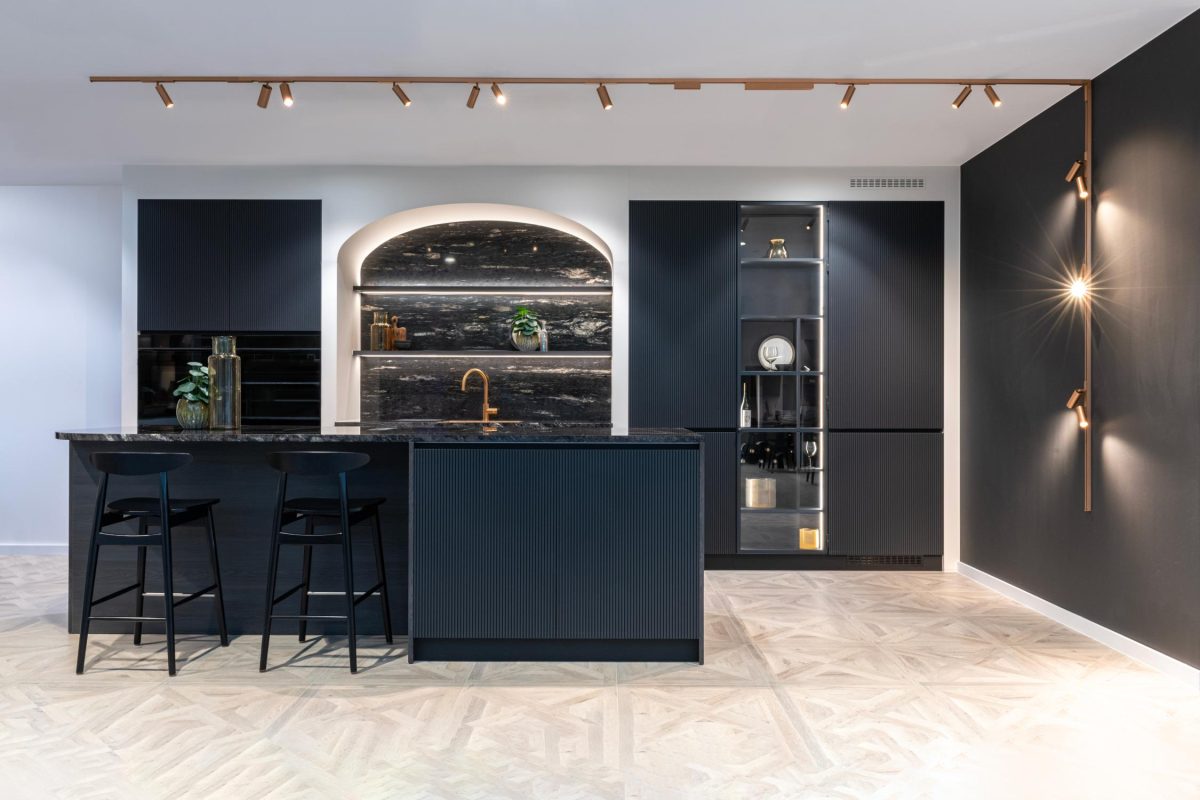
A track system is an aluminium profile with conductors inside, onto which you click lights wherever you want them. You move a spotlight without drilling or running new wires. That makes tracks popular above a kitchen island, along a wall with cabinets or art, and in rooms whose layout is still changing.
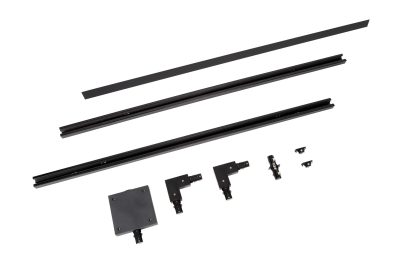
Every system consists of the same parts:
- The track, in fixed lengths of 1 to 3 m, screwed to the ceiling, suspended from cables or built into a suspended ceiling.
- The power feed, the part where the cable from the ceiling connects to the track. With 230V tracks it is a small connector, with 48V tracks a driver.
- Connectors: straight, right-angled (L), T-shaped, cross-shaped (X) or flexible, to join tracks together and make corners.
- End caps that close off the open ends.
- Adapters on the lights themselves. The adapter clicks into the track and makes contact with the conductors. There are also separate adapters from which you hang a pendant light or another light fitting.
1-phase, 3-phase or 48 V: what is the difference?
| System | Voltage on the track | Switching groups | Typical use | Examples |
|---|---|---|---|---|
| 1-phase (single-phase, 1-circuit) | 230 V | One | Living room, kitchen, bedroom | Lucide TRACK, Fantasia Micro Line and Infinitus |
| 3-phase (three-phase, 3-circuit) | 230 V per circuit | Three, the adapter chooses | Large open spaces, shops, studios | Fantasia Track 3, Spectrum SPS 2 |
| 48 V low voltage | 48 V direct current behind a driver | Per light, via app or remote control | Modern living spaces, smart home | Lucide LINIAL, Spectrum 48V high track |
| DALI track | 230 V with control wires | Per light, via a DALI system | Projects with control systems | Spectrum SPS DALI |
Is a 1-phase track enough for a home?
Usually, yes. On a 1-phase track all the lights are on together: one switch, or one dimmer if the lights are dimmable. For a row of spotlights above a kitchen island or along a wall with cabinets, that is exactly what you want. The track is narrow and the choice of spotlights, with a GU10, G9 or E27 lamp base or with built-in LEDs, is large.
The limits of such a system are far away. Lucide states for its TRACK system that a track can be up to 400 m long, with at most five lights per metre and at most 3500 W in total. In a home you will not come anywhere near that. The practical limit is the number of spotlights you want to see.
When do you choose a 3-phase track?
When you want to switch more than one group of lights separately on a single track. A 3-phase track has three circuits. On each adapter you use a slider or rotary knob to choose which circuit the light is on. That way the spotlights on the wall, the spotlights above the table and a pendant light on the same track can each still have their own switch or dimmer.
The name is misleading: you do not need a three-phase supply at home. The three circuits can be fed from the same phase, each via its own switch or dimmer. There do need to be enough wires running to the ceiling, though. Have an electrician look at that before you choose. In homes you mainly see them in large open spaces; in shops they are standard.
What is a 48V track, and when do you choose one?
With a 48V track, a driver converts the mains voltage into 48 V direct current. So there is no 230 V on the track itself. The lights are often small and attach with a magnet; you click them in or on and slide them into place.
Lucide describes its LINIAL system as follows: a 200 W driver powers the whole track at 48 V and, in combination with a gateway, controls each light separately via Zigbee. It works with platforms such as Tuya Smart and Hue, lets you switch and dim each light separately, and stores lighting scenes. The driver comes as a recessed version, which disappears into the ceiling, and as a surface-mounted version. Dimming is done via the app: according to Lucide, the driver does not work with an ordinary wall dimmer.
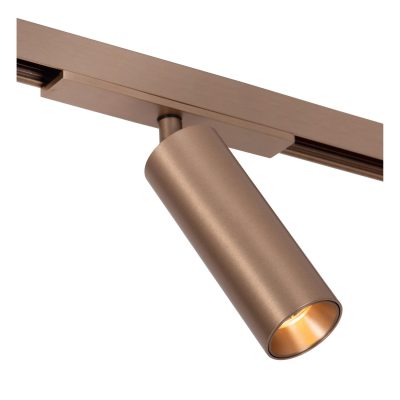
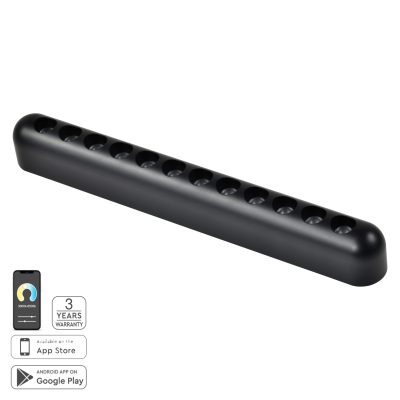
Spectrum has a 48V track with a driver that clicks into the track itself, and magnetic LED modules of 30, 60 and 90 cm, which according to the product data give 980, 1800 and 2300 lumens.
The limitation lies in the driver. Everything on the track together must not exceed its power rating.
Do spotlights from one brand fit another brand’s track?
Assume they do not. An adapter is made for the shape of one track profile and for the position of the conductors inside it. Lucide calls its TRACK components compatible with the whole TRACK range; it says nothing about tracks from other brands, so you should not assume that either. With 48V tracks the systems are completely closed: driver, track and lights come from one manufacturer.
How precise this is can be seen from the same spotlight in two versions. Fantasia sells its Oryx track spotlight in a version for its single-phase track and in a version for the Micro Line system. The light fitting is the same, the adapter is not.
With 3-phase tracks, more manufacturers follow the same profiles, and an adapter then states which system it fits. If your track system is not listed by name, it does not fit. There are also separate adapters for hanging a light fitting from another brand on your track; those must then belong to your track.
How do you plan a track?
Where does the track go?
A track belongs with what it has to light: parallel to the wall with cabinets or art, above the kitchen island or above the table. A track in the middle of a room mainly lights the floor.
How far from the wall?
For light on a wall or a painting, an angle of about 30 degrees to the wall works well. You calculate the distance from the height difference between the ceiling and the centre of what you are lighting.
How many spotlights?
That depends on the beam angle and on what you are lighting. As a guideline: one spotlight per 60 to 100 cm of track for a wall or a row of cabinets, and one spotlight per object for art. Work it out with the spotlight calculator, and read planning spotlights for beam angles and distances.
Where does the power go onto the track?
Usually at the position of the existing lighting point. From there the track runs in one direction, or in two directions with a power feed in the middle. Pay attention to the direction when ordering: power feeds and right-angled connectors come in a left-hand and a right-hand version, because the conductors in the profile are not symmetrical. If you order the wrong direction, the part will not fit on the side where the track has to go.
On the ceiling, on cables or recessed?
A track on the ceiling is the simplest. With a high ceiling you hang it from cables, so that the light comes closer to the table or the worktop. A recessed track is built into a plasterboard suspended ceiling; plan it before the ceiling is closed.
Track spotlights with a lamp base or with built-in LEDs?
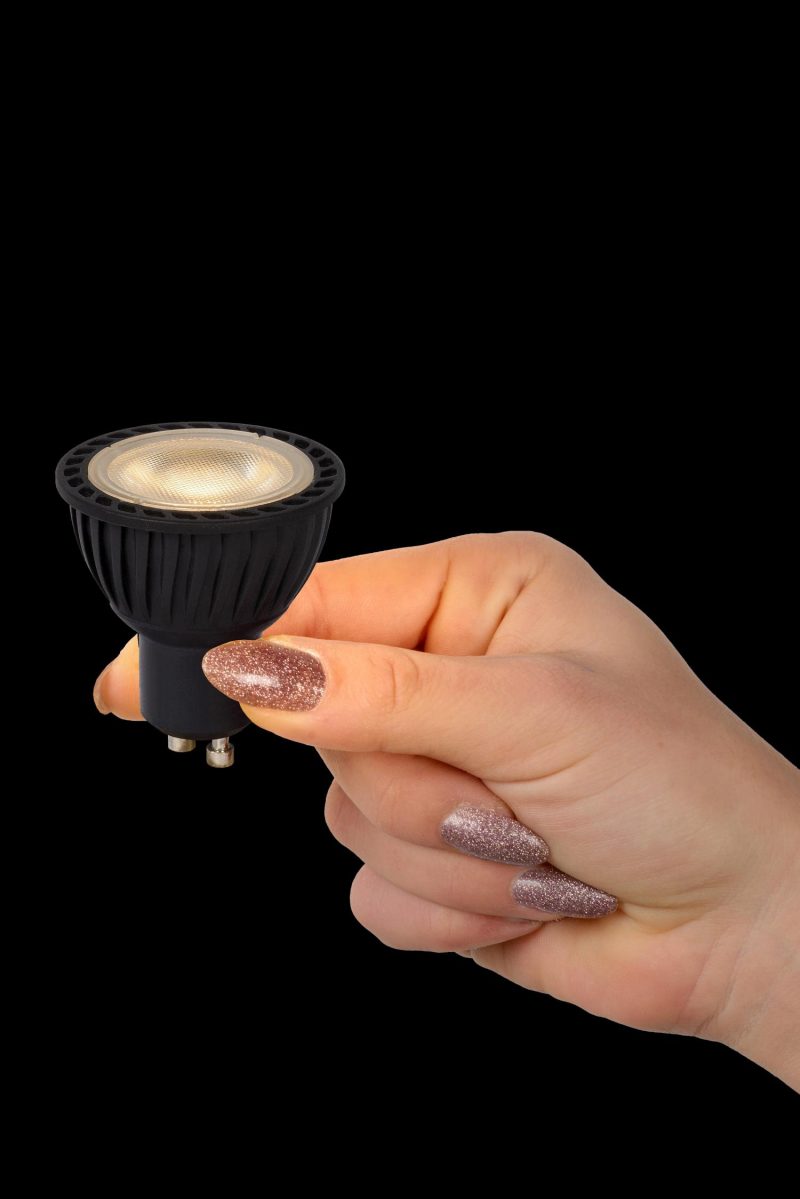
A track spotlight with a GU10 lamp base lets you choose the bulb yourself: colour temperature, beam angle, colour rendering, and later a better bulb. That is flexible, but the spotlight is slightly larger, because the bulb has to fit inside. A track spotlight with built-in LEDs is more compact, often has better optics and gives more light for its size. Colour temperature and beam are fixed, though.
For art and cabinets, where you want to play with the beam, a spotlight with a lamp base is handy. For a clean line above an island, where all the spotlights do the same thing, built-in LEDs are often more attractive.
How do you dim track lighting?
On a 1-phase track you dim all the lights together with an LED dimmer in the wall, provided that all the lights are dimmable and of the same type. On a 3-phase track each circuit can have its own dimmer. A DALI track and a 48V track with an app dim per light. What can go wrong with phase dimming is explained in dimming LED lamps.
Who installs the track?
You can screw a track to the ceiling and click spotlights onto it yourself. The connection to the electrical installation is work for an electrician, especially with a 3-phase track with several switched wires or with a 48V driver that goes into the ceiling. Switch off the circuit at the fuse box before any work.
Which mistakes do people make most often with tracks?
- Parts from different systems. A spotlight from another brand or another range does not fit, even if the profile looks the same.
- The wrong direction. Left-hand and right-hand power feeds and right-angled connectors get mixed up when ordering.
- Too close to the wall. The light falls steeply, with harsh shadows and a hot spot.
- Forgetting the driver. With a 48V track, the power of all the lights counts together, including the pendant lights.
- Forgetting the end cap. An open end looks untidy and lets dust into the profile.
Track systems
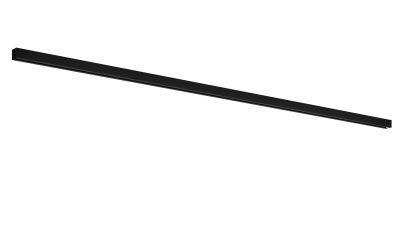
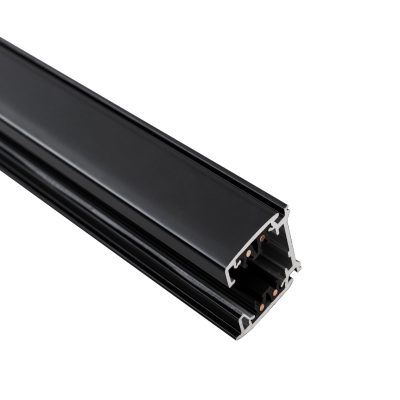
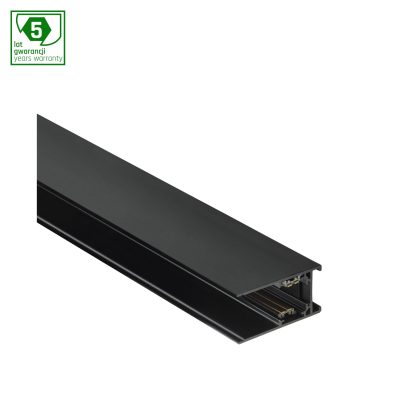
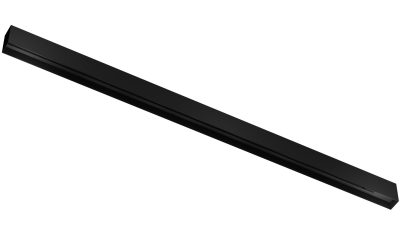
View allTracks and starter kits in the three systems: 1-phase at 230 V, 3-phase and 48 V.
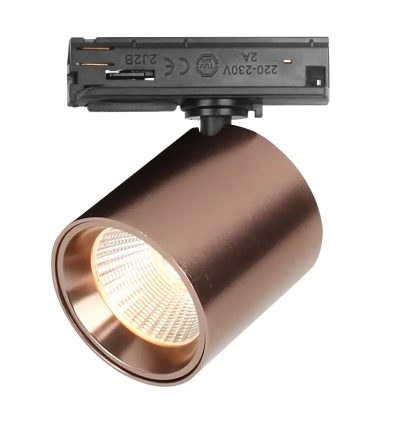
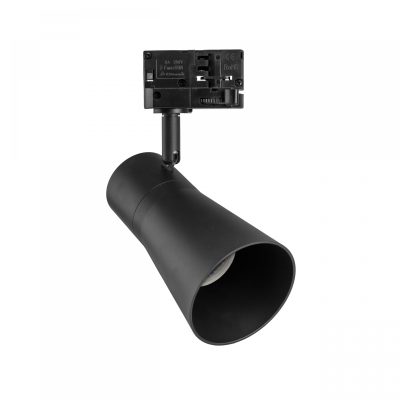
Track spotlights for every system
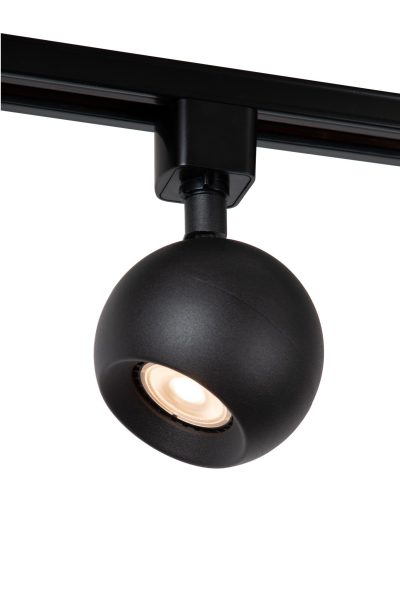
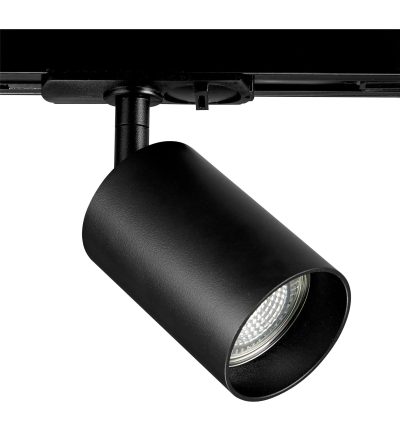
View allEach spotlight only fits the track system it was made for; this is stated in the product data.
Frequently asked questions
Can I hang a pendant light from a track?
Yes, with a pendant adapter from the same system, or with a pendant light made for the track. Check the weight the adapter can carry; this is stated in the product data.
Can I connect a track system to my existing lighting point?
Yes. The power feed of the track goes at the position of the existing lighting point, and the track continues from there. With a power feed that can go in two directions, the track can also start in the middle of the room.
Can I extend the track later?
Within the same system, yes: with a straight, right-angled or T-shaped connector you join a new track to the old one. With a 48V track, add the power of the new lights to the existing load to see whether the driver is sufficient.
Is a 48V track safer than a 230V track?
The track itself carries a low direct voltage instead of mains voltage, and that gives more freedom when moving lights. The driver itself is connected to 230 V, though, and should be connected by an electrician.
Can I use ordinary GU10 bulbs in track spotlights?
In track spotlights with a GU10 lamp base, yes. Pay attention to the length of the bulb, as LED spotlights are often slightly longer than halogen, and to dimmability if the track is on a dimmer. See lamp bases explained.
Sources
- TRACK Power supply, 1-circuit track lighting system, Lucide (geraadpleegd 2026)
- Premium LINIAL LED Driver 200W, 48V Smart Track, Lucide (geraadpleegd 2026)