You recognise industrial lighting by metal domes and conical shades, open cages, visible bulbs on fabric cable and finishes such as matt black, rust brown, copper and concrete. Those shades send almost all the light downwards, so a room with only industrial pendant lights gets bright pools of light and a dark ceiling. Solve that with a white or gold inside, a warm colour temperature of 2700 K, and at least one lamp that sends light upwards or towards the walls.
Industrial lighting looks as if it has come straight out of a workshop: a metal shade that pushes the light downwards, and materials and technology that are not hidden away. At home the style works best when you use it as an accent above a table, an island or a work corner, and fill the rest of the room with other light. Hang only industrial pendant lights and you get a beautiful table in a dark room.
In our range more than 900 products carry the industrial label, and more than half of them are black. That says something about the style, and also about the problem: black metal reflects little light.
How do you recognise industrial lighting?
Not by a mood, but by concrete features. A lamp usually has two or three of them:
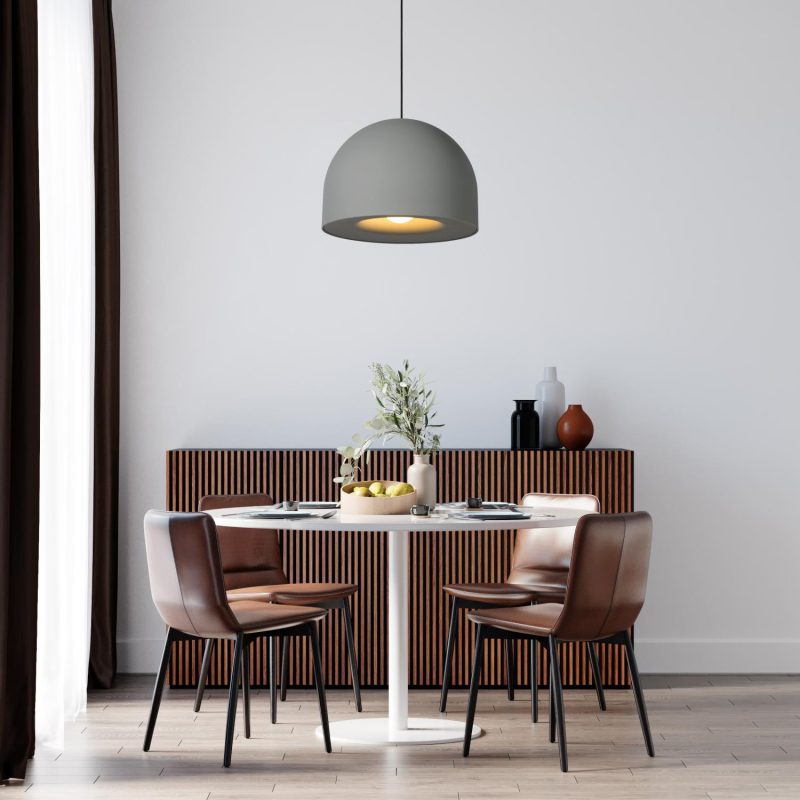
- The shape of the shade. A deep metal dome, a conical shade, or a flat dish like the ones above a workbench. All closed, with the opening facing down.
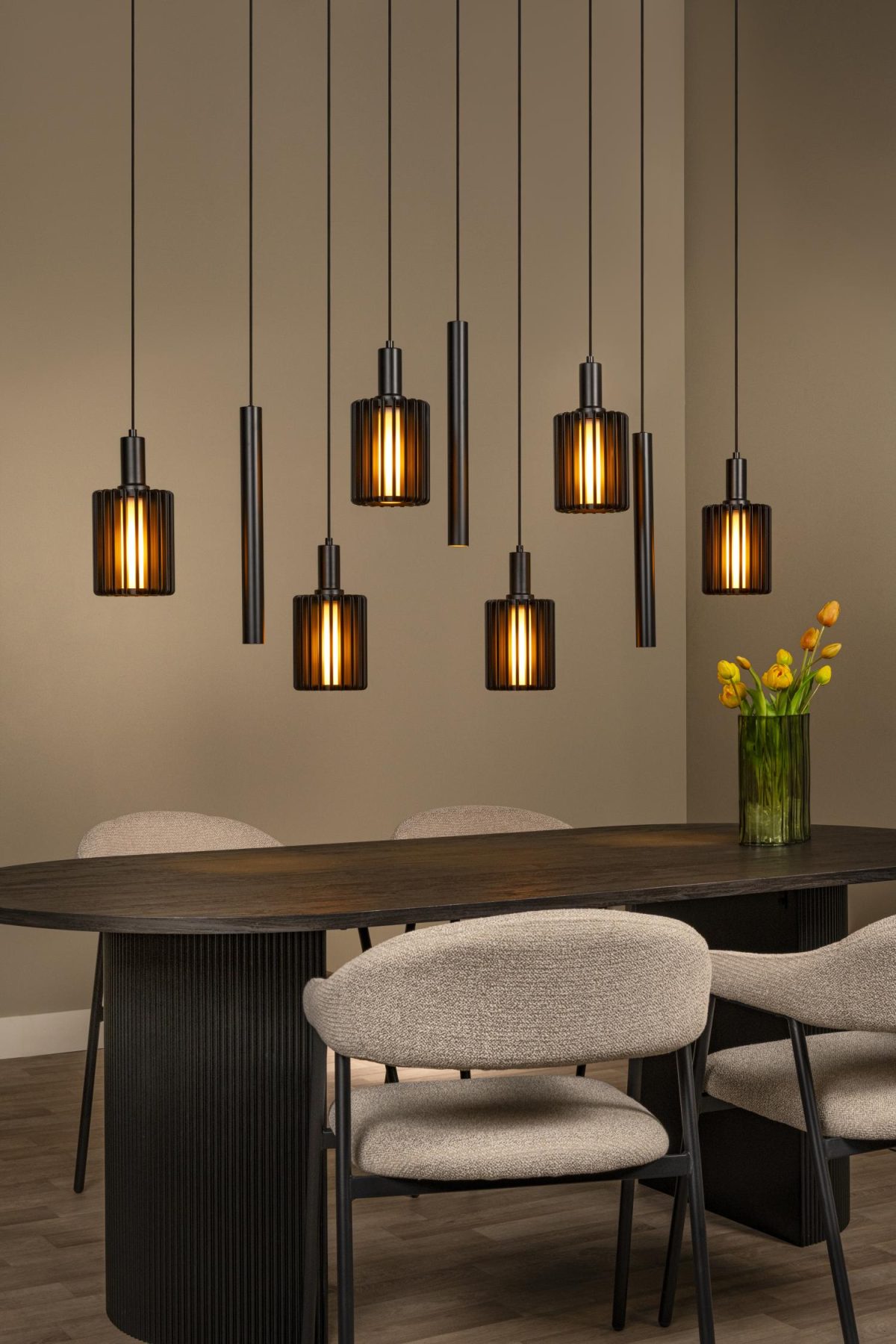
- An open cage or grille around a bare bulb, originally to protect the bulb from knocks.
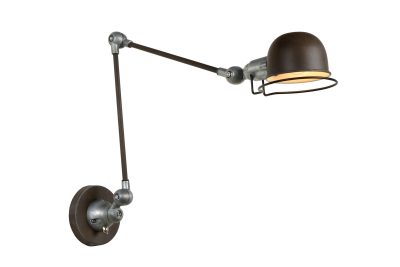
- Visible technology: a bare E27 lamp holder, a fabric cable, screws, pulleys, a scissor arm or a crane arm on the wall.
- Finish: matt black, graphite, rust brown, copper, raw aluminium, concrete look. Often combined with a white or gold inside.
- Tracks and spotlights in black, visible on the ceiling instead of concealed.
What it is not: real industrial light fittings. High-bay lamps of 70 to 200 W and 6,000 lumens or more are made for tall halls and workshops. In a living room they dazzle and give far too much light, usually in a cool colour temperature.
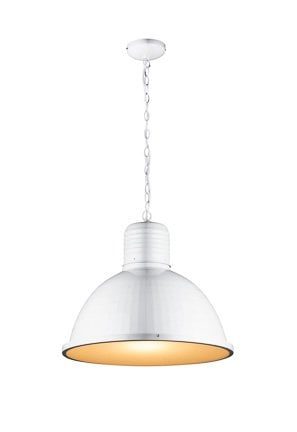
Industrial pendant lights: dome, cage and concrete look
View allFour brands, from an adjustable 20 cm shade to a 53 cm dome in a concrete look.
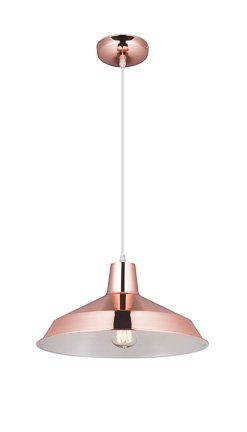
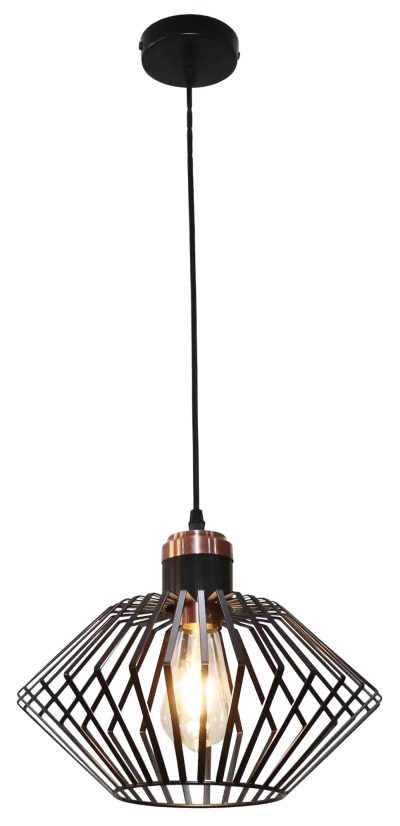
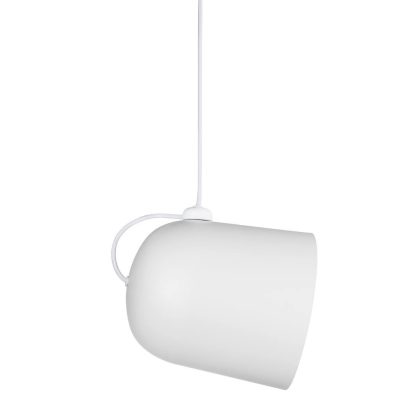
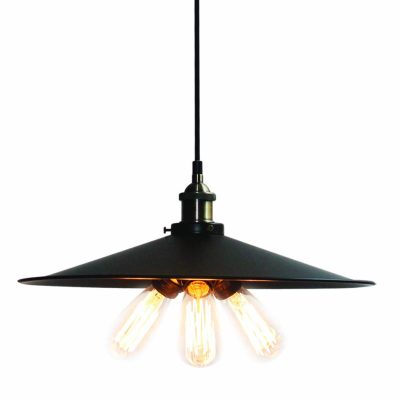
Why does industrial lighting make a room dark?
Because a closed metal shade sends all the light downwards. Under the lamp lies a bright circle; on the ceiling above it, nothing falls. In a workshop that was the point: light on the workpiece. At home you also want the room itself to feel light, and that depends on vertical surfaces and the ceiling.
Licht.wissen 14, the licht.de brochure on light in the home, puts it like this: the interplay of direct and indirect light works most harmoniously, and indirect light softens strong contrasts between light and dark that tire the eyes. With only domes you have nothing but direct light.
Three things help:
- Look at the inside of the shade. A white or gold inside reflects far more light outwards than a black one. How brightly a surface lights up depends directly on how much light it reflects; licht.de calculates this with the reflectance. A black inside looks tough, but swallows light.
- Add light upwards or towards the walls. A wall light that shines upwards, a floor lamp that lights the ceiling, or a few spotlights that make a brick or concrete wall glow. On rough material the light grazes across the texture, and that suits the style.
- Choose the right bulb for the shade. A dome with too weak a bulb is a dark hole with a pool of light under it. Work from what needs to happen underneath; above a table or worktop, a bulb of 800 to 1,000 lumens per dome is usually enough.
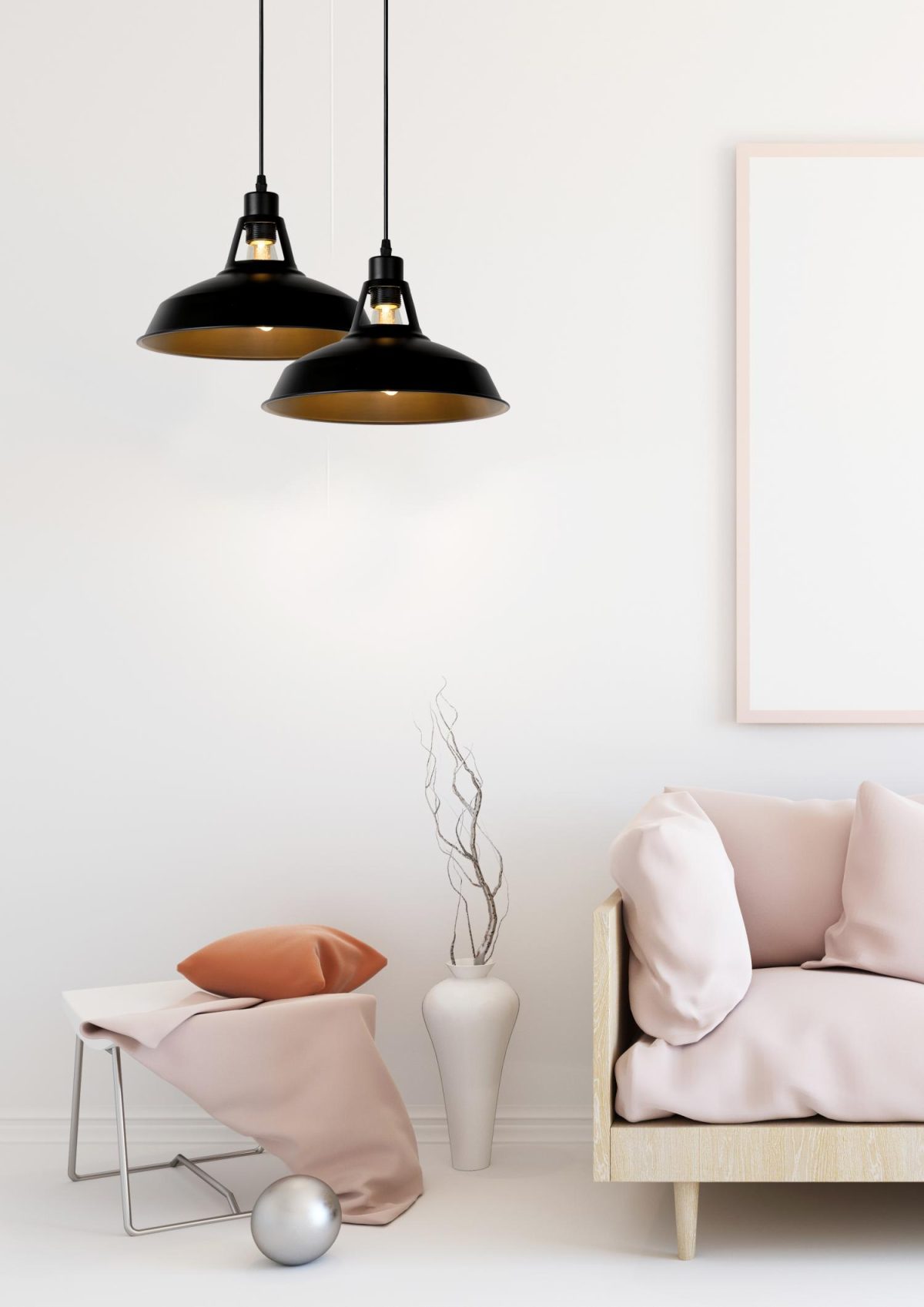
A bare bulb in a cage: beautiful, but bright
A cage or an open lamp holder shows the bulb. That is the charm, and the risk. Licht.de warns that lamps without shielding carry the greatest risk of glare: a small, bright point in your field of vision. A few solutions that suit the style:
- a filament bulb with a warm colour temperature, dimmed;
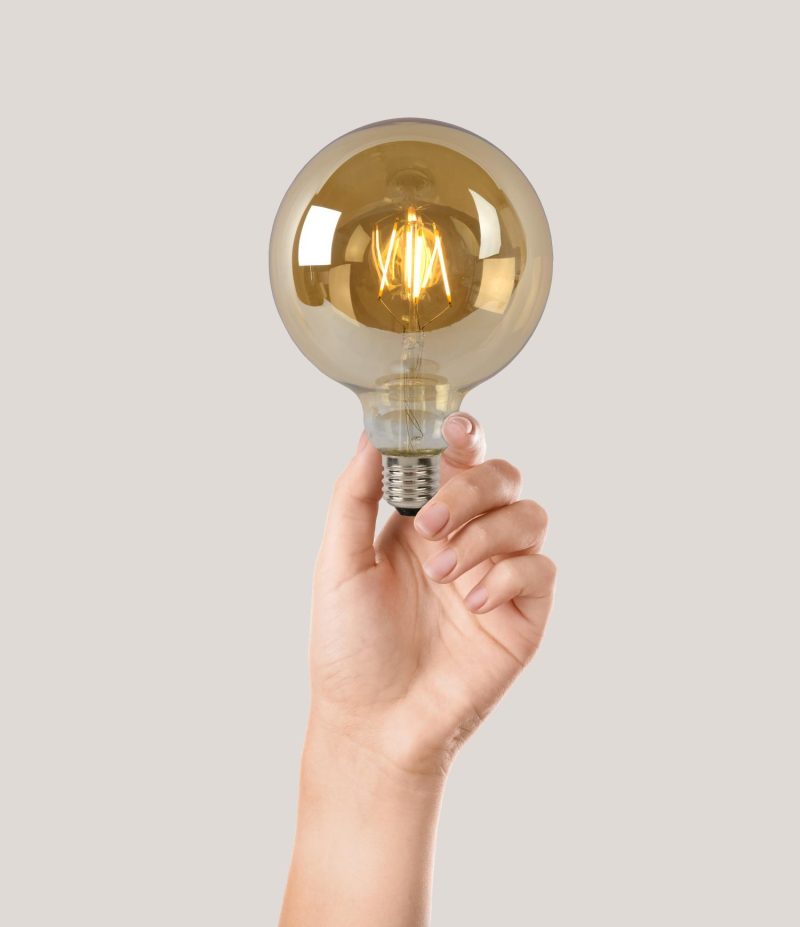
- a globe bulb with frosted or opal glass instead of a clear pear shape, so that the light is spread over the whole glass;
- a crown-silvered bulb, which reflects the light upwards and shows a glossy globe from below;
- hanging the lamp higher or lower than eye level, and never right next to a seating area.
How to choose the right filament bulb and why amber glass gives so little light is explained in filament bulbs: when they look good.
Which colour temperature suits an industrial interior?
Warm white, around 2700 K. With a workshop look it is tempting to choose workshop light of 4000 K as well, but in a living room that looks cold against black metal and concrete. The French health agency ANSES recommends warm white light for lighting in the home, below 3000 K. A warm colour temperature on cold materials gives exactly the contrast that makes the style appealing.
The exception: a real work corner, garage or studio. There neutral white is fine, because you want to see colours and details. More in choosing a colour temperature.
Combining industrial with other styles
A fully industrial interior is rare. Usually it is a few elements among wood, linen and plants. Then this works well:
- One style element, repeated. Choose matt black metal, for example, and let it come back in the pendant light above the table, a wall light with an arm and a track. Three different metal colours side by side read as chance.
- Wood or textile as a counterweight. A dome with a wooden detail, a table lamp with a fabric shade or a linen pendant light soften the whole.
- Scale. A 50 cm dome is too heavy above a small table; two smaller ones work better. Above a long table, go for two or three shades rather than one large one. How large and how high is explained in pendant light above the dining table.
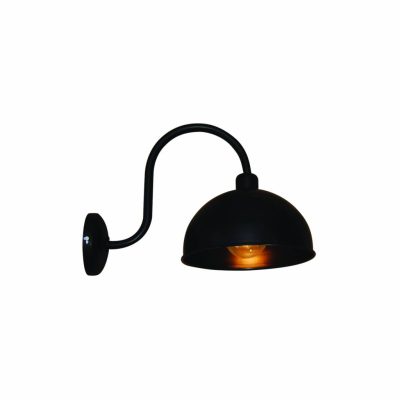
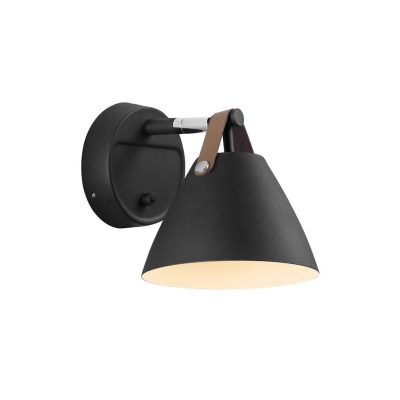
Wall lights and table lamps with a workshop character
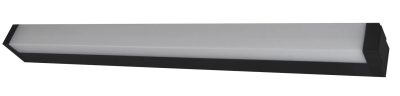
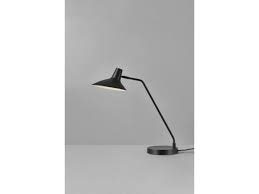
View allArms, leather and metal, and a long LED wall light that brings the wall into play.
Frequently asked questions
Can I dim an industrial dome light?
That depends on the bulb you screw into it, not on the dome. With a dimmable LED bulb and a suitable dimmer it can be done. A dimmed dome above the table and a wall light that lights the ceiling give a calm picture in the evening.
Is a concrete pendant light not too heavy?
Many concrete-look lamps are made of metal with a concrete finish and weigh no more than an ordinary metal shade. Real concrete is heavier. Check the weight in the product information and make sure your ceiling hook and fixing can take it.
Which bulb fits in a cage lamp?
Usually an E27 bulb. Because you see the bulb, you choose a decorative one, such as a filament or globe bulb, preferably dimmable. Measure the inside of the cage: a large globe does not fit in every cage.
Are black tracks and spotlights a good choice with a white ceiling?
Yes, if you place them deliberately: in a straight line, parallel to a wall or the island. Black on white stands out, and so does every deviation. More about tracks in track lighting explained.
Sources
- licht.wissen 14: Licht für Wohnräume, licht.de (ZVEI) (2019)
- Leuchtdichte, licht.de (2026)
- Direktblendung, licht.de (2026)
- LEDs: ANSES’s recommendations for limiting exposure to blue light, ANSES (2019)