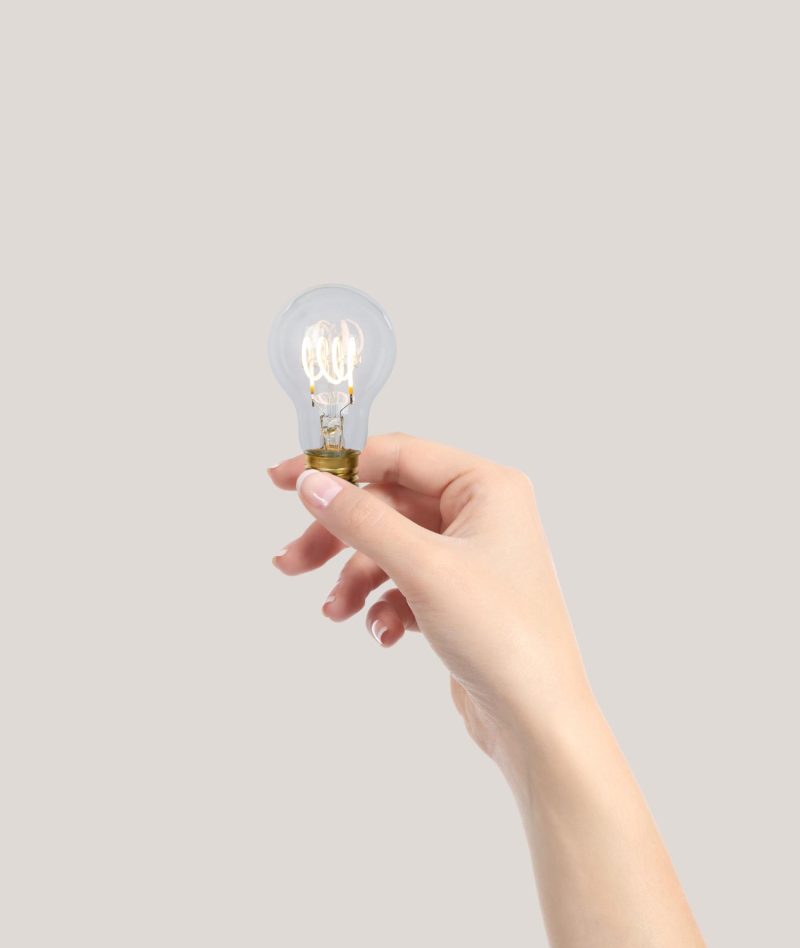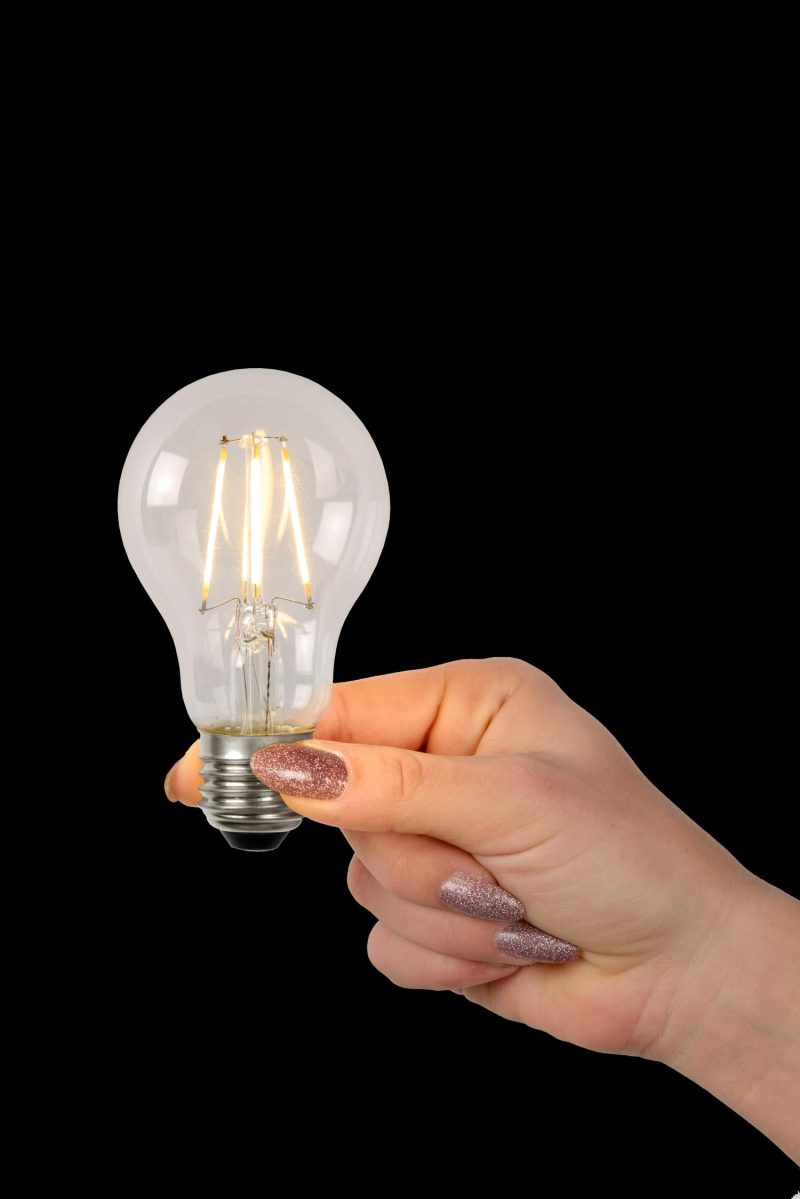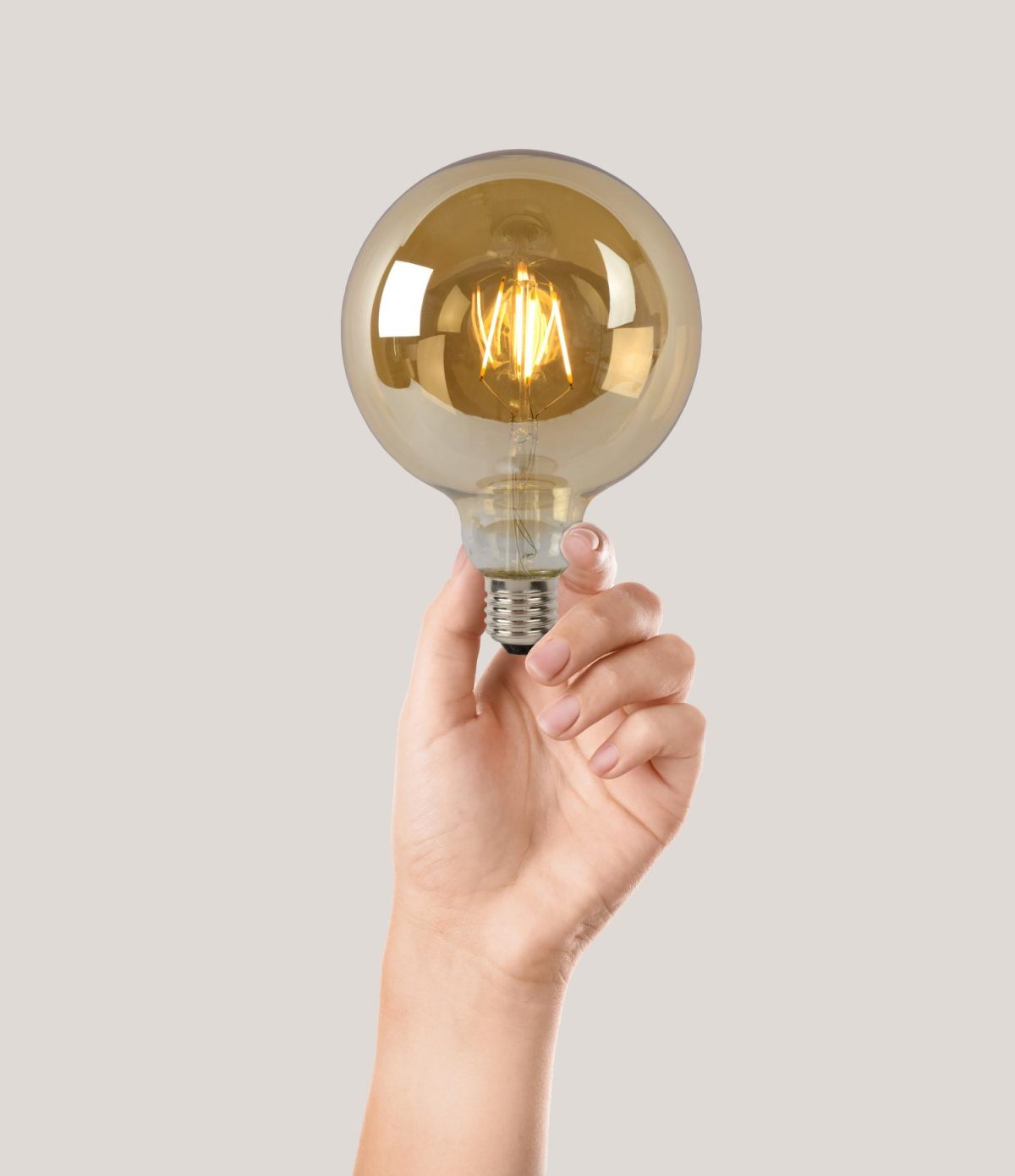
An LED filament bulb is at its best where you see the bulb itself, in an open lamp holder or behind clear glass, and dimmed. As task lighting it is less suitable: an amber 4.9 W filament bulb gives around 380 lumens, while a clear 7 W one with energy class B reaches 1,300 lumens. Filaments are small, bright light sources that quickly cause glare; dim them, hang them outside your direct line of sight or choose a crown-silvered bulb.
A filament bulb is a light source you want to see. In an open lamp holder on a fabric cable, in a clear glass globe or in a cluster of pendants above a table, it is the object itself. That is where it looks good. In a closed shade, above a worktop or as the only light in a room it is a poor choice: you cannot see the filaments, and you pay with less light for a look that stays hidden.
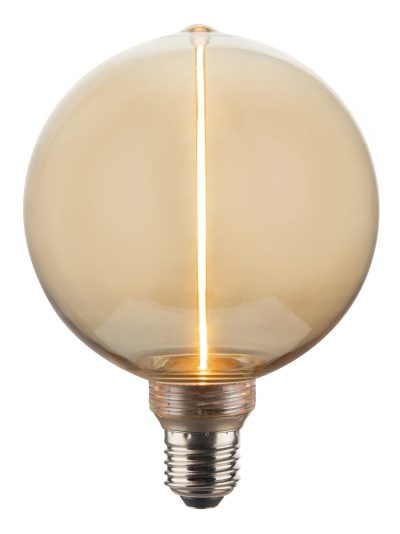
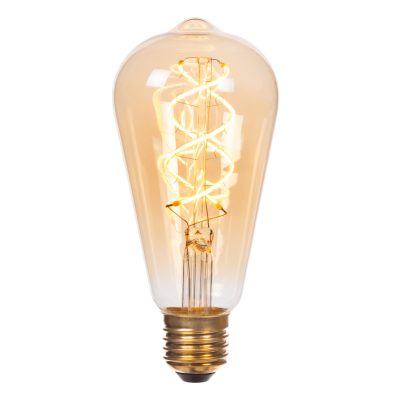
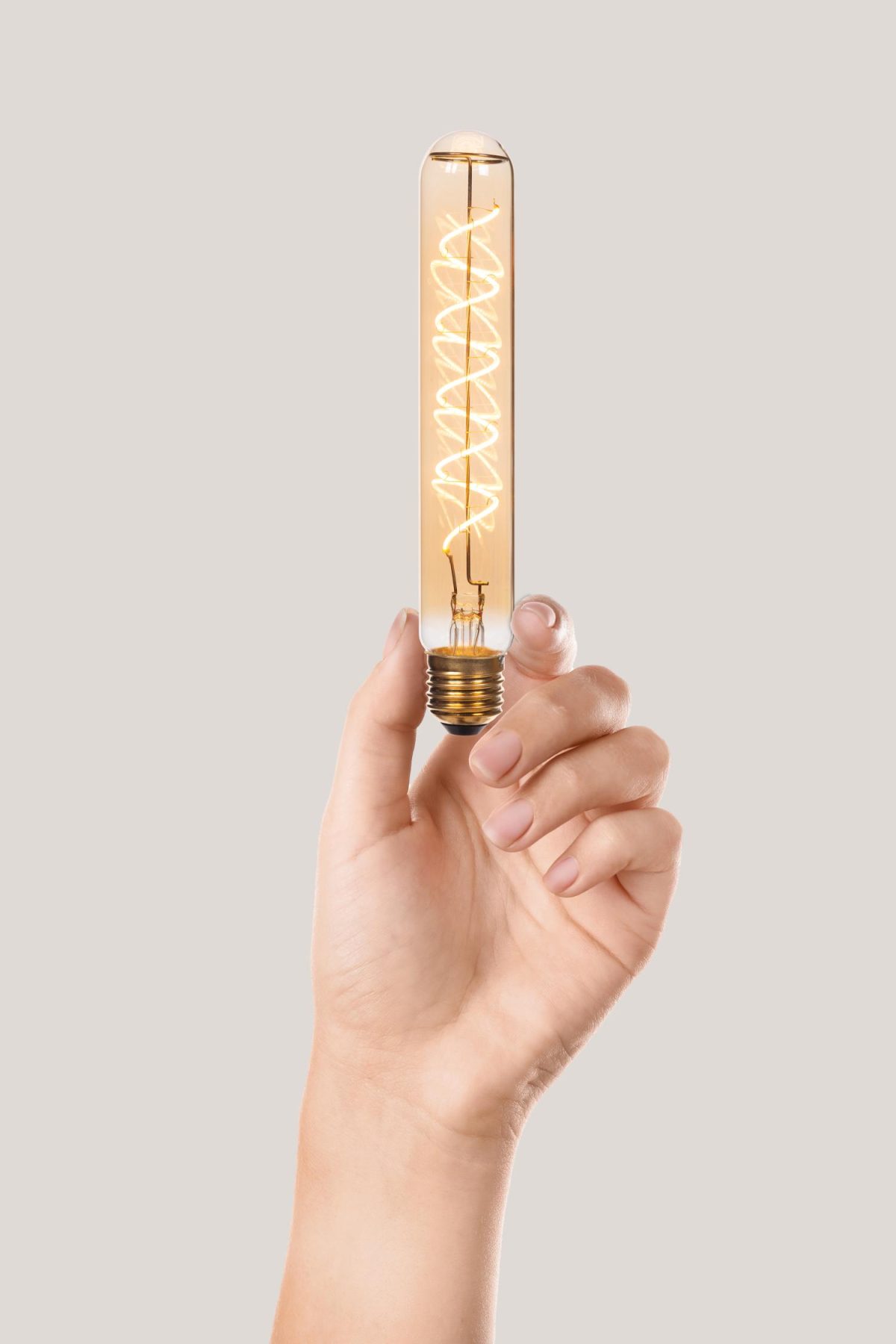
An LED filament bulb imitates the old carbon filament bulb with thin LED strips, the filaments, behind clear or tinted glass. They come in many shapes, from candle and pear to a 12.5 cm globe or a long tube, and in colour temperatures from roughly 1800 to 2700 K.
How much light does a filament bulb give?
That depends mainly on the glass and the colour temperature. Amber glass and an extra-warm colour temperature of 1800 to 2200 K cost a lot of light. Clear glass at 2700 K gets much more out of the same wattage. The difference is bigger than most people think, and you can see it in the energy class.
Since the new European energy labelling for light sources (Regulation (EU) 2019/2015), the class depends on the number of lumens per watt: class A from 210 lm/W, B from 185, and so on in steps of 25 down to G, below 85 lm/W. Two bulbs from our range, both a 12.5 cm globe with an E27 base, show how far apart that can be:
| Bulb | Wattage | Luminous flux | Lumens per watt | Class according to the table |
|---|---|---|---|---|
| G125 amber, 2200 K | 4.9 W | 380 lm | about 78 | G (below 85) |
| G125 clear, 2700 K, class B | 7 W | 1,300 lm | about 186 | B (185 to 210) |
So the clear bulb gives more than three times as much light for less than one and a half times the wattage. The amber one is not badly made: the tinted glass and the warm colour temperature are exactly what you buy it for. But it means that an amber filament bulb is a mood light, not a reading light. You can find a bulb’s official class on the energy label or in the European EPREL database; what the label tells you exactly is explained in the energy label for lighting.
Filament bulbs and decorative bulbs for a visible lamp holder
View allFrom a clear 1,300-lumen globe and a crown-silvered bulb to an amber 1800 K globe for pure mood lighting.
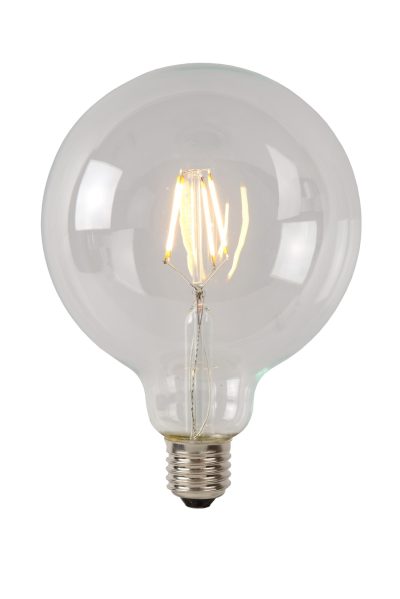
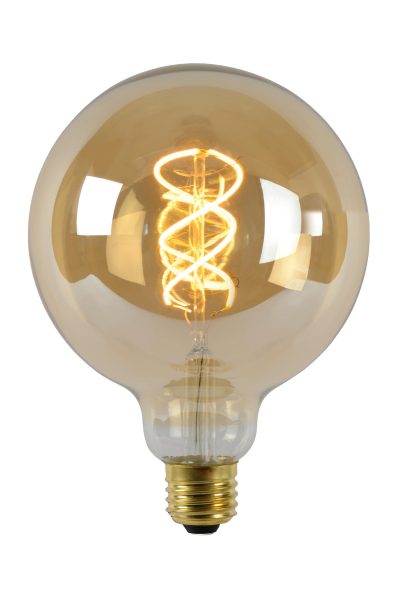
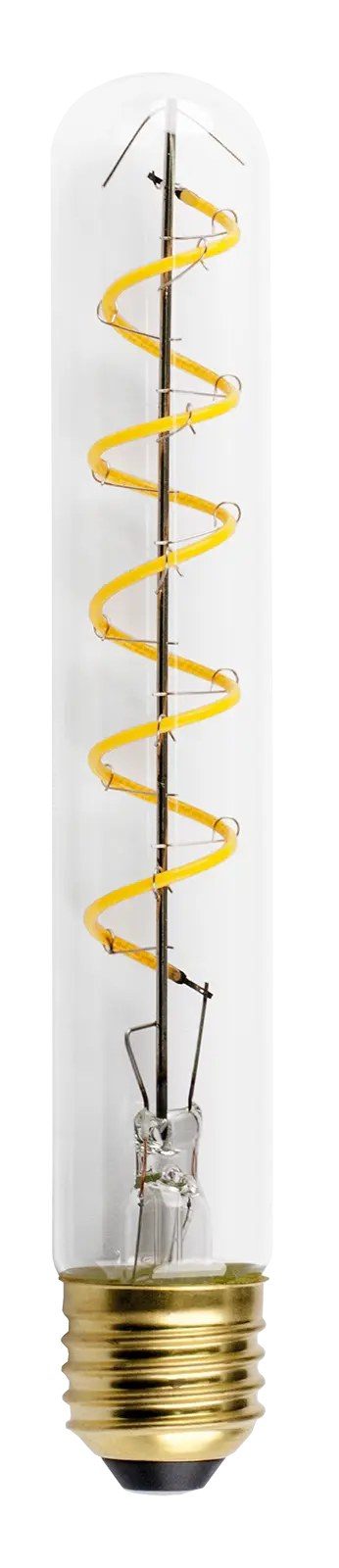
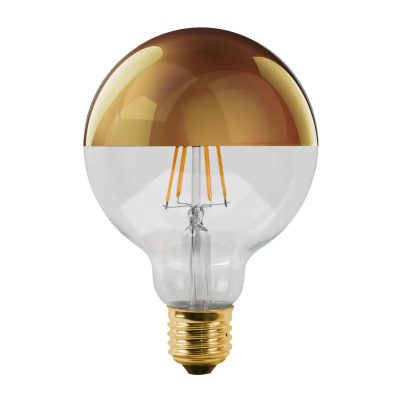
Why does a filament bulb cause glare so quickly?
Glare does not come from the amount of light, but from how bright a small surface is. Licht.de calls this luminance and warns that lamps without shielding carry the greatest risk of glare. A filament bulb is exactly that: a few thin, bright lines behind clear glass, without any shielding at all. Look straight into it and you see an afterimage for a while.
Four ways to keep the beauty without the glare:
- Dim it. A filament bulb at 20 to 40 percent looks warmer and causes far less glare. Choose a dimmable bulb and a dimmer that works with it, or a bulb with a step-dim function that you dim in a few steps with the ordinary switch. Read dimming LEDs before you buy a dimmer.
- Hang it outside your direct line of sight. A bare bulb above a table is better hung a little higher than a lamp with a shade, or so that the table is between your eyes and the bulb.
- A crown-silvered bulb. The top of the bulb is mirrored and reflects the light upwards, into the lamp holder or the shade. From below you see a glossy globe instead of a bright point.
- Frosted or opal glass. There are filament bulbs with a frosted or opal globe. The shape of the bulb stays recognisable, but the light is spread over the whole glass instead of coming from a few thin lines.
Where do filament bulbs look their best?
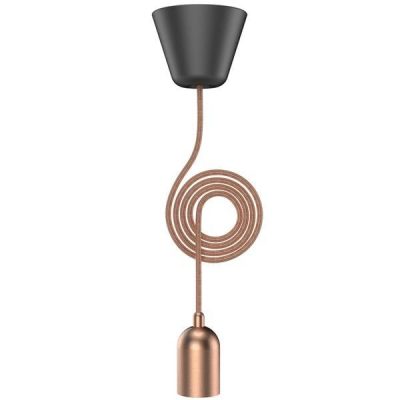
- In an open lamp holder or on a fabric cable, alone or in a group at different heights. The bulb is the design; choose a shape you like, because you always see it.
- Behind clear or lightly tinted glass: a glass globe or cylinder shows the filament and frames it.
- In wall lights with a visible bulb, as an accent beside a mirror or a door, where you do not get them in your face at close range.
- Above a bar or dining table in the evening, dimmed, as mood lighting alongside other light for the practical tasks.
- Outdoors under a canopy, in a light fitting suitable for it. There are filament bulbs with a dusk sensor that switch on by themselves when it gets dark.
Light fittings where you see the bulb
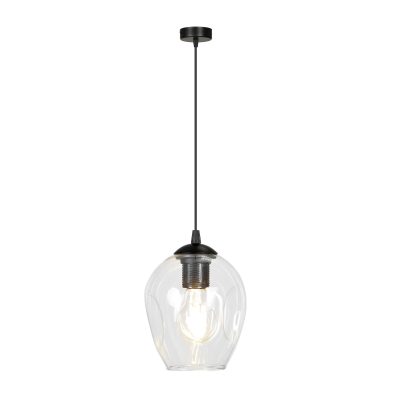
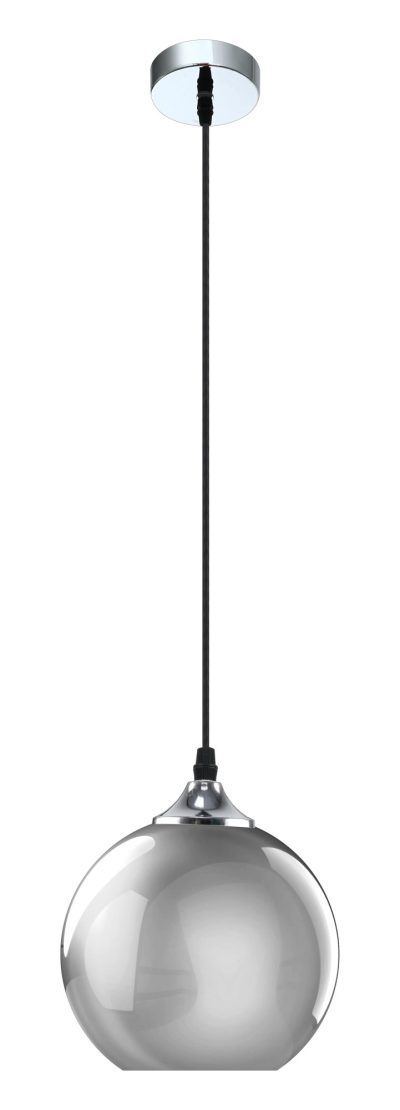
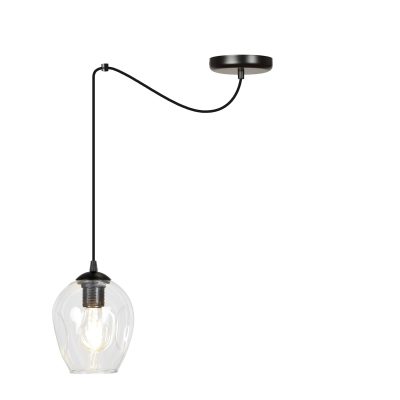
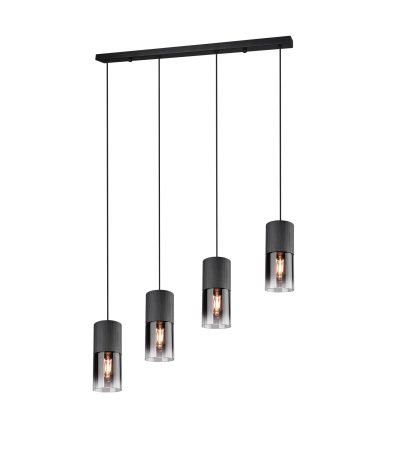
View allOpen lamp holders and clear or smoked glass: the place for a bulb that is meant to be seen.
Where you are better off choosing something else
- In a closed shade. In a metal dome, a fabric shade or behind opal glass you cannot see the filaments. You then pay for a look nobody sees, with less light. An ordinary frosted LED bulb with the same colour temperature does better there.
- Above the kitchen worktop or the desk. For cooking, reading and working you want plenty of light and good colour rendering. Amber glass turns everything yellow; that is cosy at the table, but awkward when you want to see whether the meat is cooked. More on that in colour rendering and CRI.
- In front of the bathroom mirror. You want to see your face in neutral colours, and not a bright point at eye level.
- As the only light in a room. Combine filament bulbs with lamps that fill the room, such as a floor lamp or wall lights.
Frequently asked questions
Are LED filament bulbs dimmable?
Many are, but not all. The packaging or the product information states whether a bulb is dimmable. Use a dimmer suitable for LED, otherwise the bulb may flicker or hum.
Do filament bulbs get hot?
Much less than the old carbon filament bulbs. A 4 to 7 W LED filament bulb gets lukewarm to warm on the glass, but not as hot as a 40 or 60 W incandescent bulb that had the same look.
How long does an LED filament bulb last?
Manufacturers often state 15,000 hours; Lucide, for example, gives that figure for the ST64 filament bulb with step-dim function. At three hours a day that is more than thirteen years, although the real lifespan depends on heat and how often it is switched on and off.
Can a filament bulb go in a lamp with an open top?
Yes, and then you also see it from above when you are standing. If the lamp hangs low, choose a crown-silvered bulb or dim it, so that you do not look into the filament as you walk past.
Sources
- Commission Delegated Regulation (EU) 2019/2015 with regard to energy labelling of light sources, EUR-Lex, European Commission (2019)
- Direktblendung, licht.de (2026)
- ST64 filamentlamp LED 3 StepDim (Memory), productinformatie, Lucide (2026)
- LEDs: ANSES’s recommendations for limiting exposure to blue light, ANSES (2019)