The material of the shade determines three things: how much light comes out, in which direction, and whether you look into the light source. Opal glass, linen and paper spread the light softly in all directions and cause little glare. A closed metal shade sends all the light downwards or upwards and leaves the shade itself dark. Clear, smoked and amber glass and open weaves such as rattan show the bulb itself, so there you choose a bulb that may be seen, and often a stronger one.
A shade is not decoration around a bulb; it determines what the light does. Two pendant lights with the same shape and the same bulb give a completely different room if one is made of opal glass and the other of black metal. The first fills the whole room with soft light, the second lays a bright circle on the table and leaves the rest in semi-darkness.
So first decide what you expect from the lamp, and only then the material. If you want to fill a room, you want a shade that lets light through and spreads it. If you want to light a particular spot, you want a shade that directs the light. If you mainly want a light object, you choose a shade that shows the bulb or casts shadows, and you accept that less usable light comes out.
| Material | What the light does | Glare | Works well for | Bulb inside |
|---|---|---|---|---|
| Opal or frosted glass | Glows over the whole surface, spreads in all directions | Low | General light, bathroom, hallway, above a table where you also want light all around | Any bulb; you do not see the bulb itself |
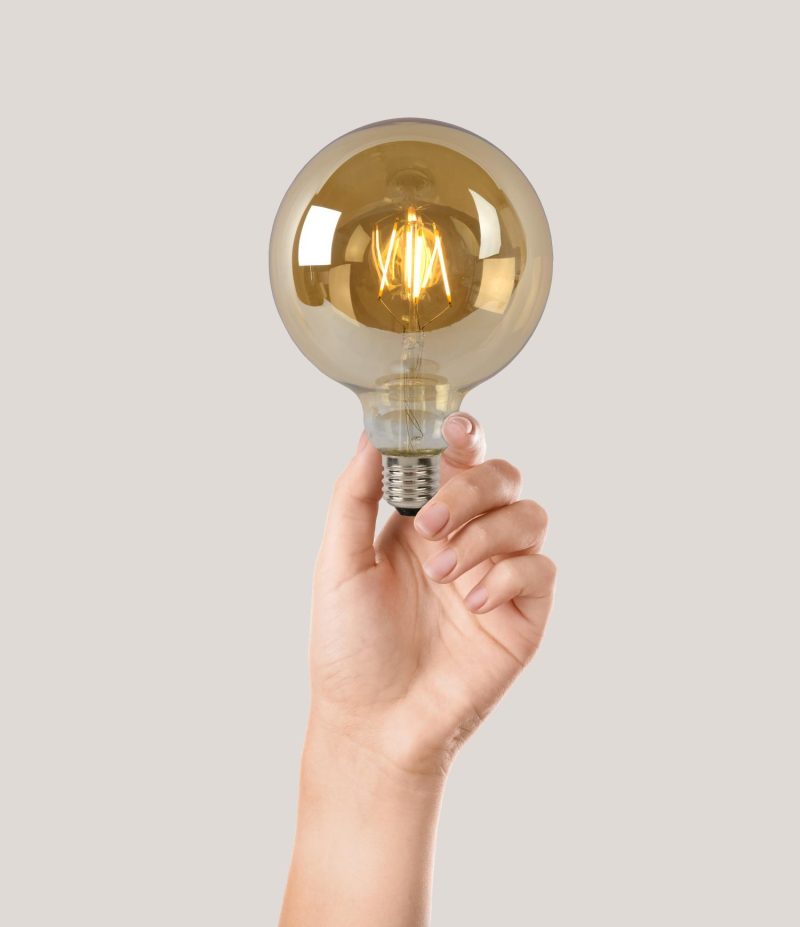
| Clear glass | Lets the light through almost unchanged; the bulb is visible | High, unless dimmed or with a decorative bulb | Light object, decorative bulbs, atmosphere | A bulb you want to see: globe or filament, preferably dimmable |
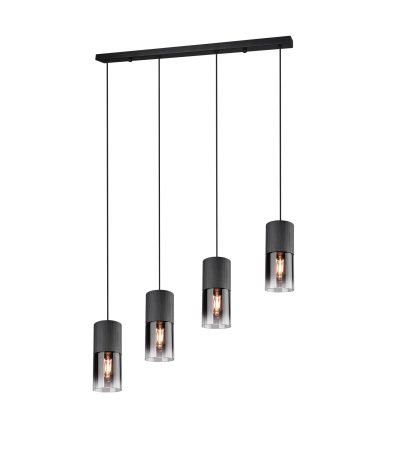
| Smoked or amber glass | Softens the light and colours it (amber warmer) | Medium | Mood lighting, a lamp that stands as an object during the day | Stronger than you think, or accept less light |
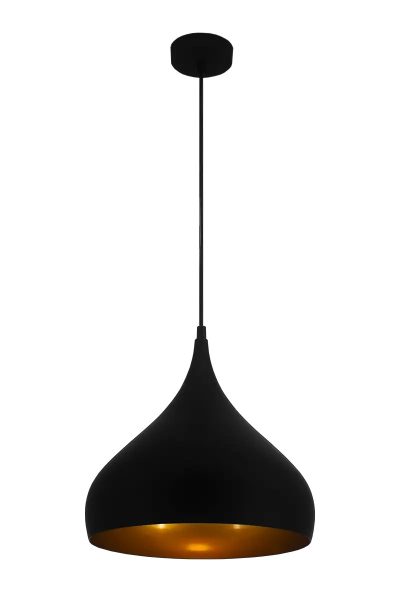
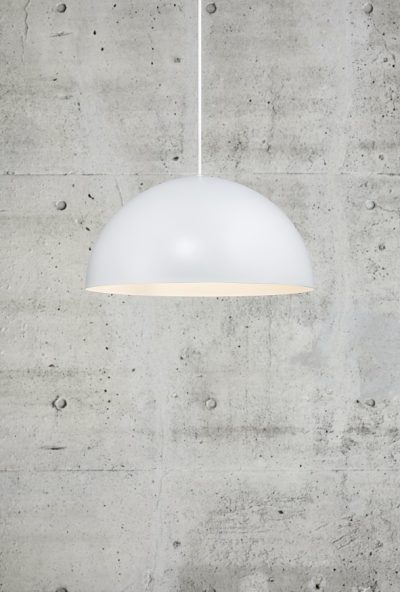
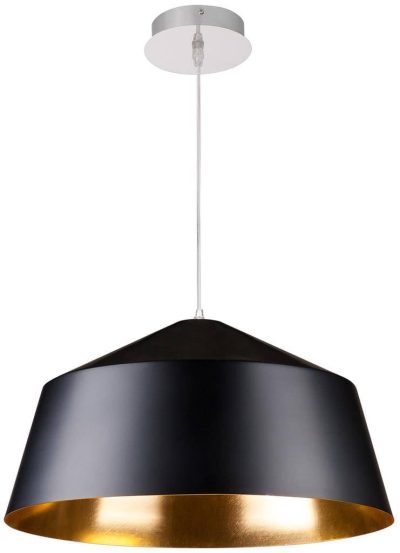
| Metal or ceramic (closed) | All the light goes downwards or upwards, the shade stays dark | Low from the side, high if you look into it | Table, island, desk, reading corner | Frosted or with shielding if you look into the shade from below |
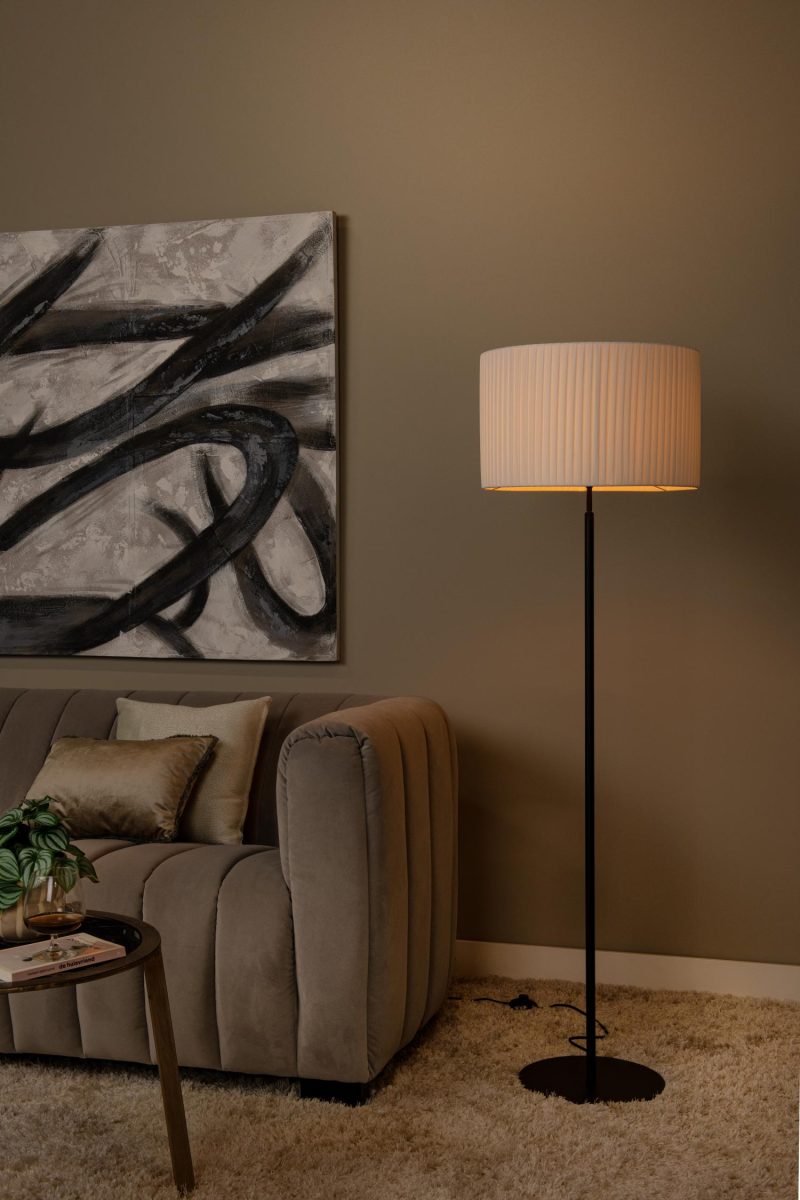
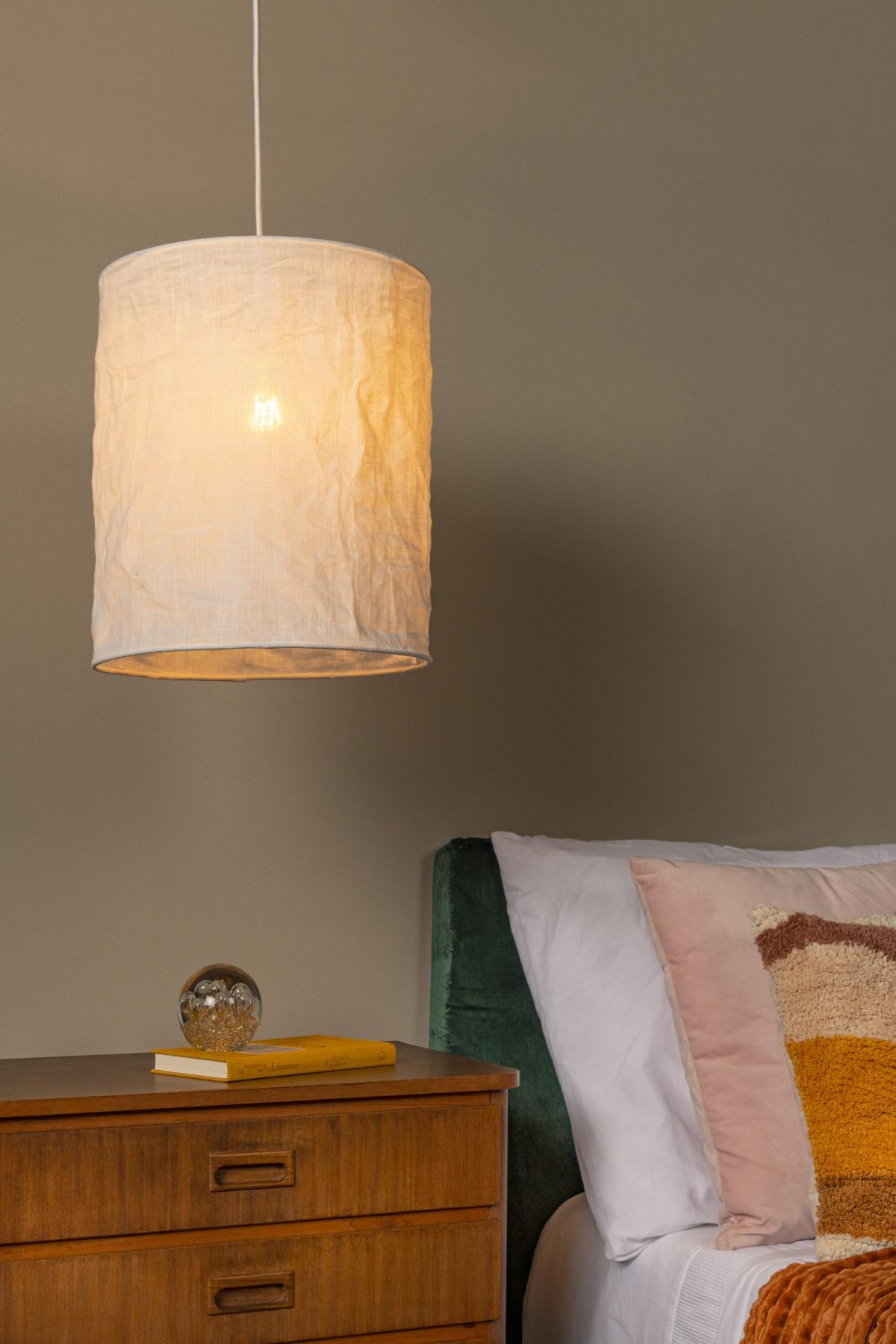
| Linen or other light fabric | Glows softly, light upwards and downwards | Low | Table and floor lamps, bedroom, living room | Frosted; mind the maximum wattage |
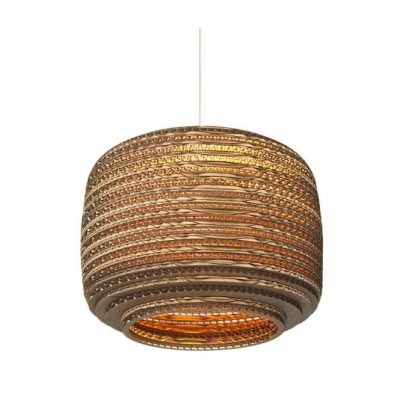
| Paper and card | Glows softly and warmly, similar to opal | Low | Large pendant lights above a seating or dining area | Frosted, warm white |
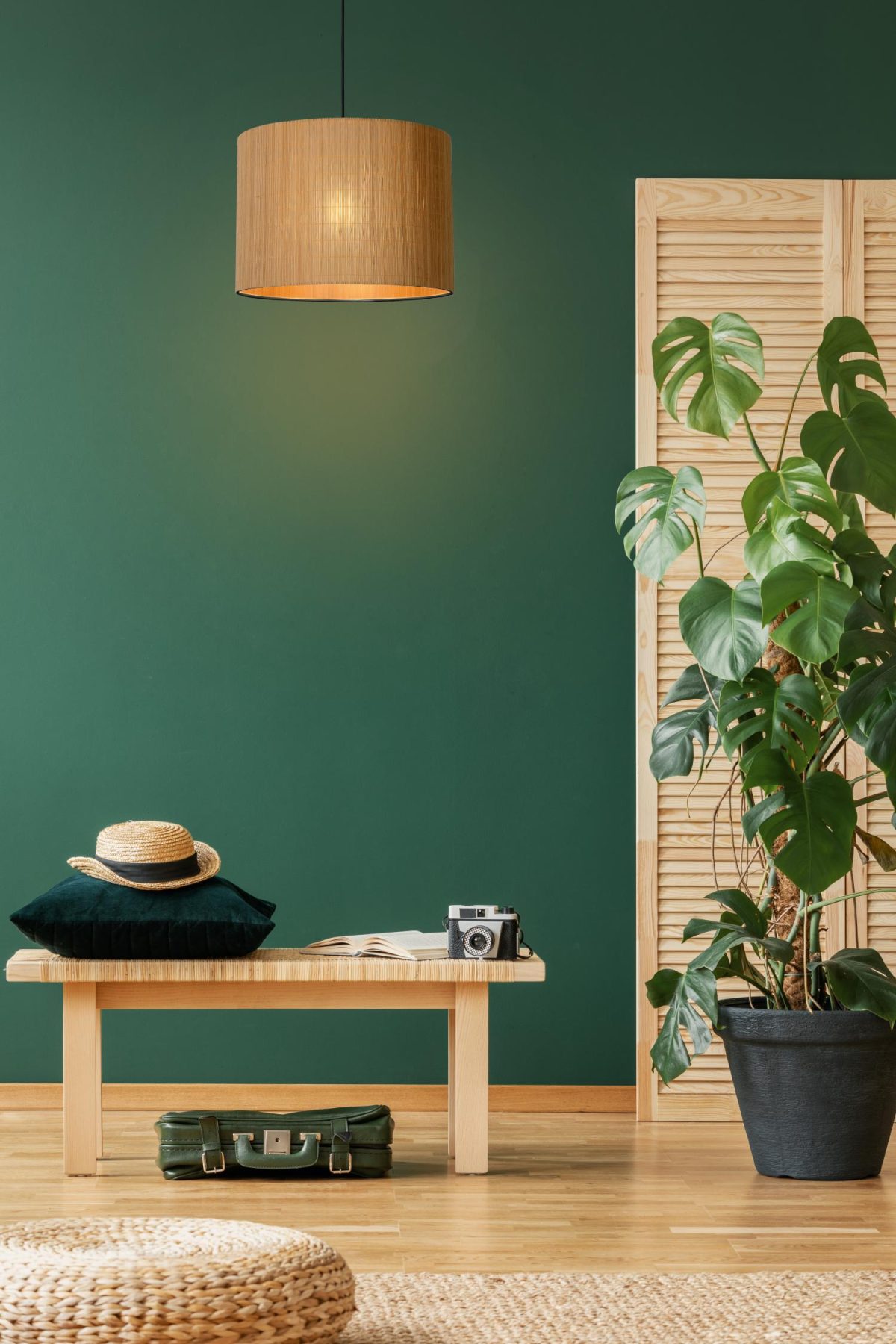
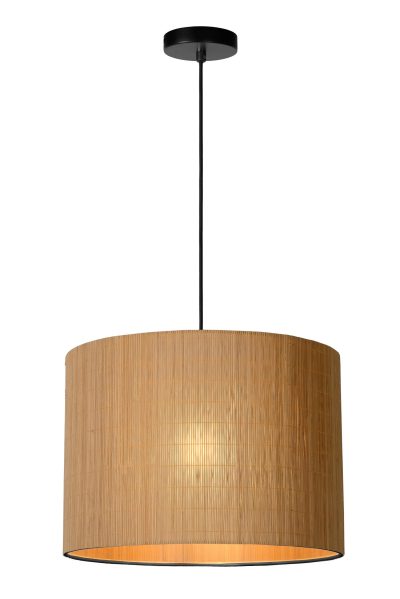
| Rattan, bamboo, weave | Light through the openings draws a pattern on wall and ceiling | Medium: you see the bulb through the gaps | Atmosphere, bedroom, terrace under a canopy | Frosted and not too bright, so that the bulb does not become a bright point |
Why opal glass causes less glare than clear glass
Glare does not come from the amount of light, but from how bright a small surface is. Licht.de calls this luminance: how much light per square metre of a surface reaches your eye. An LED bulb in clear glass is a small, very bright point. The same bulb behind opal glass spreads the same light over the whole glass surface, so that each part is much less bright. Licht.de explicitly names opal glass and diffusers as ways to lower the visible luminance of a lamp, alongside louvres, reflectors and lenses. The French health agency ANSES also recommends warm white light for lighting in the home, and indirect lighting or lamps with a diffuser.
That explains a common mistake: a clear glass pendant light above a dining table with an ordinary clear LED bulb in it. During the day it is a beautiful object; in the evening everyone at the table looks into a bright point. If you want clear glass, choose a bulb that is made to be seen, such as a globe or a filament bulb with a low brightness, and dim it. More on that in filament bulbs: when they look good and when they do not.
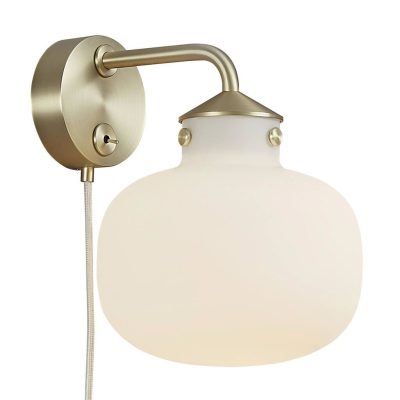
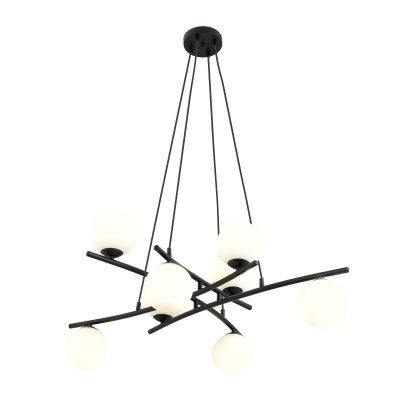
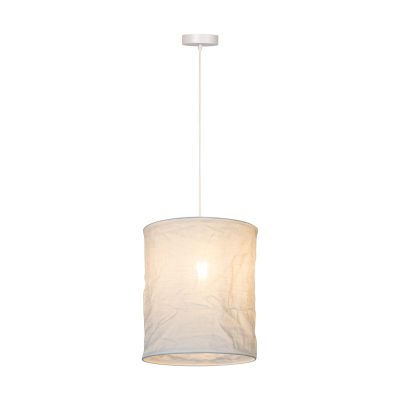
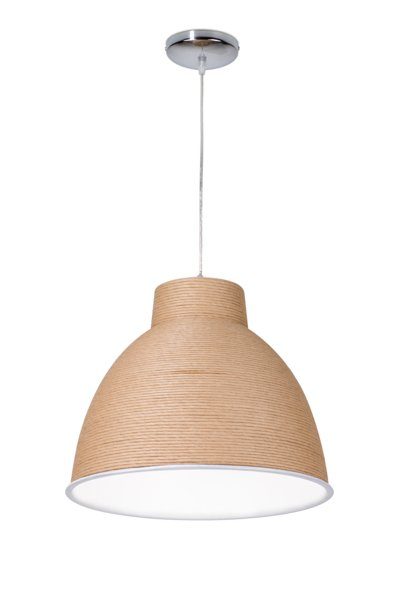
Soft, diffused light: opal glass, linen, paper and card
View allShades that light up over their whole surface, so that you do not look into a bright point.
Metal: light where you want it, and a dark shade
A closed metal shade lets no light through. Everything comes out through the opening, usually at the bottom, sometimes at the top as well. That gives a clear circle of light on the table or worktop and a calm, dark shade. For a dining table or an island that is exactly what you want: light on the food, not in the eyes of the person sitting opposite you.
Two details make the difference:
- The inside. A white inside reflects far more light outwards than a black one, and a gold-coloured inside makes the light warmer. How brightly a surface lights up depends directly on how much light it reflects; licht.de calculates the luminance of a matt surface with the reflectance factored in.
- How deep the bulb sits in the shade. If the bulb sits almost level with the bottom edge, everyone who is seated looks straight into the light source. A deep shade or a bulb with a shielding ring solves that. Licht.de calls this shielding the shielding angle: the larger it is, the less glare.
Ceramic and thick wood behave like metal: they are opaque, so all the light comes out through the openings.
Linen and fabric: the colour of the shade colours the light
A light fabric shade works like a soft filter. The light that passes through takes on the colour of the fabric: white linen gives neutral light, beige or natural makes it warmer, a coloured shade tints the whole circle of light. A dark fabric shade lets little through and behaves like a metal shade, with light only upwards and downwards.
Fabric and paper are close to the bulb, so keep to the maximum wattage the manufacturer states, and choose an LED bulb: it gets far less hot than an incandescent or halogen bulb. With card you often see in the product information that it has been treated with a flame retardant; that is a good sign, not a reason to fit a brighter bulb than permitted.
How large the shade of a table or floor lamp should be and at what height its bottom edge belongs is explained in table lamp and floor lamp: the right height and shade size.
Rattan, bamboo and weaves: shadows as an effect
A rattan or bamboo shade lets light through the openings between the fibres. That gives the recognisable pattern of light spots on the ceiling and walls, and that is precisely the purpose of such a lamp. The larger the openings, the sharper the pattern and the more light comes out, but also the more you see of the bulb itself.
The mistake often made here is a clear, bright bulb in an open weave. Then you see a bright little point through every gap. A frosted bulb or an opal globe bulb gives a softer pattern that still draws, but does not sting. And do not expect task lighting from a rattan pendant light: part of the light stays caught in the weave, and what comes out is divided into spots.
Directed or graphic light: metal, rattan and smoked glass
View allShades that steer the light, soften it or break it into a pattern.
Smoked and amber glass: a beautiful object, less light
Tinted glass holds back part of the light. Smoked glass softens the light without colouring it much; amber glass makes it noticeably warmer and more yellow. A pendant light with amber glass can be a superb object, and in the evening it gives a glow reminiscent of candlelight. What it does not do is light a table brightly with a bulb that would be more than enough behind clear glass.
Two ways to deal with that: you deliberately choose mood lighting and provide light for reading or cooking elsewhere in the room, or you fit a stronger bulb and dim it when you want less. Do not mix too many types of tinted glass in one room: amber next to opal next to smoked reads as chance.
Frequently asked questions
What is the difference between opal glass and frosted glass?
Opal glass is coloured white throughout and spreads the light very evenly; you no longer see a bulb, only an evenly glowing surface. Frosted or sandblasted glass has a roughened surface: it also diffuses, but less strongly, and with a bright bulb you often still see a lighter spot where the bulb is.
Won’t a fabric or paper shade get too hot?
With an LED bulb and within the maximum wattage the manufacturer states, that is not a problem. LED gets far less hot than an incandescent or halogen bulb. Never drape textiles over or around a lamp yourself; licht.de warns against that too.
Which bulb do I put in a rattan pendant light?
A frosted or opal LED bulb with a warm colour temperature, around 2700 K. A clear bulb gives bright little points through the openings. Choose the wattage according to what you need in the room; a rattan shade holds back part of the light.
Does a black shade give less light than a white one?
On the outside the colour makes little difference; on the inside it makes a lot. A shade that is white or gold inside reflects more light outwards than one that is black inside. So look at the inside if you want light on a table.
Sources
- Direktblendung, licht.de (2026)
- Leuchtdichte, licht.de (2026)
- LEDs & blue light, ANSES (2019)
- licht.wissen 14: Licht für Wohnräume, licht.de (ZVEI) (2019)