With a table lamp or floor lamp next to a seat, the bottom edge of the shade should be at about eye level when you are seated, so that you do not look into the bulb. To check, add up the height of the furniture and the lamp and compare the total with your own eye level. The shade is never wider than the tabletop the lamp stands on, and it covers the lamp holder completely. Put a reading lamp beside you or just behind you; the light should fall on the book, not in your eyes.
A table lamp or floor lamp is in the right place when, sitting in your usual spot, you see the shade but not the bulb. That is the whole rule; the rest is measuring. The bottom edge of the shade should be at about your eye level when you are seated, the shade must not be wider than the furniture beneath it, and the lamp holder must disappear inside it.
The mistake you see most often is a lamp that is too small on furniture that is too low: the shade sits below your shoulder, you look down into the open top, and the light falls mainly on the little table itself. The opposite mistake is a tall lamp on a tall cabinet, where you look up into the bulb from below when seated.
How high should a table lamp next to the sofa be?
Work it out from your eyes, not from the lamp. Sit in your usual spot and have someone measure how high your eyes are above the floor. That figure varies from person to person and from seat to seat; a deep, low sofa puts your eyes a good deal lower than an upright armchair.
Then add up:
- the height of the side table or cabinet the lamp stands on;
- plus the height from the base of the lamp to the bottom edge of the shade.
Together that should give roughly your eye level, or a little below. If the bottom edge is much higher, you look up into the bulb when seated. If it is much lower, you see the bulb from above when you stand or walk past, and it mainly lights the tabletop.
How wide can the shade be?
Three rules, from strict to loose:
- Never wider than the furniture. A shade that hangs over the edge of the table gets knocked and looks out of place. On a side table 45 cm wide, a shade of at most 45 cm fits, preferably a little less.
- The lamp holder disappears inside. From where you sit and from where you stand, you do not see the bulb. A shade that is too short for the base shows the lamp holder and part of the bulb.
- In proportion to the base. A commonly used design rule: the diameter at the bottom of the shade roughly equal to the height of the base, and the shade itself about two thirds to three quarters of that height. That is a rule of taste, not a law, but a lamp that is far off looks top-heavy or lost.
The shape counts too. A shade that is wider at the bottom than at the top sends more light down onto the tabletop and your book. A cylindrical shade divides the light more evenly upwards and downwards. What the material of the shade does with the light is explained in what light does a shade give.
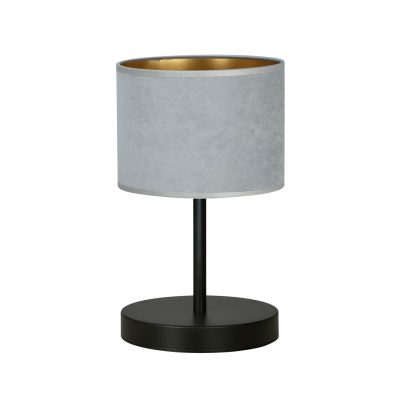
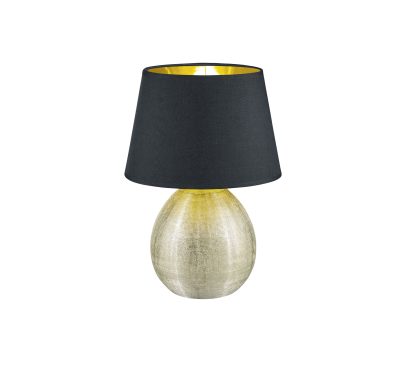
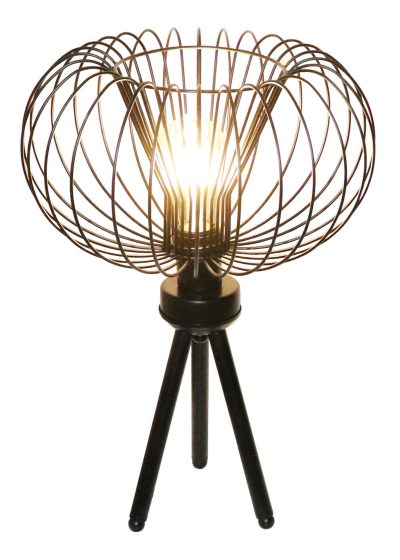
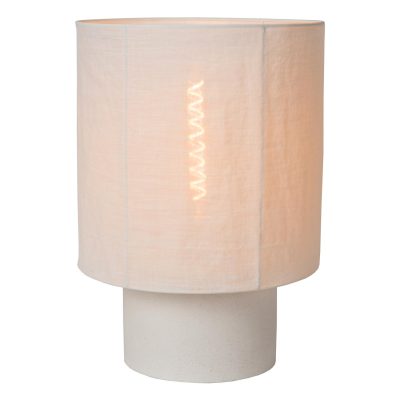
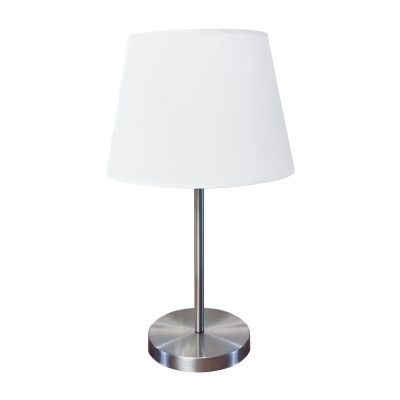
Table lamps with a shade, in different heights
View allFrom 34 to 60 cm high, so that you can choose according to the height of your furniture.
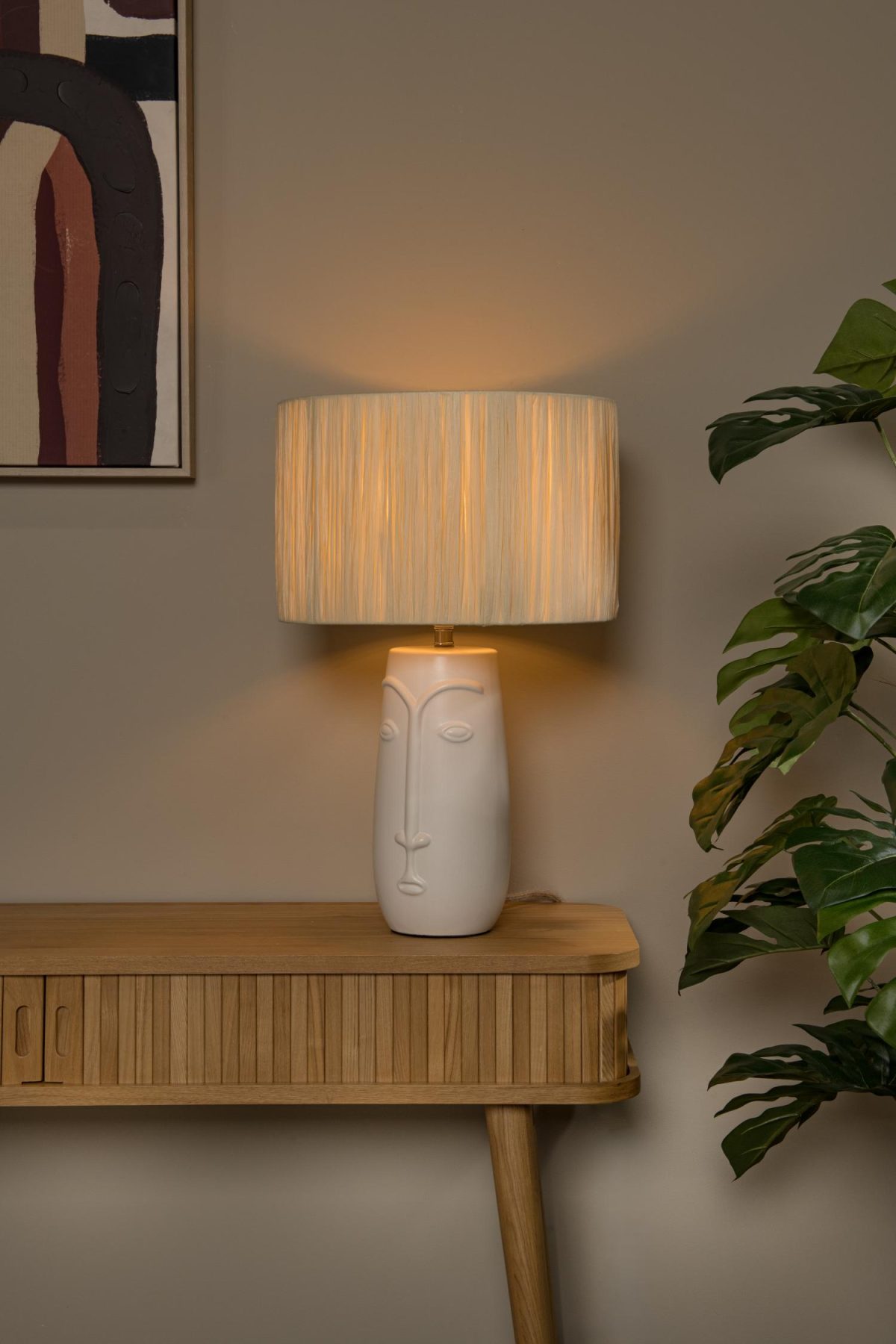
A lamp on the bedside table
In bed you sit differently than on the sofa: half upright against the headboard. The bottom edge of the shade is best at roughly shoulder height when you sit like that. Higher, and you look into the bulb when you turn your head; lower, and the light falls on the bedside table instead of on your book.
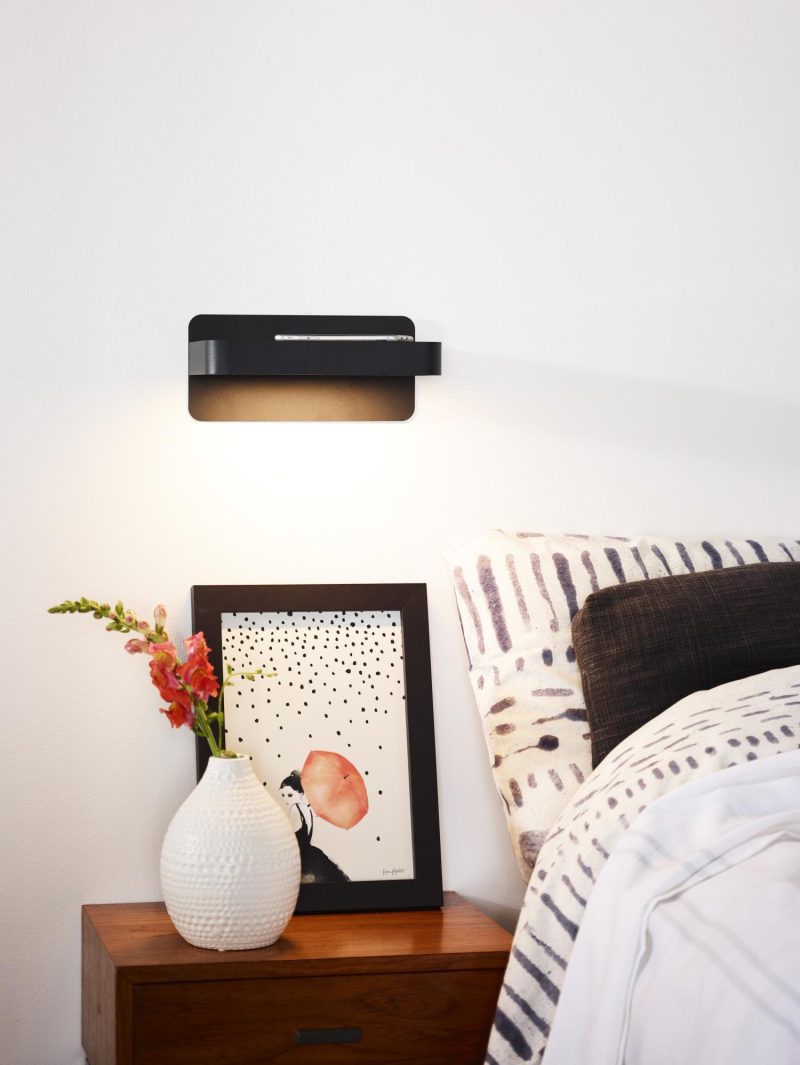
Think of your partner too. A shade that gives light in all directions keeps the other half of the bed awake. A shade that mainly shines downwards or an adjustable reading lamp on the wall is then a better choice. More about light beside the bed in bedroom lighting.
Where do you put a reading lamp, and how high?
Licht.de gives a simple rule: the best place for a reading lamp is beside or just behind the reader. Then the light falls on the book without you looking into the lamp, and without the paper dazzling you with reflections. Choose a lamp you can swivel and tilt, and preferably dim.
How much light do you need? For reading and writing, licht.de gives 500 lux on the paper as the minimum at a workplace at home, with a colour rendering of Ra 80 or higher. You will not get that from a mood lamp two metres away. A reading lamp of 300 to 700 lumens placed an arm’s length from the book will. Further away the light level drops quickly: at twice the distance, only a quarter of the light falls on the same spot.
If you wear glasses with a reading section or read for long periods, choose a warm-white to neutral-white light around 3000 K and good colour rendering; more on that in colour rendering and CRI.
| Situation | Rule of thumb | What to watch |
|---|---|---|
| Table lamp next to sofa or armchair | Bottom edge of shade around your eye level when seated | Include the furniture height |
| Table lamp on bedside table | Bottom edge of shade around shoulder height, half upright in bed | No light towards the other half of the bed |
| Table lamp on sideboard or cabinet | The taller the furniture, the lower the lamp | Judge it from a standing view |
| Shade width | Never wider than the furniture | Lamp holder must disappear completely |
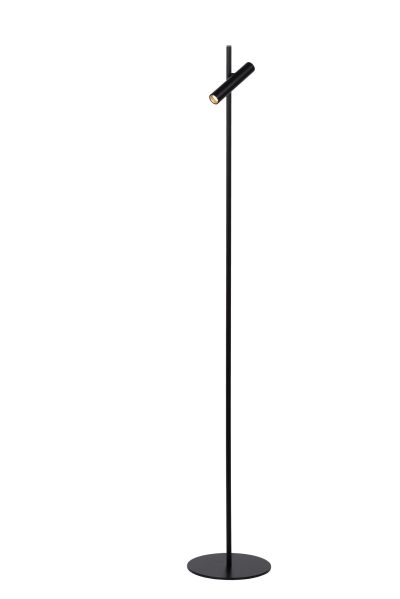
| Floor-standing reading lamp | Beside or just behind you, adjustable head | Light on the book, not in the eyes |
| Floor lamp with shade next to the sofa | Bottom edge of shade above your eye level when seated | That way you do not look into the bulb when seated |
| Arc lamp above coffee table | Shade above the middle of the table | Measure the reach and the headroom |
Floor lamps: with a shade, as a reading lamp or as an arc
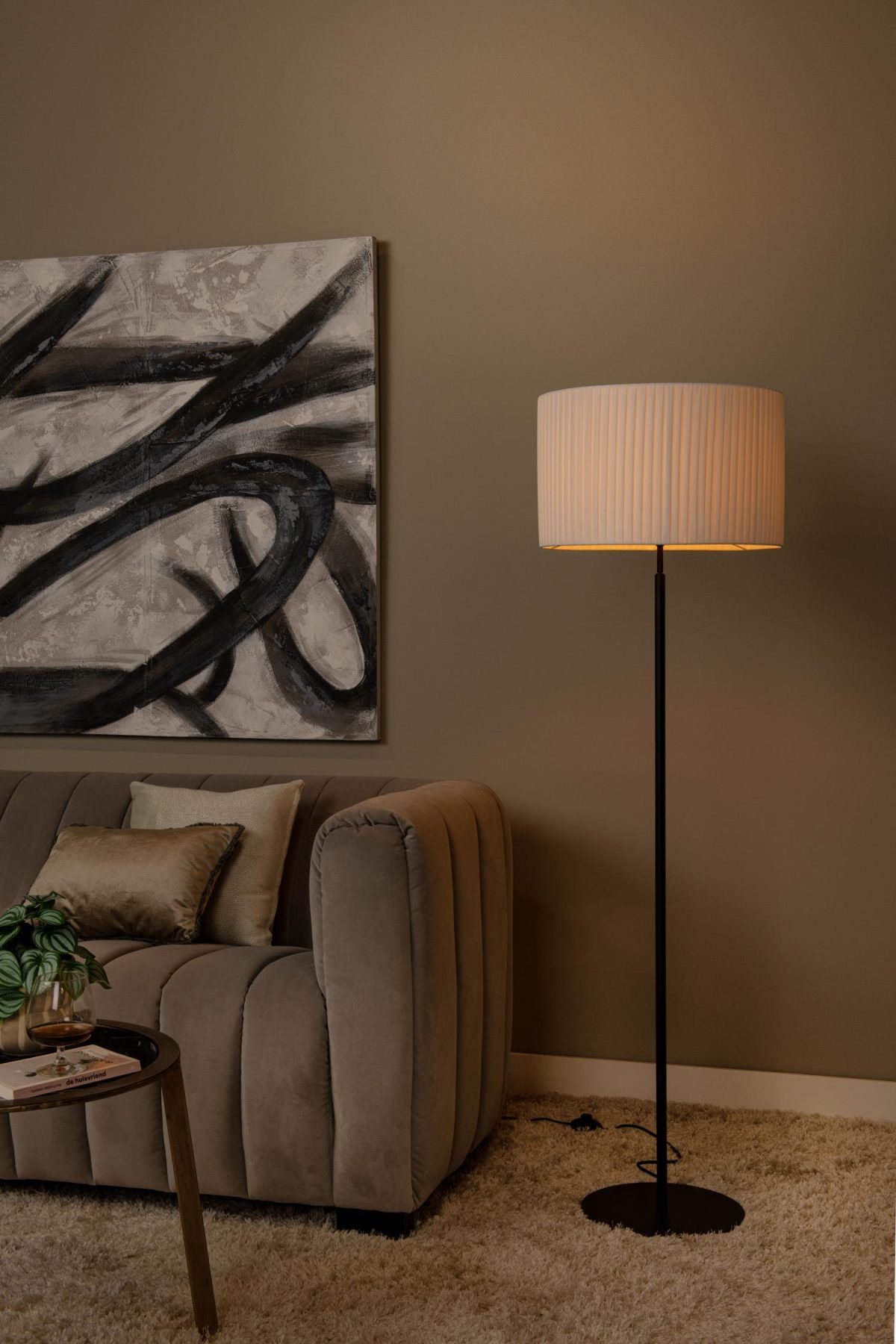
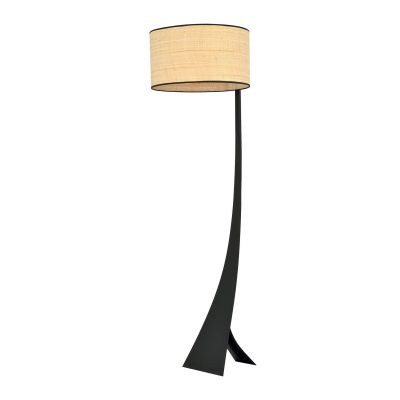
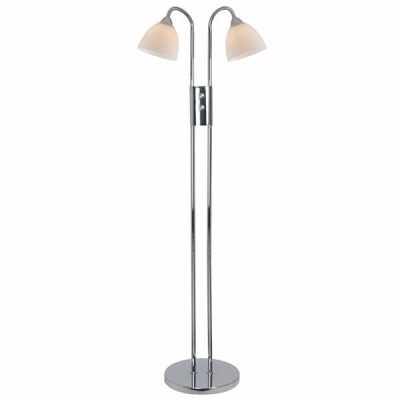
A floor lamp with a shade usually stands next to the sofa, a little behind the armrest. Because it is higher than your eyes, you look at the underside of the shade when seated; that is why the shade must be closed enough at the bottom or the bulb must sit high enough. A floor lamp of 150 to 165 cm with a shade 35 to 45 cm wide is a common size next to an ordinary sofa.
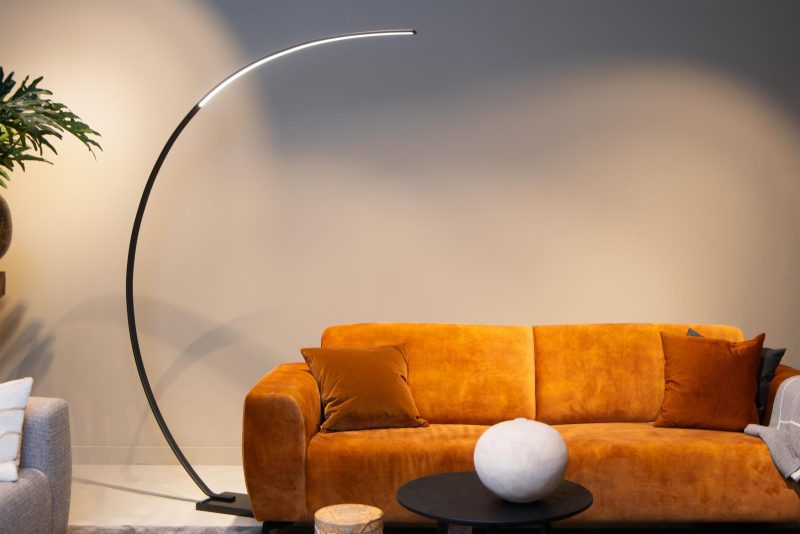
An arc lamp brings the light over the coffee table, while the base stands next to the sofa. Measure two things before you order: the reach of the arc, from the centre of the base to the centre of the shade, must be at least the distance to the centre of your table. And the shade must hang high enough that you do not bump into it when you walk round the table.
If you want to light a whole room with a floor lamp, choose one that (also) shines at the ceiling, with enough lumens. More on that in lighting a rented home without drilling.
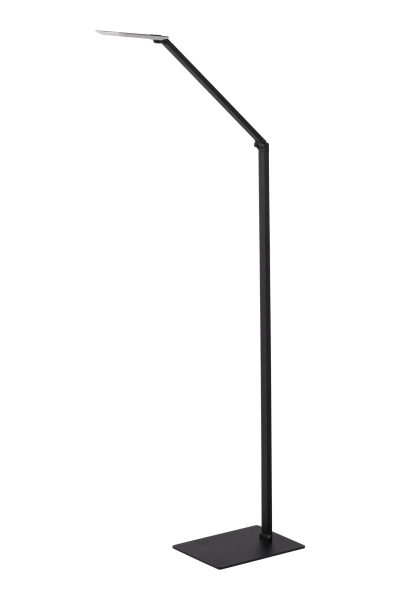
Floor lamps for reading or beside the sofa
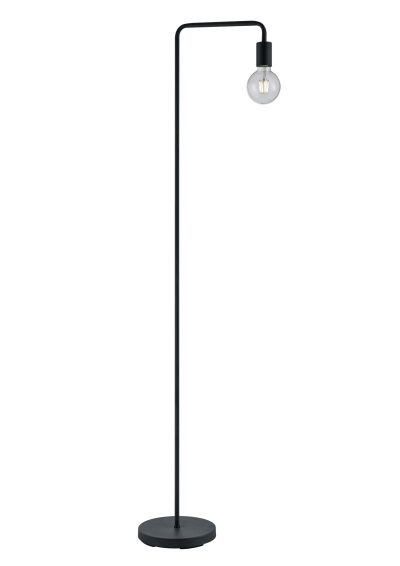
View allAdjustable reading lamps and floor lamps with a shade, between 140 and 164 cm high.
Frequently asked questions
Should two table lamps next to the sofa be the same height?
For a calm look, roughly yes: their shades should end up at the same height. If they stand on furniture of different heights, choose lamps of different heights so that the bottom edges of the shades are level.
Which bulb do I put in a table lamp with a fabric shade?
A frosted 2700 K LED bulb is the safe choice: it spreads the light evenly over the shade and gets only slightly warm. Respect the maximum wattage stated on the lamp. If you want to read by it, take 600 to 800 lumens; for atmosphere, less is enough.
Is a table lamp on a windowsill a good idea?
For atmosphere, yes: from outside it looks warm, and inside it softens the contrast with a dark window. Choose a lamp with a shade that shows no bright point towards the room, and check that the windowsill is wide enough for the base.
How far from my chair can a reading lamp be?
As close as is practical, usually within an arm’s length. Light falls off quickly with distance: what is enough to read by at 50 cm is only a quarter at 1 metre. An adjustable head helps to put the light exactly on the book.
Sources
- licht.wissen 14: Licht für Wohnräume, licht.de (ZVEI) (2019)
- Wohnzimmer: Lichtanwendungen, licht.de (2026)