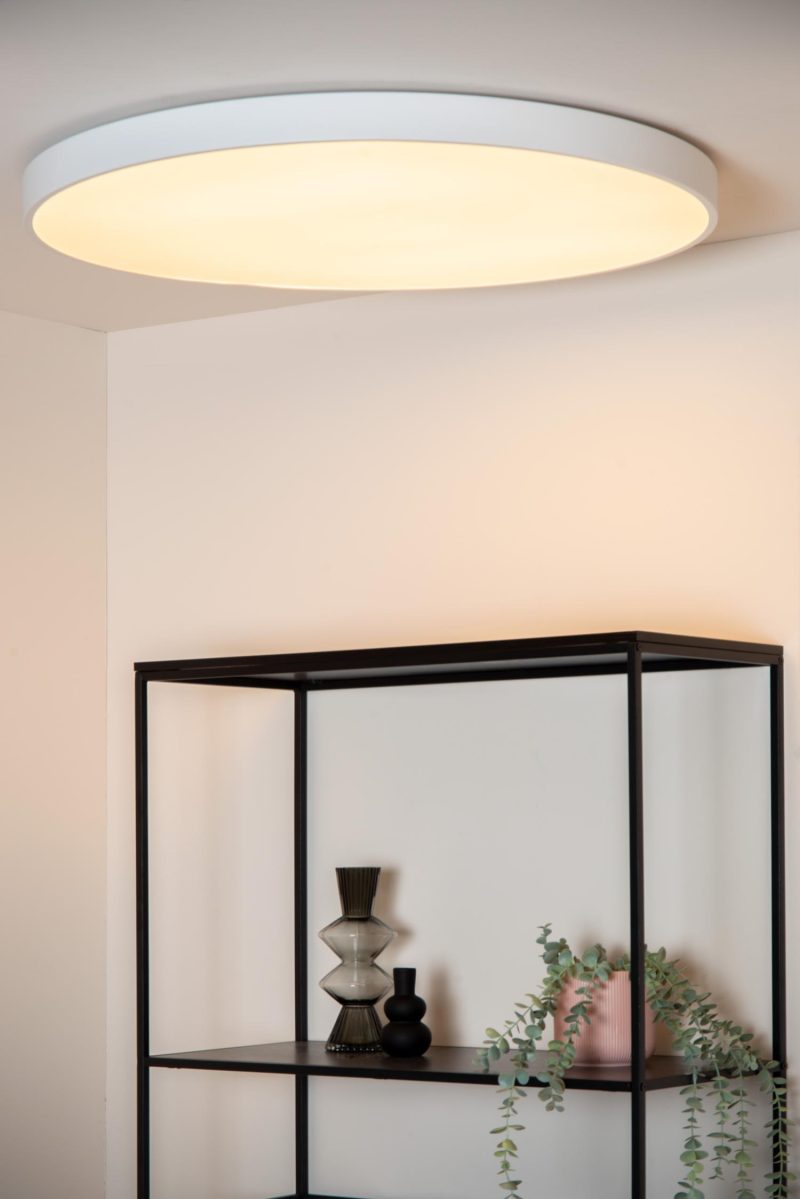
In a rented home you get the most light from three things: the lighting point that is already there, floor lamps of 1,000 lumens or more plugged into a socket, and rechargeable wall lights in places without power. Small holes are often less forbidden than people think: in the Netherlands you may drill them without permission if you fill them when you leave, in Flanders you must remove screws and repair the damage. Always leave the wires at a lighting point at their full length.
You can light a rented home well without moving a single cable. The basis is a floor lamp that can genuinely handle a room, supplemented by table lamps and one or two rechargeable wall lights where there is no socket. The ceiling point that is already there you use for a pendant light or ceiling light, and when you move out everything goes into the removal box.
The most common mistake is the reverse: one ceiling light as the only light, because there happens to be one lighting point. That gives a flat, harsh room and dark corners exactly where you want to sit. If you want to light a rented home well, think from the socket, not from the ceiling.
Are you allowed to drill in a rented home?
Often you are, and the rules differ by country and even by region.
- The Netherlands: the Dutch government says it literally: small changes that you can undo without much cost, such as drilling holes in the wall, may be made without the landlord’s permission. You do fill them again when you leave.
- Flanders: the list of minor repairs under the Flemish Residential Tenancy Decree places this with the tenant: removing nails, staples and screws and repairing the damage. So drilling is not forbidden, but you leave an intact wall behind when you move out.
- Brussels and Wallonia each have their own tenancy rules. Check your tenancy agreement there, and if in doubt, ask before you start.
A tenancy agreement can be stricter than the law, for example in an apartment with a concrete ceiling with cables running through it. A short email with a photo of what you want to hang up takes you five minutes and avoids a discussion about the rental deposit.
A floor lamp as the main light: how much light do you need?
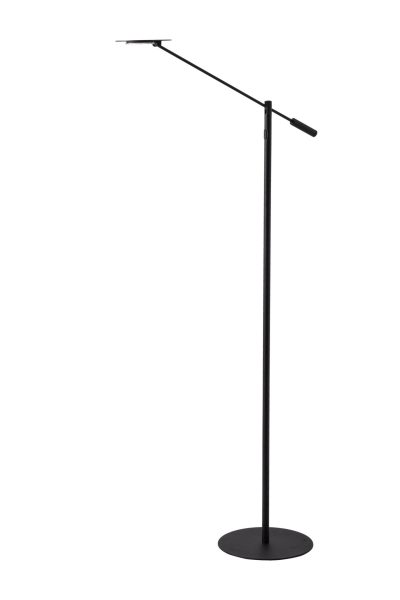
In a rented home a floor lamp is not an extra but your ceiling light on legs. For that it does need to give enough light. Many decorative floor lamps reach 300 to 500 lumens; that is nice next to an armchair, but too little for a whole room. For the main light, look at lamps with 1,000 lumens or more, preferably dimmable.
Lumens are the amount of light a lamp emits. How much you need per square metre depends on the room and the colour of your walls; the lumen calculator and the guide how many lumens per room give guide values for that.
The type makes a big difference. A lamp that shines at the ceiling, a so-called uplighter, uses the white ceiling as a large reflector: the light comes back into the room softly and evenly. Licht.de, the German knowledge centre of the lighting industry, calls floor lamps with a dual function a practical solution: an uplighter at the top for the room and a second light source below it for reading. A lamp that only shines downwards mainly lights the floor beneath it.
Floor lamps with enough light for a whole room
View allAll with integrated LED or a bulb of 900 lumens or more, on an ordinary plug.
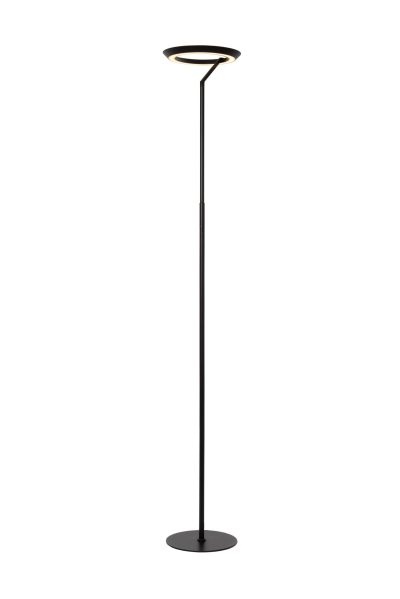
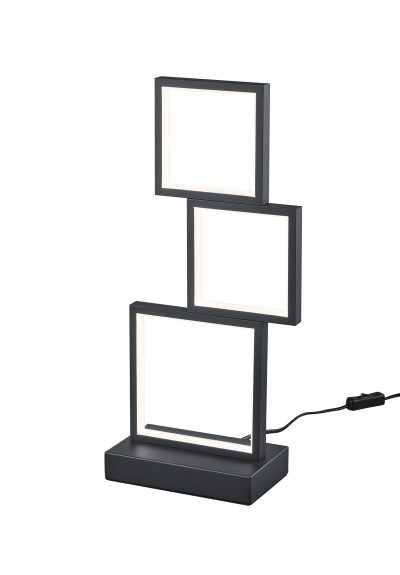
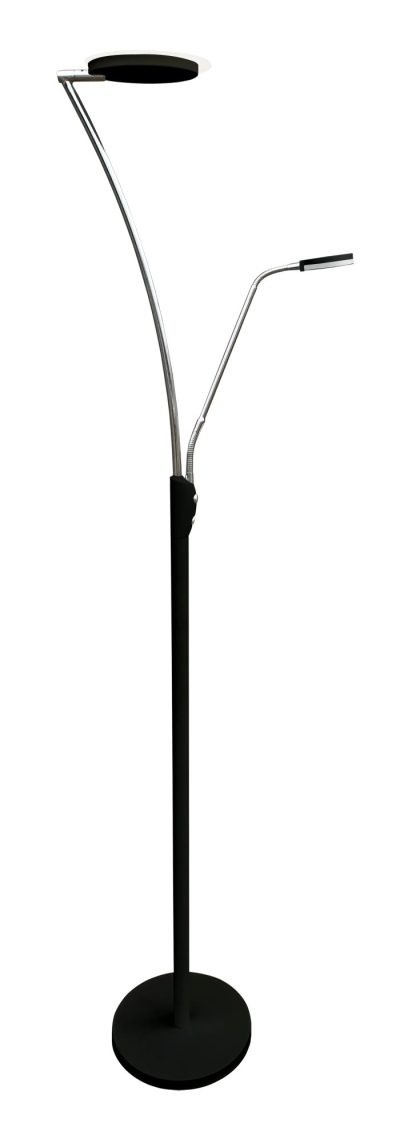
What can you hang from the existing lighting point?
First look at what is already there. There are roughly three situations.
- A hook in the ceiling. Then you hang a pendant light without drilling: the lamp hangs from the hook, and the wires go into a connector strip or terminal block in the ceiling cup. Mind the weight; a heavy glass lamp needs a hook made for it.
- A mounting plate or holes from a previous ceiling light. A new ceiling light almost always has its own mounting bracket. Sometimes the screws fit the existing holes; measure the spacing before you choose.
- Only wires, no hook. Then something has to be fixed, however light the lamp. That means two or three small holes in the ceiling, which you fill when you leave.
Is the lighting point not where you need it, for example in the middle of the room while the table stands by the window? Then a pendant light with a long cable can be led via a second hook to the right spot. That is one extra small hole instead of new wiring in the ceiling. A track on the existing lighting point is another way out: one connection, and you put the spotlights where you want them. Licht.de recommends track systems for rooms with only one ceiling connection. You can read more about tracks in track lighting explained.
Where there is no socket: rechargeable wall lights and spotlights
The hallway, a spot next to the bed, a painting above the cabinet: there is rarely a socket there. A rechargeable wall light solves that. You take it off the wall, charge it via USB and put it back.
Count on orientation light or reading light, not room light. A rechargeable wall spotlight typically gives 100 to 200 lumens, about a tenth of a good floor lamp. How long such a lamp lasts depends on the battery and the dimming setting: the manufacturer of the Lucide Toni below states a 2,200 mAh battery and up to 10 hours of light at maximum power. If you want to know how to read those figures and what happens to a battery outdoors, read how long a rechargeable lamp lasts.
A rechargeable wall light also has to hang on something. Usually that is a small plate that the lamp clicks onto magnetically. You fix that plate with a small screw, or with mounting tape if the manufacturer allows it and the wall is smooth and firm. Tape holds poorly on wallpaper or a porous lime finish.
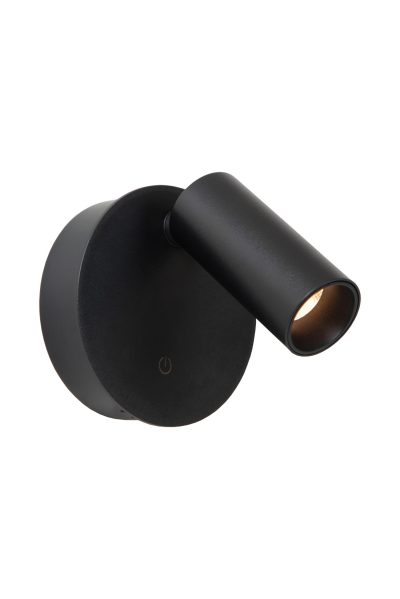 LUCIDE TONI rechargeable wall spot / wall lamp, battery, Ø 8.1 cm
An adjustable battery-powered wall spotlight with a magnetic wall plate and a motion sensor you can switch off. With 120 lumens at 2700 K it is intended for a hallway, a niche or a reading corner, not as room light. €31.46
Clamp lamps, arc lamps and cables that stay tidy
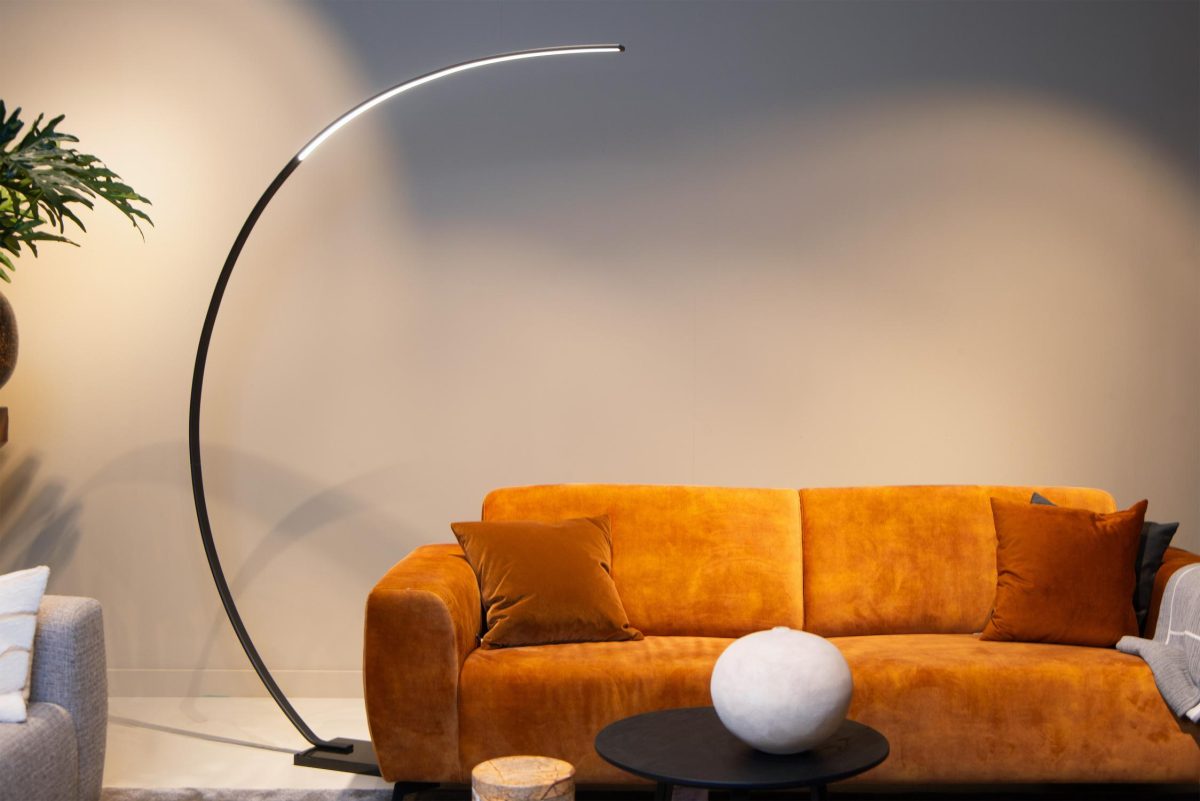
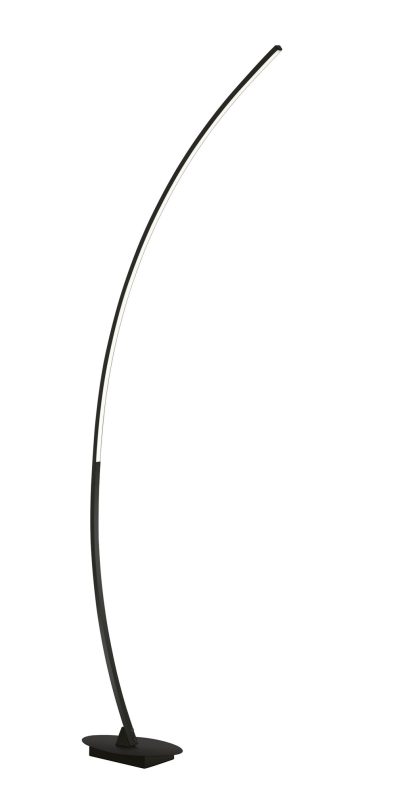
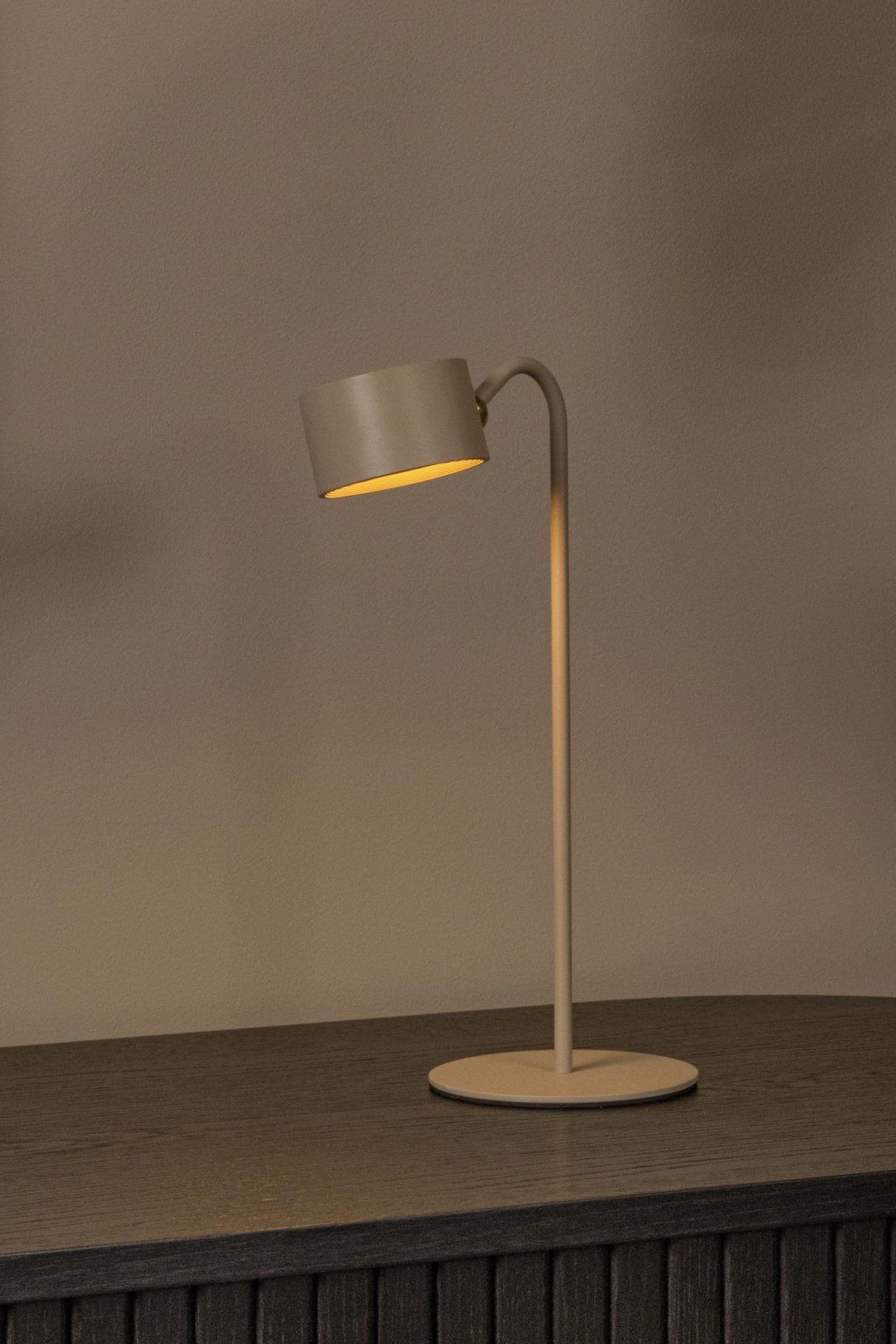
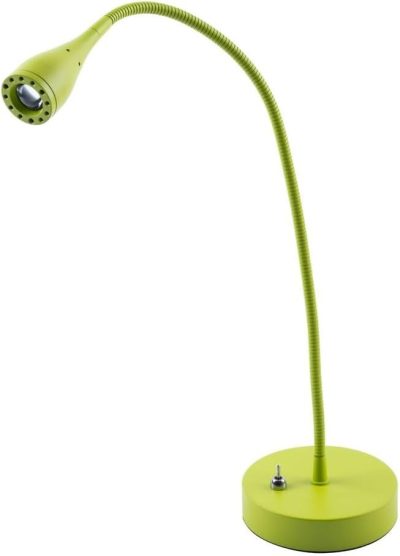
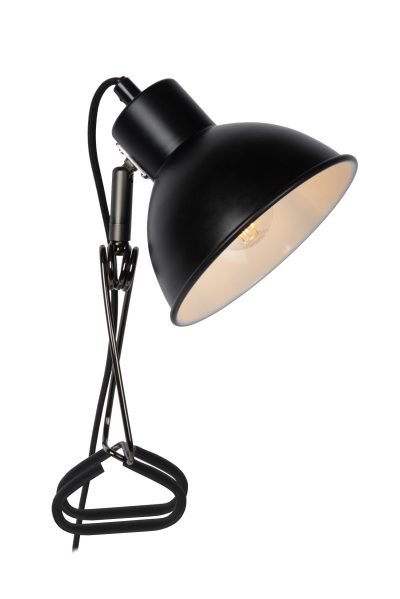
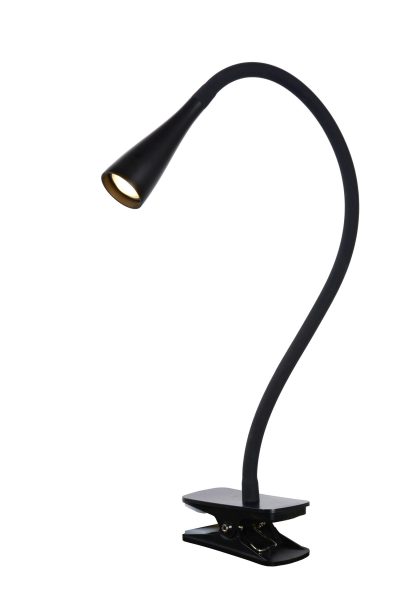
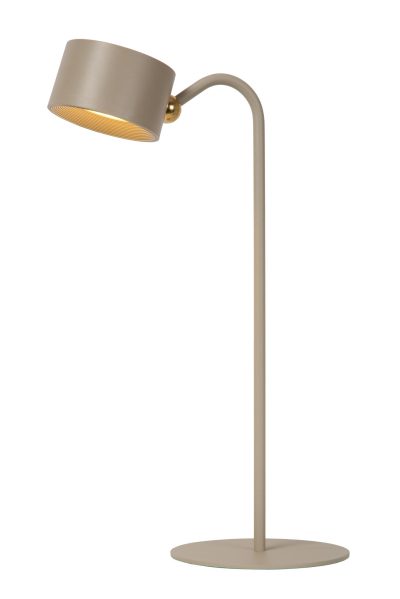
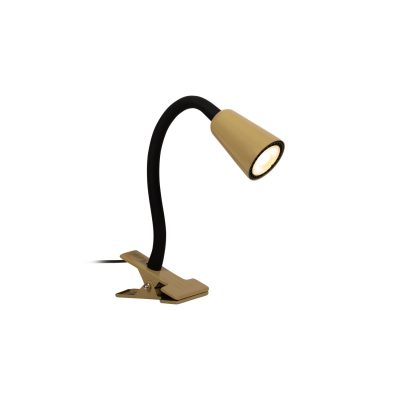
A clamp lamp on a bookshelf or on the headboard of the bed is the cheapest reading lamp without a hole. An arc lamp brings light over the sofa or coffee table, in a spot where you would otherwise hang a pendant light, while the base stands next to the sofa. Do measure the arc: the lamp must reach far enough and the shade must hang high enough that you do not bump your head on it.
Loose cables are the weak point of plug-in lighting. Run them along the skirting board, fix them with self-adhesive trunking in the colour of the wall, and choose an extension lead with a switch so that you switch off several lamps in one go. That saves you bending down three times every evening, and stops anyone tripping over a cable.
Clamp lamps and lamps for a shelf or bookcase
View allLight where you read, without fixing anything to the wall.
Dimming and switching without replacing the switch
The wall switch in a rented home usually only controls the ceiling point. If you want to dim your plug-in lamps together, there are three ways that change nothing in the installation: a lamp with a built-in dimmer or touch control, an inline dimmer in the cable, or smart bulbs that you control with an app or a wireless button. With an inline dimmer, pay attention to the bulb inside: not every LED bulb is dimmable, and not every dimmable LED bulb works with every dimmer. More on that in dimming LEDs.
Frequently asked questions
Can I replace the landlord’s ceiling light with my own lamp?
Usually yes, as long as you keep the original lamp and put it back when you leave. When you move in, note which lamp was hanging there and take a photo. Switch off the circuit at the fuse box before you work on the wires.
Is a rechargeable lamp enough as the only light in a room?
No. A rechargeable wall or table lamp usually gives 100 to 300 lumens, while a living room easily needs 1,500 to 2,500 lumens. Use rechargeable lamps for the places where there is no power, and a floor lamp plugged into a socket for the main light.
How do I light a painting without a cable in the wall?
With a rechargeable adjustable wall spotlight above or next to the painting, or with a spotlight on a track connected to the existing lighting point. Licht.de advises lighting a painting at an angle from above, from about 0.5 to 1.5 metres from the wall. That way you see less reflection in glass or varnish.
Am I better off avoiding lamps with a fixed cable if I move later?
A lamp with a plug moves with you without any work. A lamp that is wired into the mains has to be disconnected when you leave, and the wires covered. For a rented home plug-in lighting is therefore the most flexible; it is best to limit fixed lamps to the lighting point that is already there.
Sources
- Mag ik mijn huurwoning verbouwen of renoveren?, Rijksoverheid (2026)
- Bijlage 1. Lijst van kleine herstellingen (uitvoering Vlaams Woninghuurdecreet), Vlaamse Regering (2018)
- licht.wissen 14: Licht für Wohnräume, licht.de (ZVEI) (2019)
- Wohnzimmer: Lichtanwendungen, licht.de (2026)
- TONI oplaadbare wandspot, productinformatie, Lucide (2026)