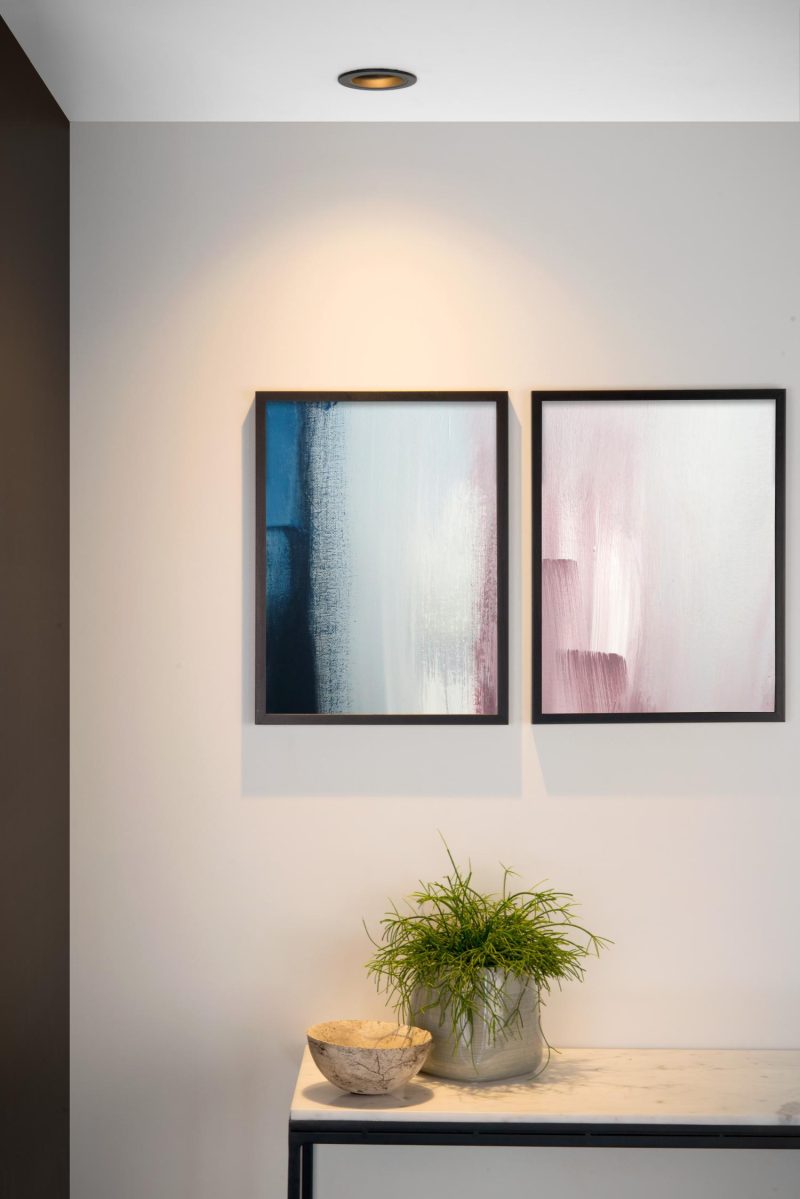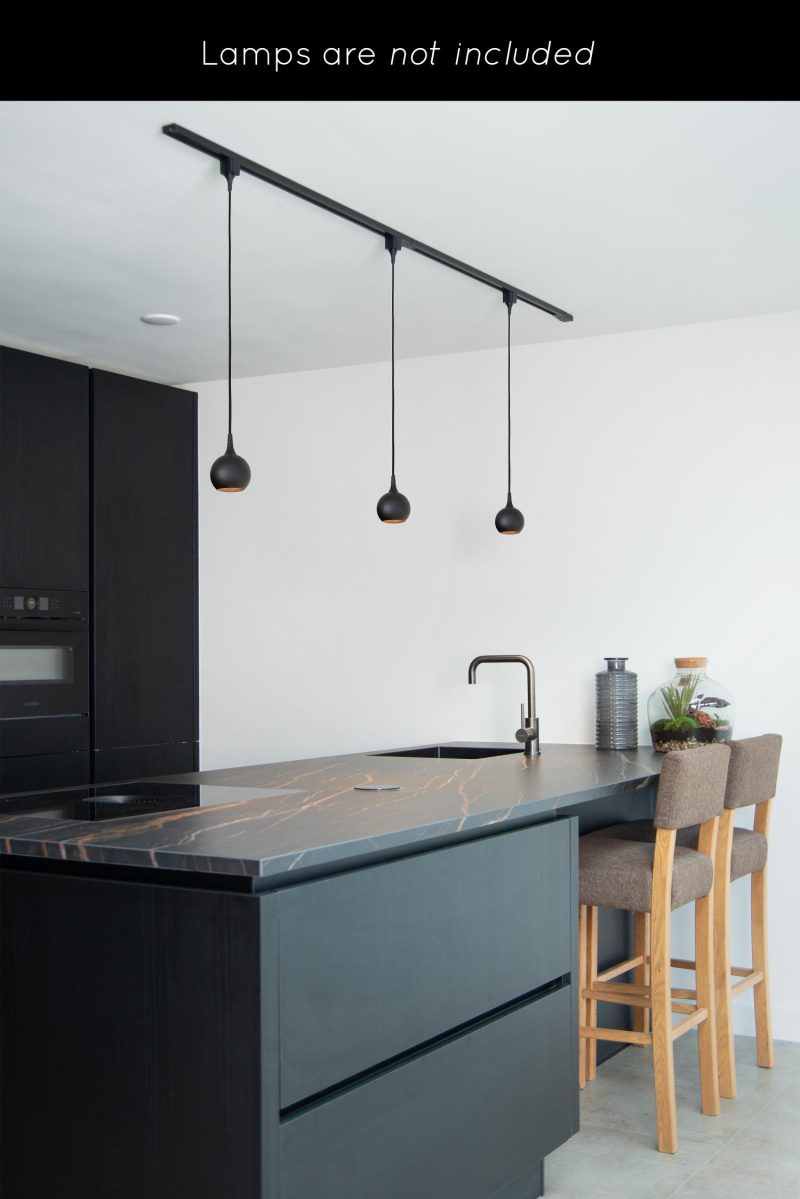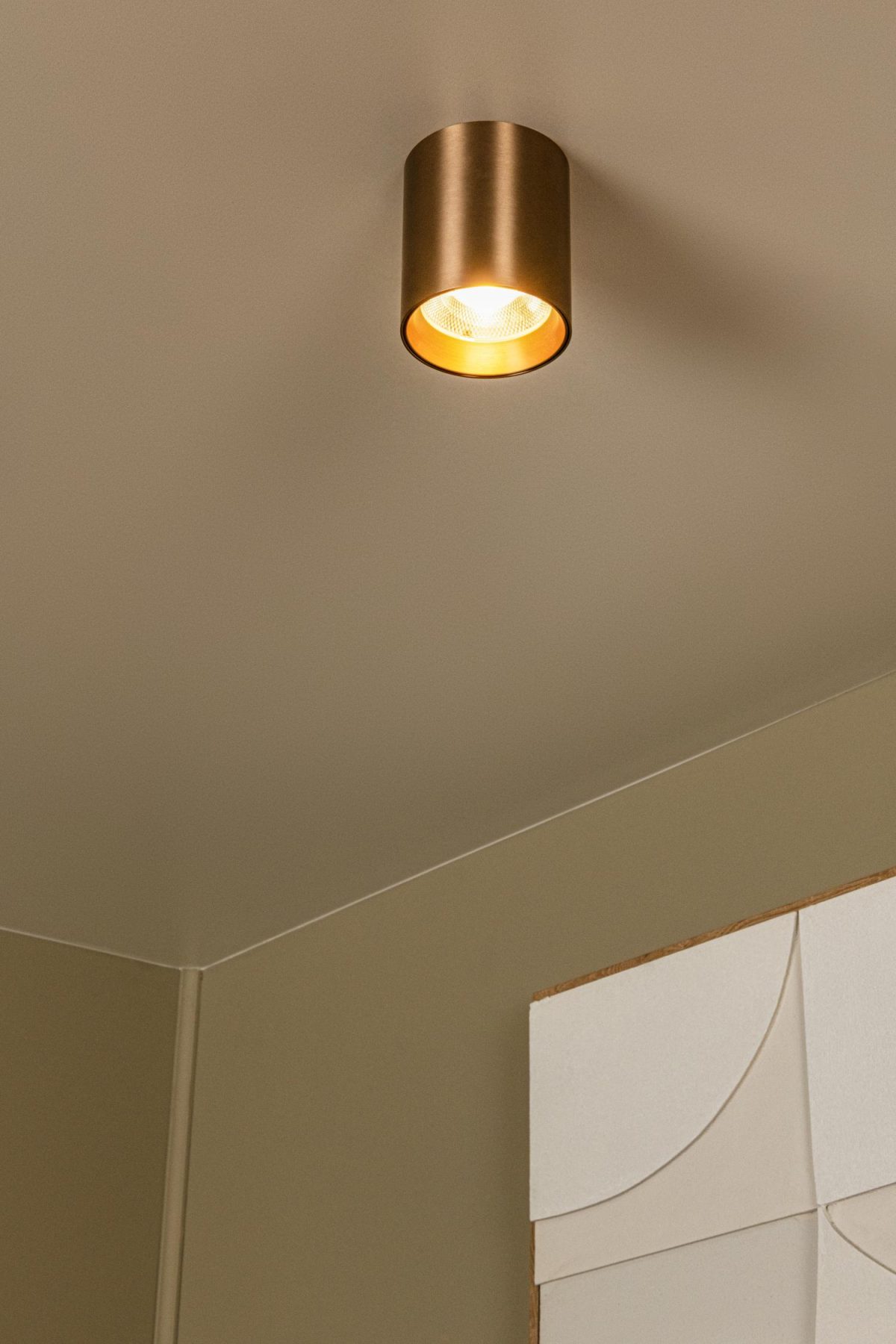
On a concrete ceiling you choose surface-mounted spotlights, not recessed ones: a recessed spotlight with a GU10 bulb easily needs 6 to 8 cm of space behind the ceiling, and in concrete that space is not there. From one existing lighting point you can feed several spotlights with a spotlight plate, a track or individual surface-mounted spotlights with the cable in trunking. In hollow-core floor slabs, drill only where the hollow channels are, never in the webs between them.
On a concrete ceiling, surface-mounted spotlights and tracks work, and recessed spotlights almost never do. A recessed spotlight needs a hole and space behind it, plus a cable that reaches each spotlight. In a concrete slab you have neither. What you usually do have is one lighting point, somewhere in the middle of the room, and from that one point you can feed a surprising number of spotlights.
So the question is not which spotlight you choose, but how you get the light from that one point to the places where you need it. There are four ways to do that, each with a different kind of drilling.
Why recessed spotlights rarely work in a concrete ceiling
An ordinary GU10 LED bulb is about 5 to 6 cm long. Add the housing and a little space for the lamp holder and the cable, and with a classic recessed spotlight you soon need 6 to 8 cm behind the ceiling surface. In a plasterboard ceiling with a void that is no problem. In a concrete slab you have to cut a hole of that depth for every spotlight, and get a cable into that hole. That is not a quick job, and in an apartment you are often not even allowed to do it without the agreement of the co-owners.
If you still want flush recessed spotlights, have a suspended ceiling fitted: a metal grid with plasterboard a few centimetres below the concrete. That costs ceiling height, and in a 2.50 m room you feel every centimetre. For that, also read lighting for a low ceiling.
| Solution | Drilling | Moving afterwards | Suitable if |
|---|---|---|---|
| Spotlight plate or bar on the lighting point (2 to 4 spotlights) | Only the fixing at the lighting point | Spotlights swivel and tilt, but do not move | you want light around one spot, such as above a dining table or seating area |
| Surface-mounted track from the lighting point | A fixing point for the track every 1 to 1.5 m | Yes, spotlights slide along the track | you want to light a strip several metres long, for example a kitchen or hallway |
| Individual surface-mounted spotlights with the cable in trunking | Fix every spotlight and the trunking | No, the cable is fixed | you want spotlights in fixed, scattered positions |
| Suspended ceiling with recessed spotlights | Hang a grid, holes in plasterboard | No | you still want recessed spotlights and can spare the height |
A spotlight plate on the lighting point: the simplest solution
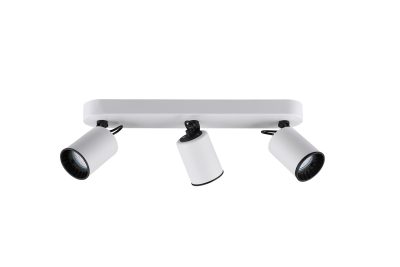
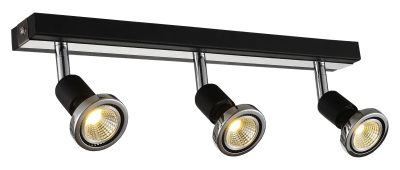
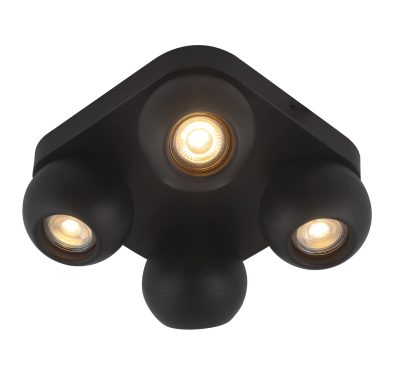
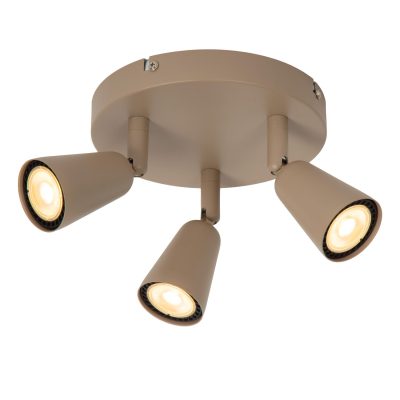
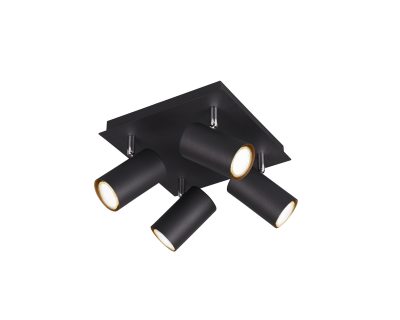
A ceiling light with two, three or four adjustable spotlights on a bar or plate hangs directly on the existing lighting point. You need no new wiring, only the fixing of the light itself. Because each spotlight can be aimed separately, one light fitting lets you light the table, a cabinet and a section of wall.
Mind the length of the bar. A 40 cm spotlight bar with three spotlights spreads the light over a 40 cm stretch of ceiling; the beams spread further apart the more you tilt them, but the light source stays in one place. For a room of 4 by 5 metres that is enough for a seating area or dining table, not for even light across the whole room.
Ceiling lights with several adjustable spotlights
View allTwo to four spotlights on one connection point, all with a GU10 base, so that you choose the colour temperature and brightness of the bulbs yourself.
A track: light over several metres from one connection
You screw a surface-mounted track to the ceiling and connect it to the lighting point. Then you click spotlights into the track and slide them where you want them. Licht.de explicitly names track systems as a solution for rooms with only one ceiling connection. The advantage over a spotlight plate: the light sources are spread over the whole length, so you can light a long kitchen or a hallway evenly.
A track does need fixing points along its whole length, so you drill several holes in the concrete. Choose the route so that the track follows a straight line that relates to the room: parallel to the kitchen worktop, or at a fixed distance from a wall. How to put a track together, which phase you need and how many spotlights it can take is explained in track lighting explained.
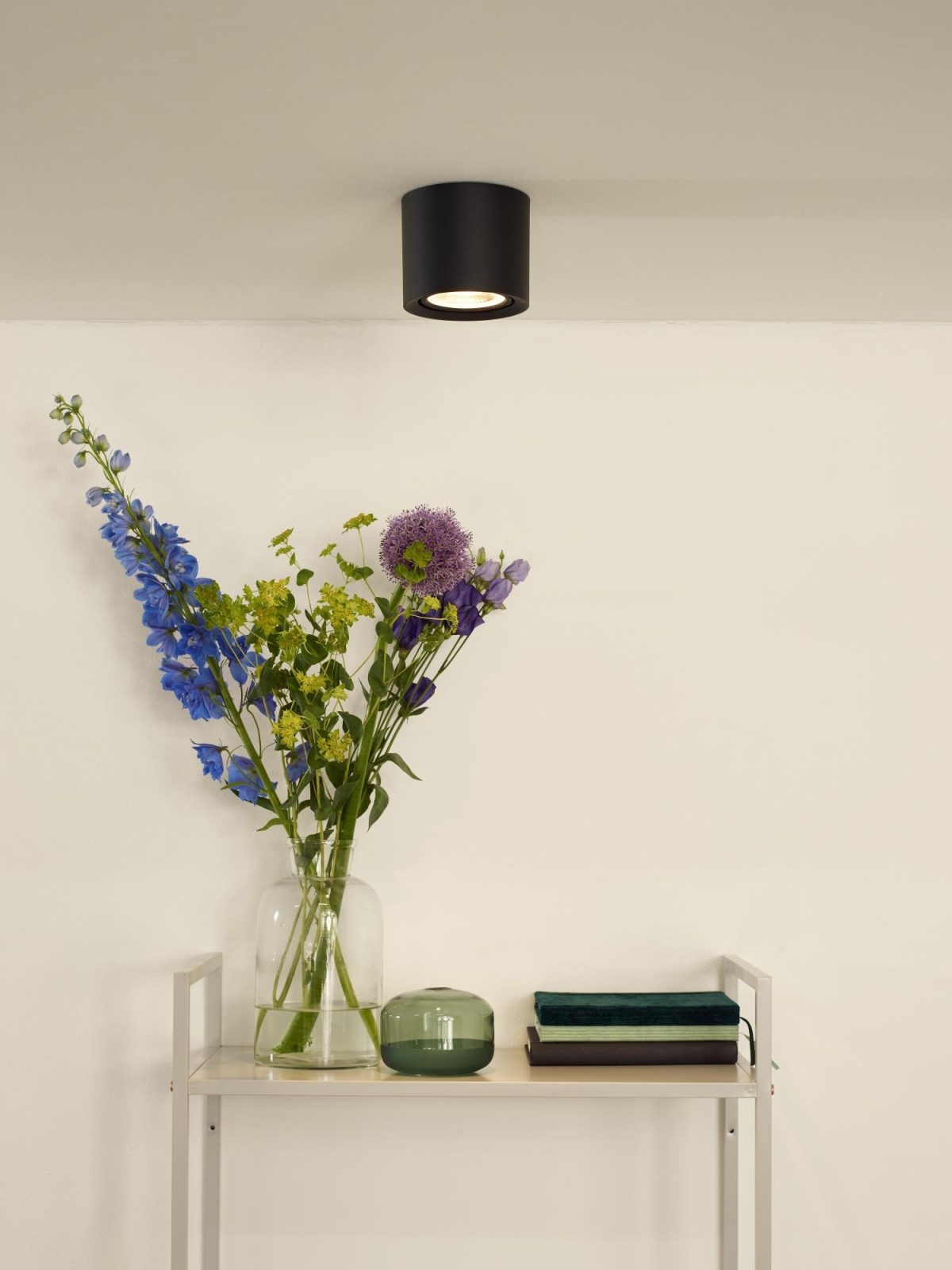
Individual surface-mounted spotlights: how does the cable get there?
If you want spotlights in fixed positions that are not in one line, each spotlight needs its own supply. On concrete that cable runs visibly, in surface conduit or cable trunking. Trunking a centimetre or two wide, painted the colour of the ceiling, is less noticeable than you think, especially if it follows a straight line along a beam or a wall.
This is work on the fixed installation. In Belgium the rules of the AREI apply, in the Netherlands those of NEN 1010; leave the laying of new wiring to an electrician. What you can choose yourself is the route: the fewer bends and crossings, the calmer the ceiling looks.
Which surface-mounted spotlight causes the least glare?
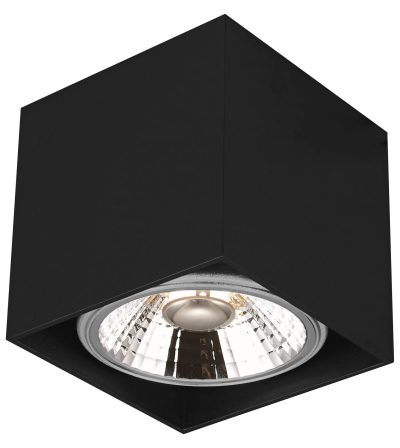
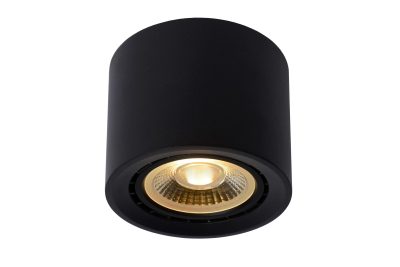
A surface-mounted spotlight hangs in view, and so does the light source. The deeper the bulb sits in the housing, the less you look straight into it. Licht.de calls this the shielding angle: the larger that angle, the less glare. A cylinder in which the bulb is set back a few centimetres, or a spotlight with a black inside or a louvre, therefore gives calmer light than a spotlight where the glass of the bulb is flush with the rim.
Three other choices make a big difference:
- Aim spotlights at something: a wall, a cabinet, a table. A spotlight that shines straight down into an empty room gives pools of light on the floor and little light where you sit.
- Choose the beam angle to suit the task: a narrow beam of 24 to 36 degrees for an accent, a wide one of 60 degrees or more for general light.
- Take dimmable bulbs, or spotlights with integrated LED and their own dimming function. More on that in dimming LEDs.
Individual surface-mounted spotlights with enough light for general lighting
View allSpotlights with integrated LED or a powerful bulb, between 620 and 1,130 lumens per spotlight.
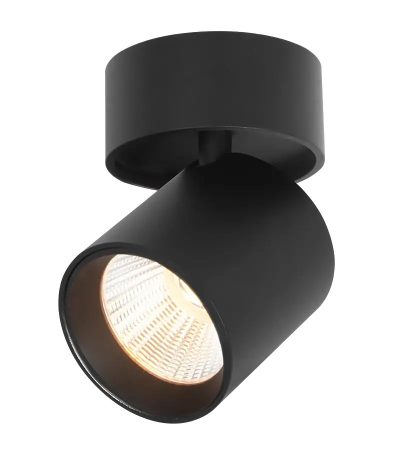
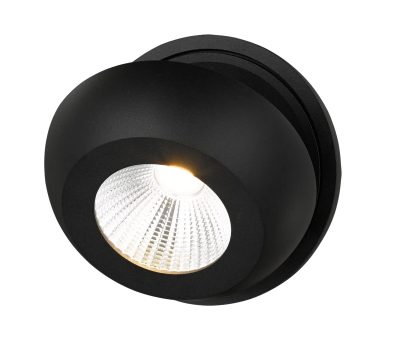
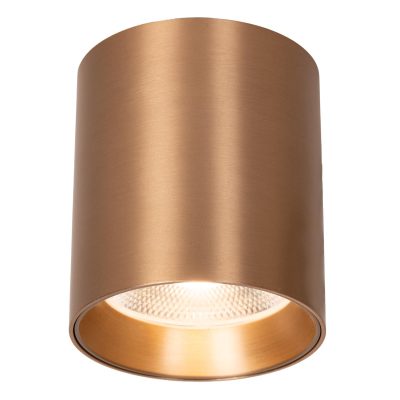
Colour and shape: when does a surface-mounted spotlight blend in?
A white spotlight on a white-painted ceiling stands out least. A black or brass-coloured spotlight on raw concrete becomes a deliberate element instead, and that works best if you use few of them and line them up neatly. If you leave the ceiling as raw concrete, you often choose black, and then a black track or black trunking helps everything read as one whole. Whatever you choose, stick to one finish per room; three kinds of spotlights side by side look accidental.
Frequently asked questions
Can I put spotlights on a concrete ceiling without an electrician?
Replacing a light with a ceiling light with several spotlights on an existing lighting point is an ordinary lamp change: power off at the fuse box, wires into the terminal block. As soon as new wiring has to run to extra spotlights, it is work on the installation and belongs with an electrician.
Are there recessed spotlights with little recess depth?
Yes, there are flat recessed fittings with integrated LED that are only 3 to 4 cm deep. In concrete you still have to cut a hole for them and bring a cable into that hole, so it does not solve the core of the problem.
How much does a track with spotlights weigh, and can a concrete ceiling take it?
The weight of a track with spotlights is modest and spread over several fixing points. The concrete is rarely the problem, the fixing is: use plugs for hollow-core floor slabs if your ceiling is made of hollow-core slabs, and do not drill into the webs.
Can a surface-mounted spotlight go in the bathroom?
Yes, provided the spotlight has the degree of protection that matches its position in the bathroom, such as IP44 or IP65. Which zone requires which IP rating is explained in bathroom lighting and IP zones.
Sources
- G5-004 Bevestigingsmiddelen in kanaalplaatvloeren, VBI (2022)
- Direktblendung, licht.de (2026)
- licht.wissen 14: Licht für Wohnräume, licht.de (ZVEI) (2019)
- Veiligheid en controle van elektrische installaties, FOD Economie (2026)