Under a ceiling of 2.40 to 2.50 m you choose flat ceiling lights no more than 5 to 10 cm deep, with opal or frosted glass that shields the light source. Light that reaches the ceiling and the top of the walls makes the room look taller. Pendant lights belong only where nobody walks underneath, such as above a table, and spotlights are better with a wide beam of 60 degrees or more: at 1.65 m from the tabletop a 36-degree beam gives a pool of light of only about 1.1 m.
Under a low ceiling, what works is flat ceiling lights with diffusing glass, wall lights that send light upwards, and pendant lights only above a table or an island. What does not work: a domed ceiling light 25 cm deep in the middle of the room, or a chandelier in a walkway.
A low ceiling has two problems at once. There is little room between your head and the lamp, and the light source is closer to your eyes, so it dazzles more quickly. The good news: with light in the right place, the room looks taller than it is.
How flat should a ceiling light be with a low ceiling?
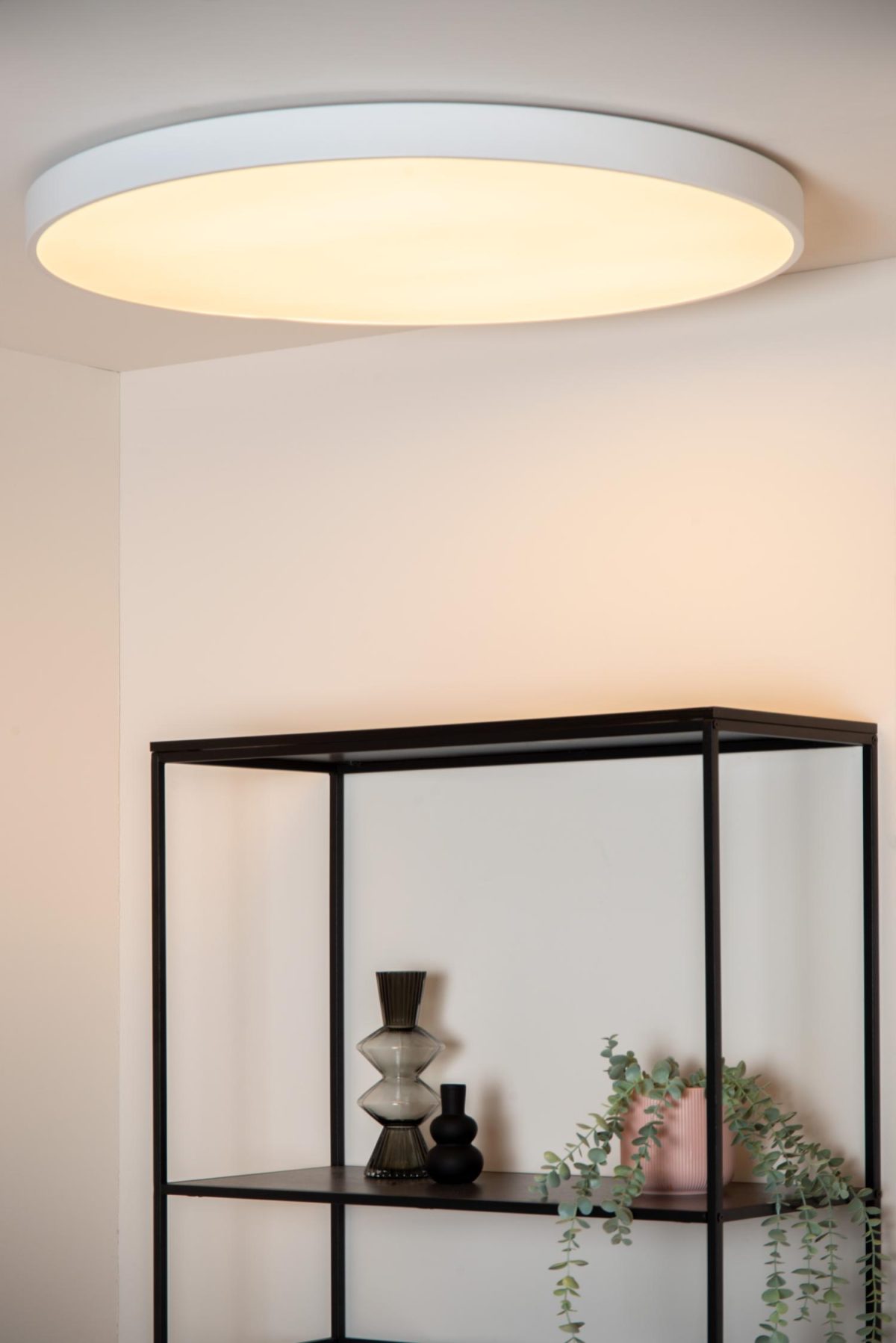
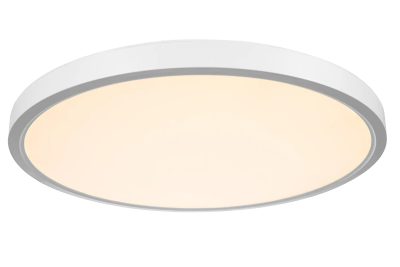
The flatter the better, provided the lamp gives enough light. In a living room with a ceiling below 2.50 m, aim for a light fitting no more than 5 to 10 cm deep. There are round LED ceiling lights 2 to 6 cm high that still give 3,500 to 5,000 lumens, enough for a good-sized room.
Width helps too. A wide, flat lamp of 60 to 80 cm spreads the light over a larger area than a small lamp with the same number of lumens. That looks calmer and dazzles less, because the brightness per square centimetre of the lamp is lower. Licht.de describes this brightness as luminance and names opal glass and diffusers as ways to lower the visible luminance of a lamp.
Licht.wissen 14, the licht.de brochure on light in the home, explicitly names flat but powerful LED panels as a solution for rooms with low ceilings. In a living room you would sooner choose a round LED ceiling light with a warm colour temperature than an office panel, but the principle is the same.
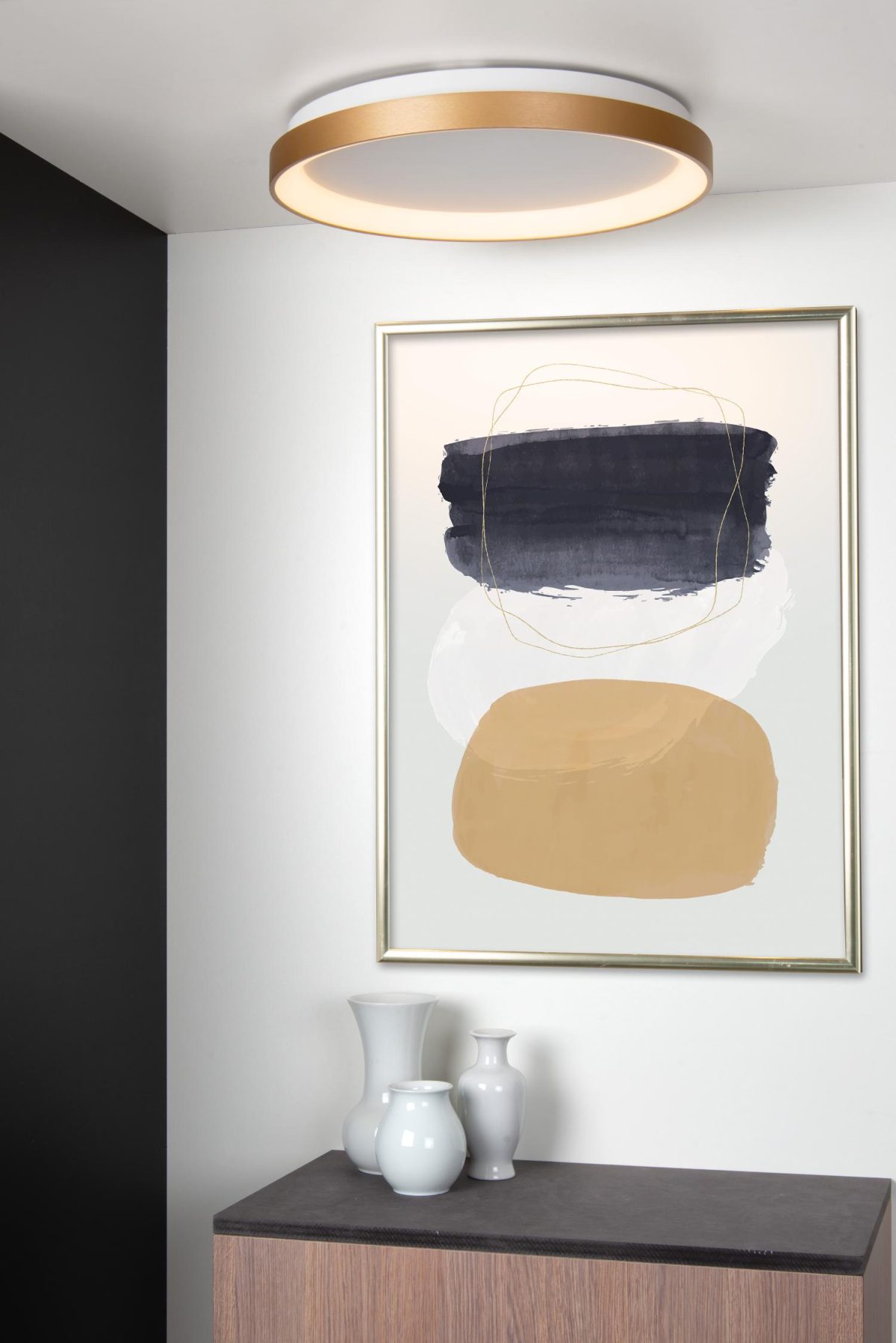
Flat ceiling lights with plenty of light
View allAll no more than 10 cm deep and between 3,500 and 5,120 lumens, from five different brands.
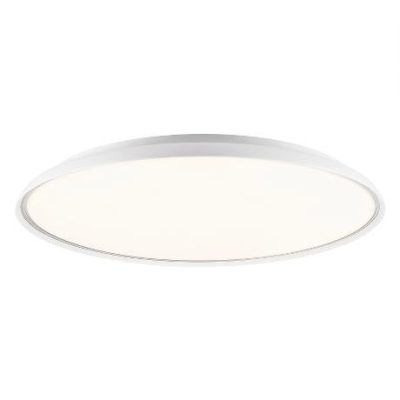
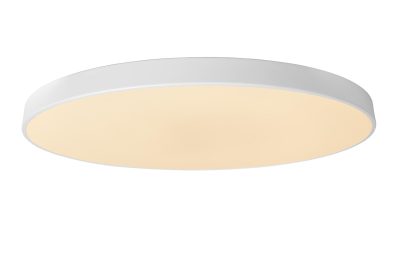
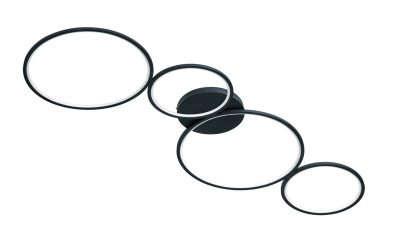
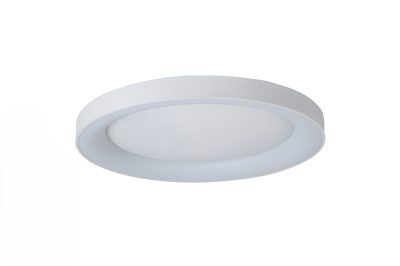
Let the ceiling light up and it looks taller
A dark ceiling feels lower than a light one. It is the simplest trick there is: make sure light falls on the ceiling and on the top of the walls. Writing about corridors, licht.de says that they appear larger and friendlier when walls and ceiling are brightened with powerful indirect lighting.
Three ways to do that:
- Wall lights that (also) shine upwards, at 1.6 to 1.7 m high. With a 2.40 m ceiling that leaves 70 to 80 cm of wall on which the beam fans out before it reaches the ceiling.
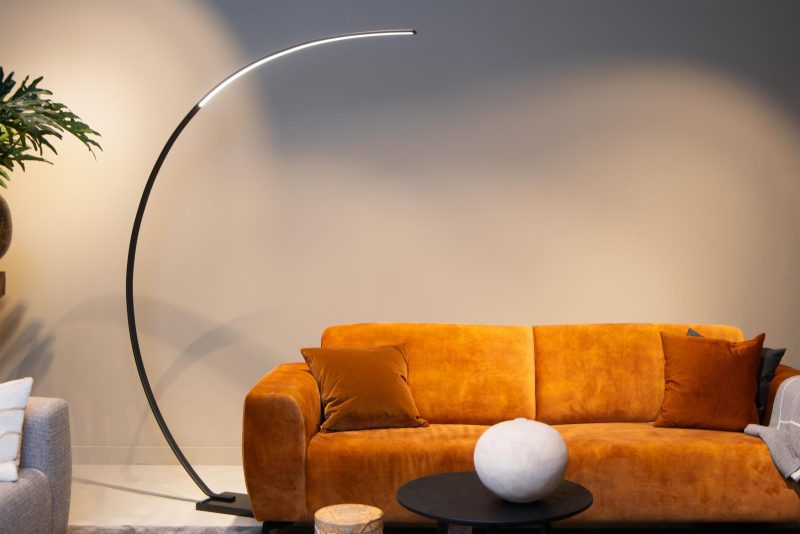
- A floor lamp that shines at the ceiling, an uplighter. Under a low ceiling this works particularly well, because the ceiling is close and reflects a lot of light.
- A ceiling light that gives part of its light sideways or upwards, so that the ceiling around the lamp does not stay in shadow. A light fitting that only shines straight down leaves a dark ring around itself.
One caveat: a rough or dark-painted ceiling reflects much less. If you want a dark ceiling, count on more lumens and more light sources at eye level.
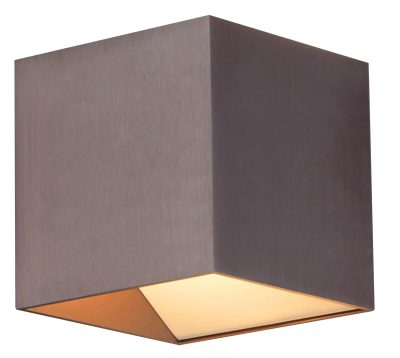 Fantasia Pure wall light brown aluminium
This wall light shines up and down and gives 770 lumens, dimmable. Under a low ceiling it draws a band of light on the wall and helps to brighten the ceiling. €161.10
Pendant lights under a low ceiling: where they work and where they do not
A pendant light can work perfectly well under a low ceiling, as long as nobody walks underneath it. Above a dining table, a kitchen island or beside an armchair in a corner it bothers nobody. In the middle of a through route it becomes an obstacle.
A practical rule: in a walkway, keep the bottom of every lamp at least at door height, roughly 2.10 m. With a 2.40 m ceiling that leaves you 30 cm for the lamp and the suspension. That is too little for a real pendant light, and exactly why flat ceiling lights work better here.
Above a table the usual rule applies: 70 to 80 cm between the tabletop and the bottom of the lamp. With a 75 cm high table and a 2.40 m ceiling you have about 85 to 95 cm for the lamp and the suspension together. A low, wide shade fits better there than a tall cylinder. More on that in pendant light above the dining table, and check it with the dining table calculator.
Spotlights with a low ceiling: choose a wide beam
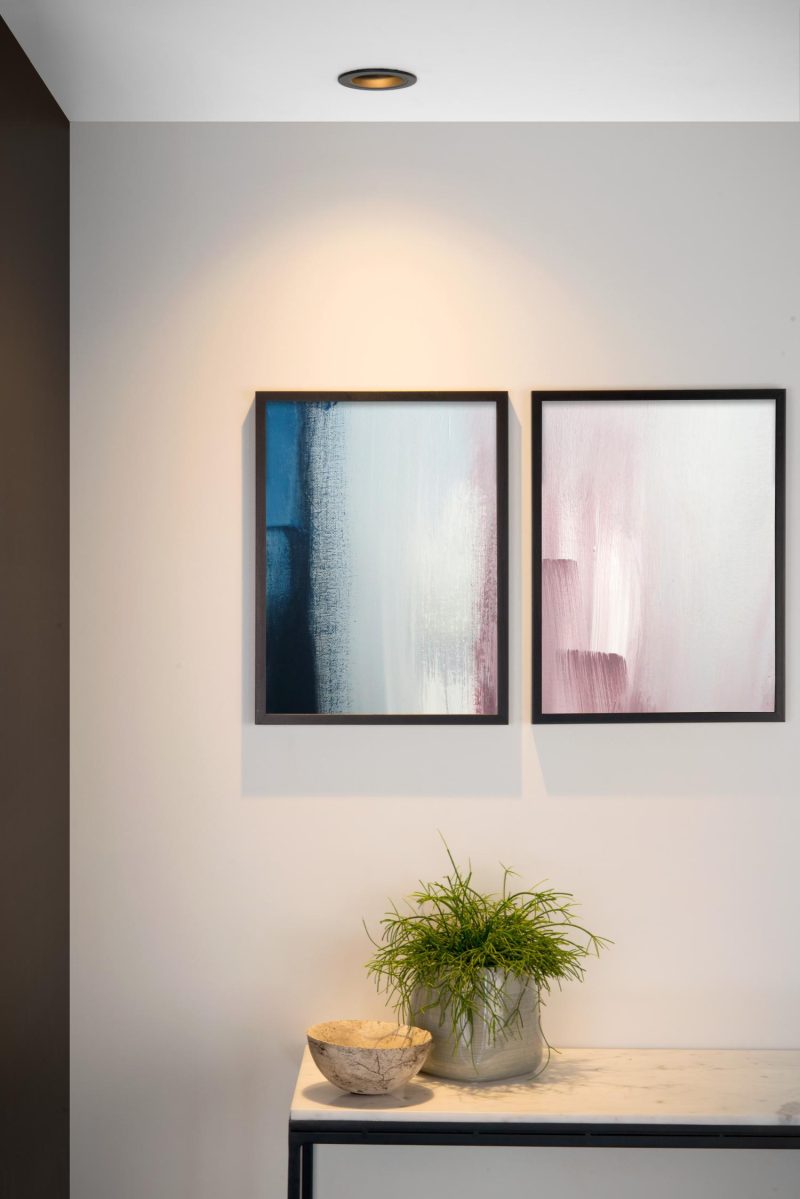
Spotlights seem a logical choice for a low ceiling, because they disappear flat into the ceiling. There is one pitfall: the closer the spotlight is to the surface it lights, the smaller the pool of light. Under a low ceiling a narrow beam gives hard, small circles on the floor and the table, with dark strips in between.
The diameter of the pool of light is roughly twice the distance times the tangent of half the beam angle. You do not need to work that out; the table below does it for a 2.40 m ceiling.
| Beam angle | On a table (1.65 m below the spotlight) | On the floor (2.40 m below the spotlight) |
|---|---|---|
| 24° | about 0.70 m | about 1.00 m |
| 36° | about 1.10 m | about 1.55 m |
| 60° | about 1.90 m | about 2.75 m |
| 100° or more (ceiling light) | more than 3.9 m | more than 5.7 m |
So for general light under a low ceiling you choose spotlights with a beam of 60 degrees or wider, and you place them closer together than under a high ceiling. Keep narrow beams for accents: a painting, a cabinet, a plant. How many spotlights you need and at what spacing, you can check with the spotlight calculator; the basics are in planning spotlights.
Recessed spotlights need space behind the ceiling. If the low ceiling is concrete, there is usually no void and you end up with surface-mounted spotlights or a track; for that, read spotlights on a concrete ceiling.
Frequently asked questions
Does a light ceiling colour really make a difference?
Yes. A white ceiling reflects much more light than a grey or dark ceiling, so the same lamps give more light in the room and the ceiling reads as higher. With a dark ceiling you need more lumens for the same result.
Is an LED panel not too cold for a living room?
That depends on the colour temperature and the finish, not on the type. A round or square panel of 2700 or 3000 K with an opal front gives soft, warm light. A 4000 K office panel with a grainy diffuser does look cold.
Can a ceiling fan with lighting go under a low ceiling?
Only if the blades stay high enough. Keep the blades out of reach of a raised hand, and choose a model that is mounted close to the ceiling. Under a 2.40 m ceiling that is tight; ask the manufacturer for the minimum mounting height.
Can I put a ceiling light in a bathroom with a low ceiling?
Yes, provided the IP rating suits the zone in which it hangs. With a low ceiling a lamp above the shower hangs closer to the water, so check the zone extra carefully. See bathroom lighting and IP zones for the rating you need.
Sources
- licht.wissen 14: Licht für Wohnräume, licht.de (ZVEI) (2019)
- Direktblendung, licht.de (2026)
- Leuchtdichte, licht.de (2026)